
🕑 8 min read
OKX paid half a billion dollars in fines, then landed a $25 billion valuation from the NYSE’s parent company five weeks later.
In February 2025, OKX’s parent entity Aux Cayes FinTech pleaded guilty to operating an unlicensed money transmitting business in the US and paid $504 million to the Department of Justice. That should’ve been a death blow. Instead, Intercontinental Exchange – the publicly traded company that owns the New York Stock Exchange – invested roughly $200 million in OKX at a $25 billion valuation in March 2026, took a board seat, and announced plans to list tokenized equities through the platform.
That contradiction tells you everything about where OKX sits right now. This OKX review breaks down whether the exchange’s fees, security, and feature set justify the hype – and whether US-based traders can actually use it.
What you’ll learn
- OKX charges 0.08% maker / 0.10% taker for spot trades – 12x cheaper than Coinbase’s 1.20% taker fee, with an extra 40% discount for OKB holders.
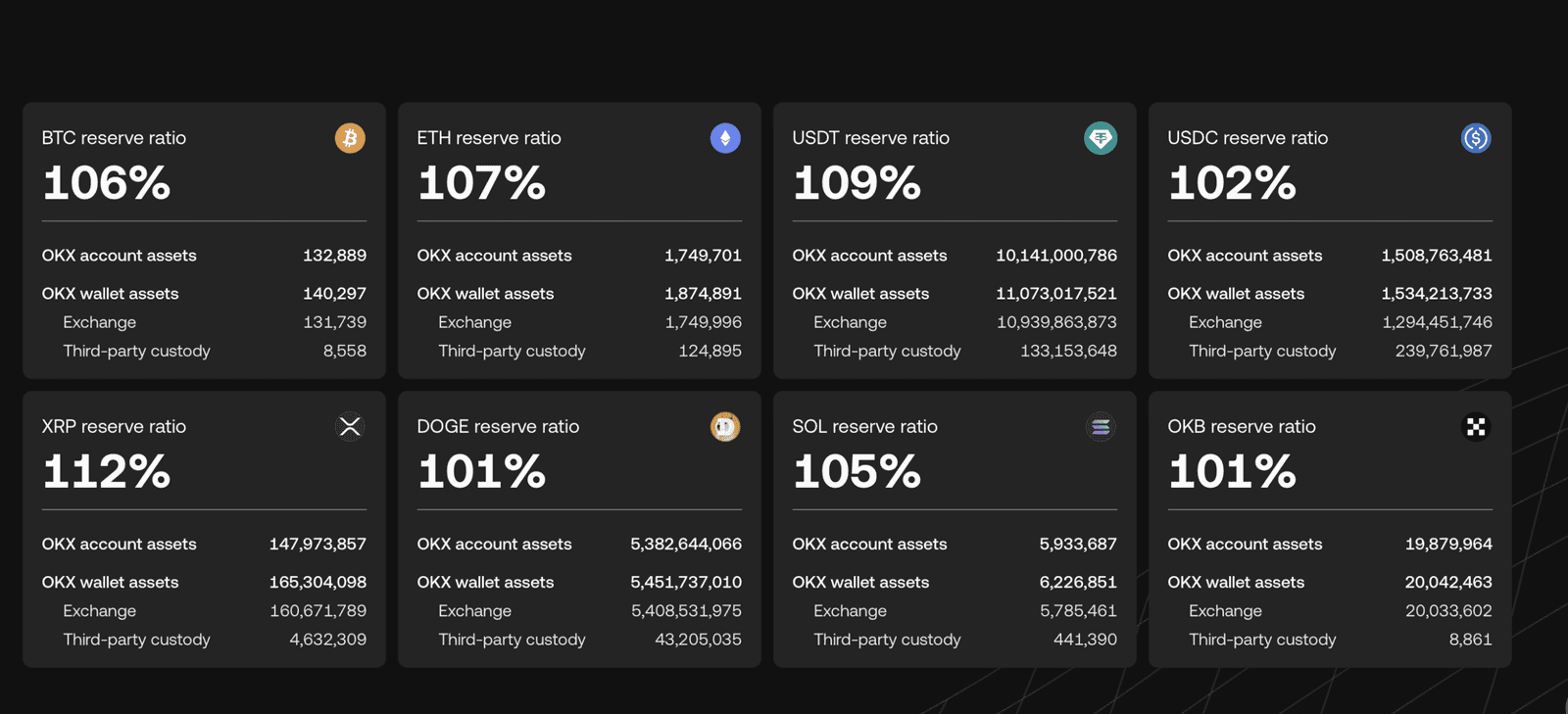
- The exchange holds $35.4 billion in verified reserves (105% BTC, 106% USDT coverage), publishes monthly Hacken-audited proof-of-reserves reports, and carries a trust score of 10/10 on CoinGecko.
- OKX now operates in the US after the DOJ settlement – but residents of New York, Texas, and Nevada remain locked out as of April 2026.
A $504M fine, then a $25B valuation – OKX’s wild year
$504 million. That’s what OKX paid to make its US legal problems disappear. The DOJ alleged the exchange had facilitated more than $5 billion in suspicious transactions, and the guilty plea covered operating without a money transmitter license.
But the settlement came with a perk most people missed: a clean slate to enter the US market legally. OKX opened regional headquarters in San Jose, California, appointed Roshan Robert – a former Morgan Stanley and Barclays executive – as US CEO, and began a phased rollout of services.
Five weeks after writing that $504M check, ICE invested $200 million. The deal included licensing OKX’s spot crypto prices for ICE futures products and plans to offer tokenized NYSE-listed stocks through OKX by late 2026.
‘ICE Makes Investment in OKX, Establishing Strategic Relationship,’ said the official Businesswire press release headline from ICE on March 5, 2026.
Beyond the US, OKX has been stacking licenses like frequent flyer miles. A VARA license in Dubai launched in October 2024. A MiCA license through OKCoin Europe Ltd in Malta arrived in January 2025, passported across all 30 EU/EEA states. The exchange was founded by Star Xu in 2013 as OKCoin, rebranded to OKX in 2022, and now operates under Hong Fang as President. CoinGecko ranks it #3 globally with a perfect trust score of 10 out of 10.
Paying a $504M fine and getting rewarded with a $25B valuation is a bit like totaling your car, then having the insurance company hand you a Ferrari. It only works if the underlying business is genuinely strong.
OKX fees undercut Coinbase by 12x – the full breakdown
OKX quietly runs one of the cheapest fee schedules among the top-five exchanges. We’ve tested the math, and the gap is honestly embarrassing for the competition.
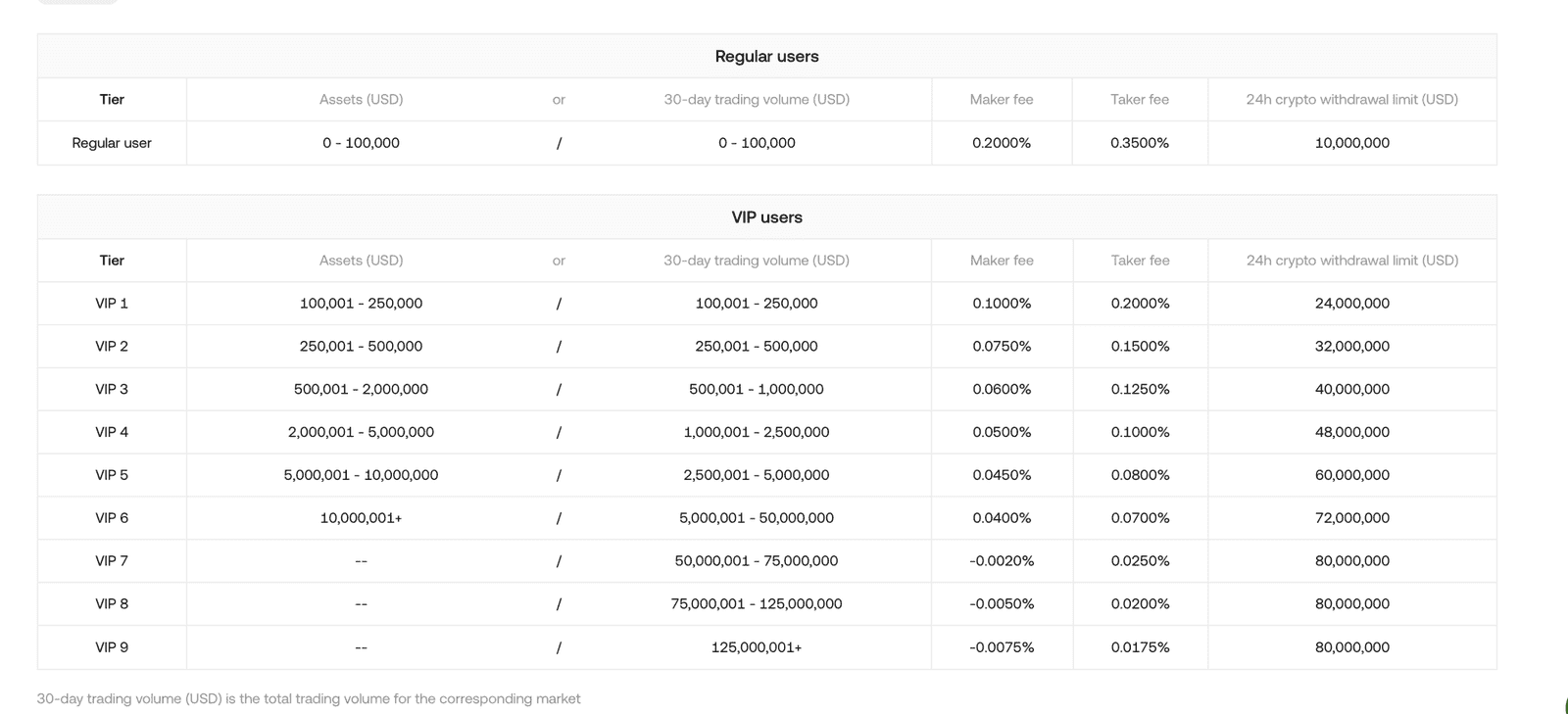
Spot trading starts at 0.08% maker / 0.10% taker. That’s not a VIP rate – it’s the base tier, what you pay on day one with zero trading history. Derivatives are even cheaper: 0.02% maker / 0.05% taker for perpetuals and futures.
On a $10,000 spot trade, OKX charges $10 in taker fees. Coinbase charges $120. That’s not a typo.
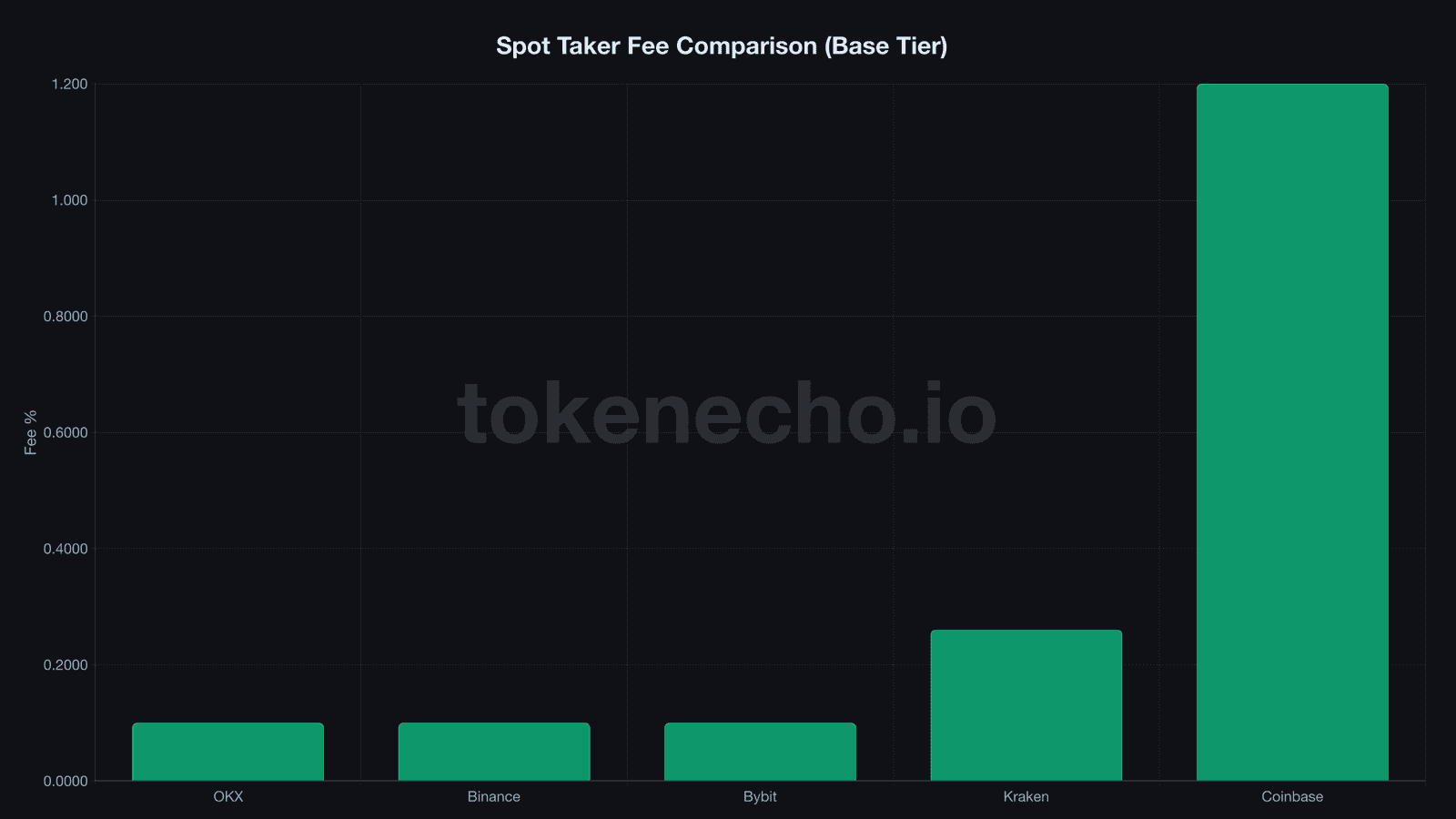
VIP tiers kick in at around $5 million in 30-day volume or a six-figure account balance. At the highest tiers, maker fees approach zero. And holding OKB, the exchange’s native token, slashes fees by up to 40% on top of whatever tier you’ve already earned.
Here’s how the big four stack up:
| Exchange | Spot maker | Spot taker | $10K cost (taker) | Trust score | Pairs |
|---|---|---|---|---|---|
| OKX | 0.08% | 0.10% | $10 | 10/10 | 1,127 |
| Binance | 0.10% | 0.10% | $10 | 10/10 | 1,423 |
| Kraken | 0.16% | 0.26% | $26 | 10/10 | 300+ |
| Coinbase | 0.60% | 1.20% | $120 | 10/10 | 382 |
Fees only matter if the platform actually gives you something worth trading. That’s where OKX gets interesting.
The built-in Web3 wallet that rivals standalone apps
Why would you need MetaMask, Phantom, and a bridge aggregator when one wallet covers all of them?
OKX’s Web3 wallet isn’t an afterthought bolted onto an exchange. It’s a full-blown self-custody wallet with a built-in DEX aggregator that pulls liquidity from over 400 decentralized exchanges across 130+ blockchains. Ethereum, Solana, Bitcoin, Avalanche, Polygon, Base – it doesn’t matter. One interface handles all of them.
The DEX aggregator alone routes trades across 30+ chains and 25+ cross-chain bridges, optimizing for the best available price. That’s the kind of tooling that standalone apps like 1inch or Jupiter charge for separately. OKX bundles it into the same app you use for centralized spot trading.
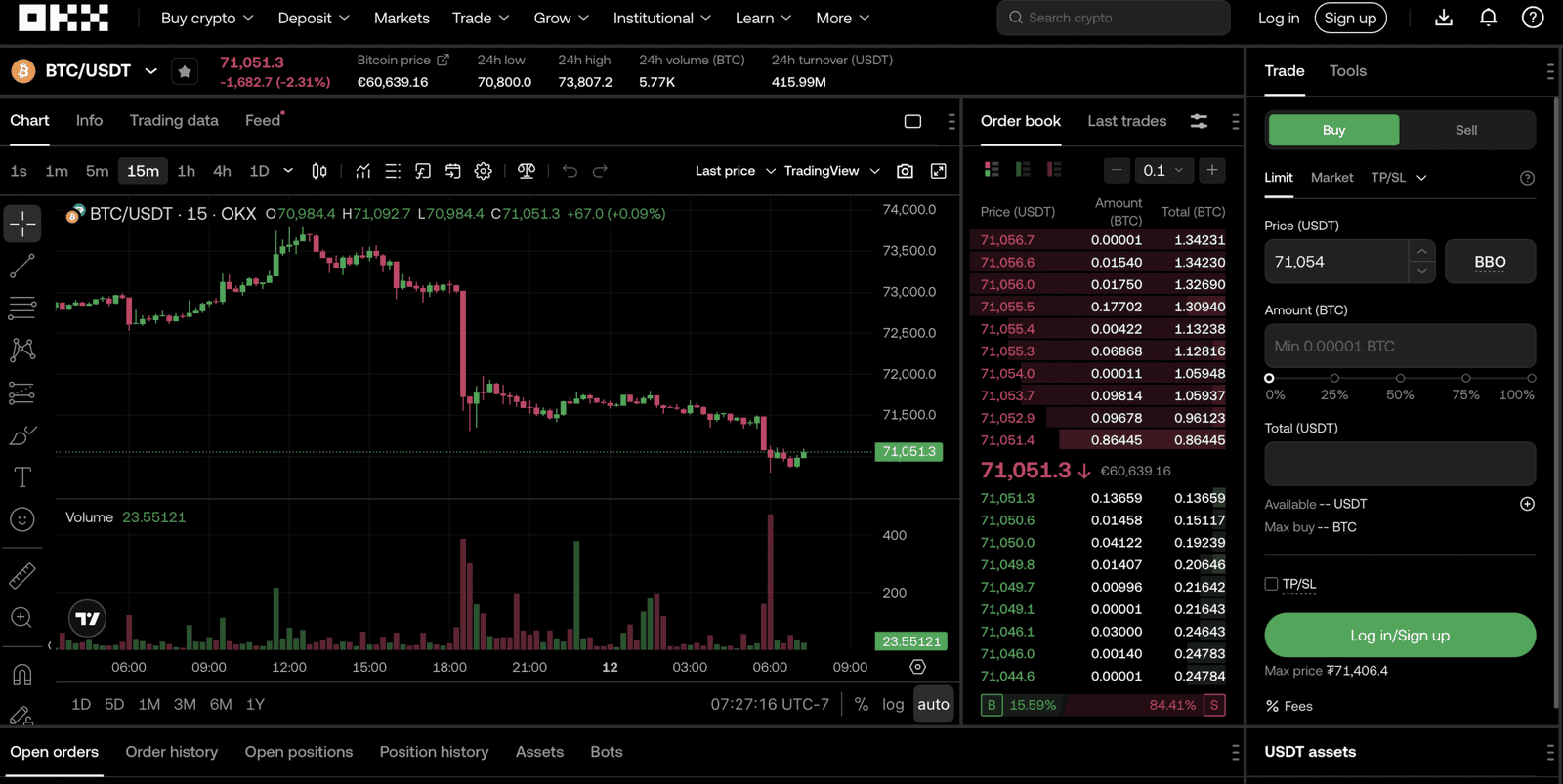
And the feature list keeps going. Copy trading connects you to 8,000+ lead traders who share their spot and futures positions – you pick a trader, set your allocation, and Smart Sync mirrors their moves. Lead traders take 8-13% of profits, which is steep but standard.
Trading bots cover 12 pre-built strategies: grid trading, DCA, arbitrage, recurring buys. OKX Earn splits into three tiers – Simple Earn for passive interest, Structured Products for derivatives-based yields, and On-chain Earn for staking rewards routed through DeFi protocols. Jumpstart, the exchange’s launchpad, gives OKB holders priority access to new token offerings before public listing.
The breadth is genuinely hard to match. Where Coinbase offers simplicity and Kraken offers reliability, OKX offers everything – sometimes at the cost of a steeper learning curve for beginners.
All those features are useless, though, if you can’t actually access them.
Restricted in New York, Texas, and Nevada – the US problem
Picture downloading OKX in Manhattan, completing KYC with your New York driver’s license, and getting rejected. That’s exactly what happens.
Despite the DOJ settlement and the splashy US launch, OKX still doesn’t serve residents of New York, Texas, or Nevada as of April 2026. Those states impose their own crypto licensing requirements – BitLicense in New York, for instance – and OKX hasn’t obtained them yet. The phased rollout that started in mid-2025 covers most of the country, but three of the most populous states remain walled off.
Can you use a VPN to get around it? No. OKX’s mandatory KYC process requires identity verification and proof of address. Changing your IP address doesn’t change your driver’s license. And if the platform detects circumvention, the terms of service are clear: account freezing and potential fund seizure.
For readers stuck in restricted states, the Coinbase vs Kraken vs Binance comparison covers US-friendly alternatives. Coinbase and Kraken both operate nationwide. Kraken charges 0.26% taker – more than OKX but a fraction of Coinbase’s 1.20%.
Traders who can access OKX will note that its security infrastructure rivals anything available domestically. OKX’s 36th consecutive monthly proof-of-reserves report, audited by blockchain security firm Hacken, shows $35.4 billion in primary assets – with reserves exceeding 100% across all 22 tracked assets. Over 95% of client funds sit in cold storage with multi-signature wallet approvals. The platform has never suffered a major hack, though a smaller security incident in mid-2024 prompted additional safeguards including AI-powered threat detection.
OKX vs Binance vs Coinbase vs Kraken – the honest comparison
OKX beats every competitor on paper for fees and features. But not every trader values the same things.
| Category | OKX | Binance | Coinbase | Kraken |
|---|---|---|---|---|
| Best for | Power traders, Web3 | Volume, derivatives | US beginners, staking | US traders, low fees |
| Spot fees | 0.08%/0.10% | 0.10%/0.10% | 0.60%/1.20% | 0.16%/0.26% |
| Derivatives | Perps, futures, options | Perps, futures | Limited | Futures, margin |
| Web3 wallet | Built-in, 130+ chains | Separate app | Separate app | None |
| US access | Partial (not NY/TX/NV) | No | Full | Full |
| DOJ fine | $504M (2025) | $4.3B (2023) | None | None |
| Proof of reserves | Monthly, Hacken | Monthly, $215B | NASDAQ, SOC 2 | Quarterly, Armanino |
| Native token | OKB ($83, 21M supply) | BNB ($602, #4) | None | None |
Binance matches OKX on fees and beats it on pair count, but US users can’t touch either one. Coinbase costs 12x more per trade but offers FDIC insurance up to $250K on USD balances and full US coverage. Kraken splits the difference – reasonably cheap, fully US-compliant, 14 years without a major breach, but no built-in Web3 wallet.
The OKB factor – a token worth knowing about
OKB trades at $83.21 as of April 12, 2026, down from its all-time high of $228.74 in October 2025. That’s a 63.6% drawdown. The total supply is permanently fixed at 21 million – same cap as Bitcoin, intentionally.
Every quarter, OKX uses 30% of its trading fee revenue to buy back and burn OKB. A one-time burn of over 65 million tokens in 2023 shrank the supply from 300 million to 21 million. No inflation. No unlock schedule. No “76% of supply locked” situation like we’ve covered with other tokens.
Holding OKB gets you tiered fee discounts (up to 40%), priority access to Jumpstart token launches, and staking rewards. For active OKX traders, it functions as a loyalty program with genuine tokenomic backing. For everyone else, it’s speculative exposure to OKX’s growth – now implicitly backed by the NYSE’s parent company.
Who should open an OKX account, and who shouldn’t
OKX works best for experienced traders who want derivatives, a built-in Web3 wallet, and fees that undercut nearly every competitor. If you’re comfortable navigating a complex interface and you don’t live in a restricted state, it’s genuinely hard to find a better all-in-one platform.
It’s the wrong choice for crypto beginners who want a simple buy-and-hold experience. Coinbase’s interface is cleaner, and the learning curve is flat. It’s also obviously the wrong choice for anyone in New York, Texas, or Nevada – no workaround exists.
Pros:
- Lowest base spot fees among major exchanges (0.08%/0.10%)
- Built-in Web3 wallet with DEX aggregation across 130+ chains
- $35.4B in proof-of-reserves, monthly audits, trust score 10/10
- ICE/NYSE partnership adds institutional credibility
- OKB’s fixed 21M supply and quarterly burns
Cons:
- $504M DOJ settlement raises past compliance questions
- Not available in New York, Texas, or Nevada
- Complex interface overwhelms beginners
- OKB token down 63.6% from ATH – fee discount benefits diminish with price
- Manchester City and McLaren sponsorships ($25-50M/year) are flashy but don’t improve the product
What caught our attention most: OKX spent $504 million to enter the US, then convinced the owner of the New York Stock Exchange to invest $200 million five weeks later. If ICE’s due diligence team signed off on OKX’s compliance overhaul, that’s a stronger endorsement than any proof-of-reserves report.
For more exchange comparisons, see our full Coinbase vs Kraken vs Binance breakdown and our guide on how to buy Bitcoin.
OKX’s US expansion is still a work in progress – whether the remaining state-level restrictions fall in 2026 will determine if it can truly compete with Coinbase and Kraken domestically.
This is not financial advice. DYOR. Data as of April 12, 2026.
Sources: CoinGecko OKX exchange data, CoinGecko OKB token data, OKX fee schedule, OKX Proof of Reserves #36, DOJ press release, ICE investment in OKX, OKX MiCA license, OKX VARA license
Leave a Reply