



Solana Processes $650B in Stablecoins Monthly – More Than Ethereum – With Just 5% of Supply
🕑 5 min read
Solana now settles more stablecoin value than any blockchain on Earth, despite holding a fraction of the market’s actual dollars.
The Paradox Nobody’s Talking About
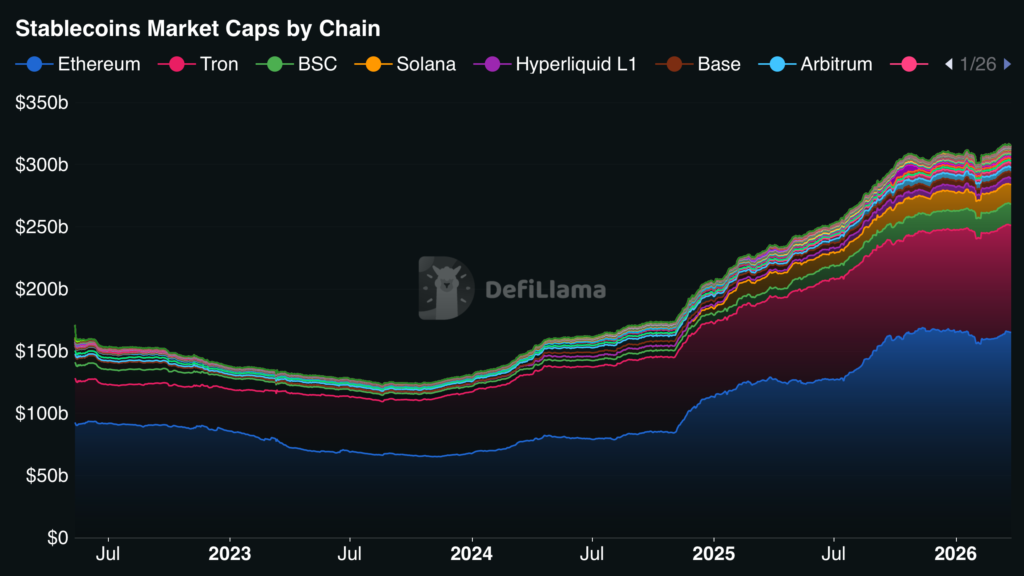
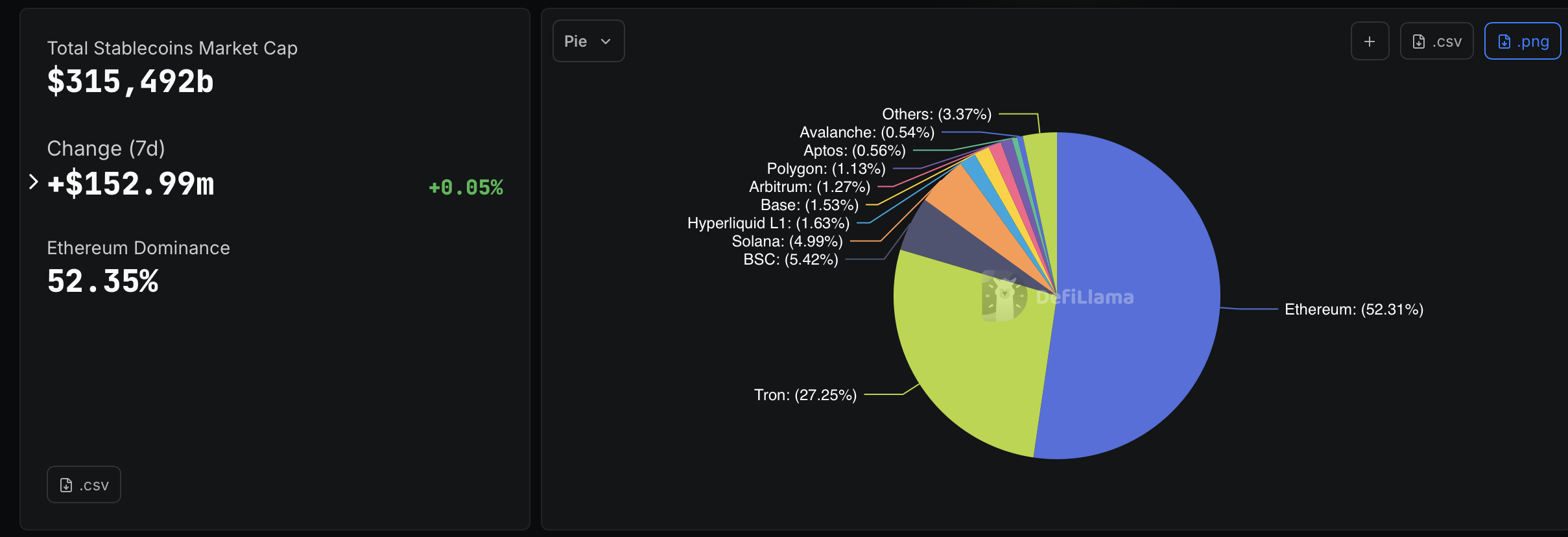
$15.4 billion. That’s all the stablecoin capital sitting on Solana right now – roughly 5% of the $314 billion global stablecoin market. Ethereum holds $164 billion. Tron holds $85 billion.
And yet Solana moved $650 billion in stablecoin transactions in February 2026 alone.
Read that number again. Solana cycled through more than 42 times its entire stablecoin supply in a single month. For comparison, Ethereum – with ten times more stablecoin capital – processed less volume over the same period. Tron, the longtime king of cheap USDT transfers, got left behind too.
Something fundamental shifted in how money actually moves through crypto. And most people missed it.
The Numbers Behind the Flip
Solana didn’t just edge past Ethereum. It lapped the field.
According to Artemis Analytics data, Solana captured roughly 36% of all global stablecoin transaction volume in February – up from single digits just eighteen months ago. The $650 billion monthly figure is more than double Solana’s previous record from October 2025. Ethereum processed approximately $525 billion, and Tron handled around $600 billion in the same period, though Tron’s volume skews heavily toward small remittance transfers under $1,000.
What makes this particularly striking is the velocity metric. If you divide monthly volume by supply, you get a rough “money velocity” for each chain:
- Solana: 42.2x (moves its entire supply 42 times per month)
- Tron: 7.0x
- Ethereum: 3.2x
That’s not a marginal difference. Solana’s stablecoin velocity is twelve times higher than Ethereum’s. Capital on Solana doesn’t sit. It works.
Why Solana? Three Converging Forces
The volume explosion didn’t happen by accident. Three catalysts landed almost simultaneously – and the combined effect is what created this anomaly.
Visa picked Solana for settlement. In December 2025, Visa launched USDC settlement for U.S. banks running on Solana’s rails through Cross River Bank and Lead Bank. The annualized run rate hit $3.5 billion before Q1 ended. That’s real institutional plumbing, not a pilot program press release. When the largest payment network on the planet chooses your chain for dollar settlement, capital follows.
Western Union joined the party. In March 2026, Western Union partnered with Crossmint to issue USDPT – a stablecoin purpose-built for remittances – on Solana. Western Union processes $80 billion annually in cross-border transfers. Even a small percentage migrating on-chain would dwarf most DeFi protocols.
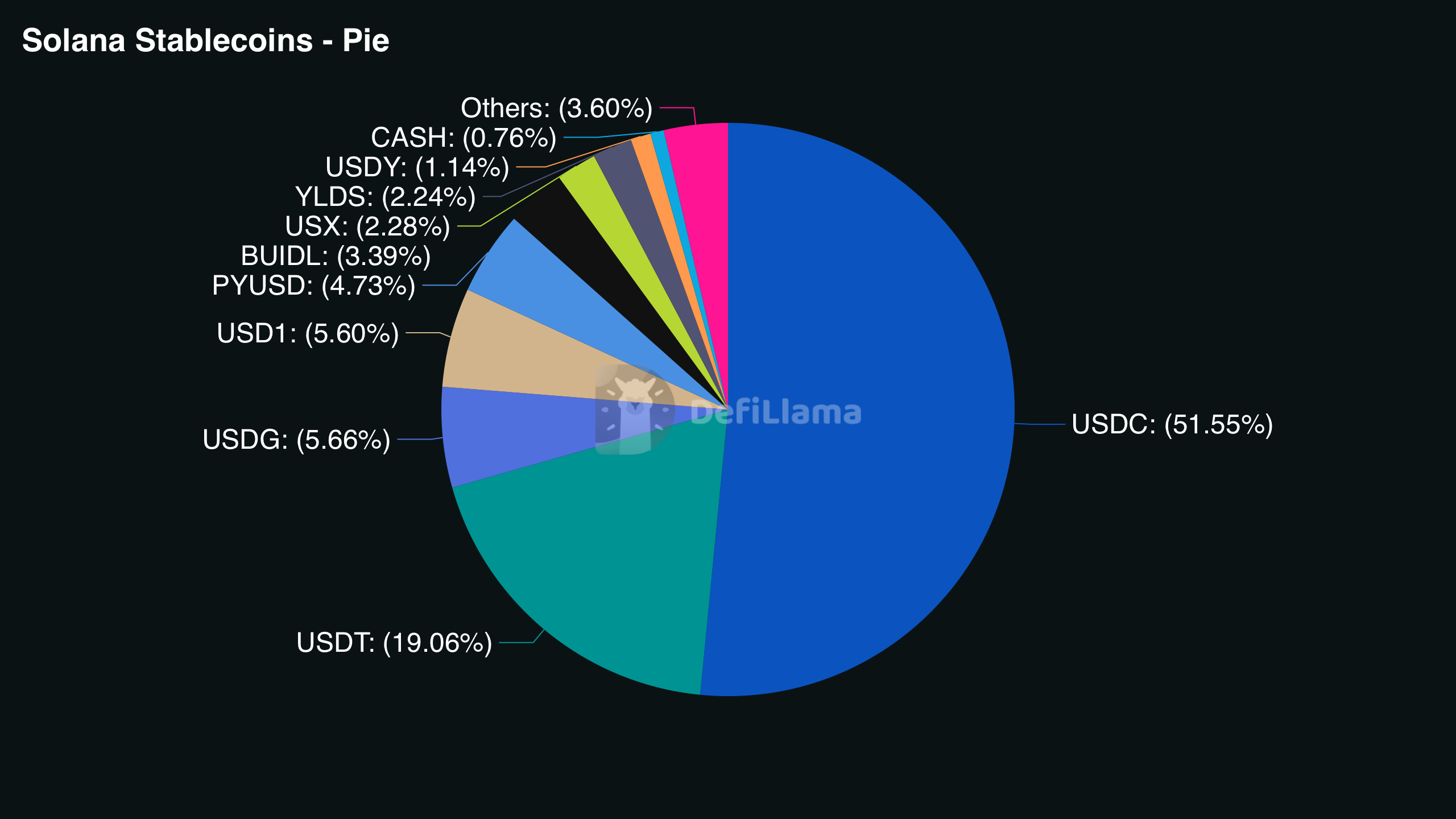
And then there’s the quiet giant: USDC on Solana grew 300% year-over-year to $7.87 billion, making Solana the second-largest USDC chain after Ethereum. Circle isn’t just tolerating Solana anymore. They’re building for it.
The Stablecoin Mix Is Diversifying
What caught our attention isn’t just USDC growth – it’s how many different stablecoins are thriving on Solana simultaneously.
USDC sits at $7.87 billion. USDT holds $3.0 billion. But look below those two and you’ll find a surprisingly crowded field. USDG (Global Dollar) has $909 million on Solana – that’s 54% of its entire supply choosing this single chain. Trump’s USD1 stablecoin parked $882 million here. PayPal’s PYUSD holds $731 million, while BlackRock’s BUIDL tokenized fund allocated $530 million.
Eighteen months ago, non-USDC/USDT stablecoins on Solana were a rounding error. Now they represent over 20% of supply and growing at roughly 15x year-over-year.
That diversification matters. It means Solana isn’t dependent on a single issuer’s decision. Multiple institutions – from BlackRock to PayPal to a sitting president’s financial venture – independently chose this chain for their dollar products. That kind of convergence doesn’t reverse easily.
The Ethereum Paradox (Yes, It Goes Both Ways)
Before anyone declares Ethereum dead in the stablecoin race – stop. Ethereum still holds $164 billion in stablecoins, or 52% of the entire market. That’s more than the next four chains combined.
The real picture is a division of labor. Ethereum is becoming the settlement layer where stablecoins are held – parked in DeFi protocols, sitting in treasury wallets, locked in yield strategies. Solana is becoming the transfer layer where stablecoins are moved – payments, remittances, trading, real-time settlement.
Think of it like this: Ethereum is the vault. Solana is the highway.
Both roles are valuable. But the highway is where transaction fees generate revenue, where network effects compound through usage, and where institutional partnerships like Visa and Western Union actually plug in. That’s a different kind of moat than TVL.
What the Smart Money Is Watching
The velocity gap creates an interesting dynamic for SOL’s price thesis – one that the market hasn’t fully priced in.
Solana processes more economic activity per dollar of stablecoin supply than any chain by an order of magnitude. If even a fraction of Ethereum’s $164 billion in stablecoin capital migrates to Solana for better execution, the supply shock would be significant. Solana’s current $15.4 billion stablecoin base is growing, but it’s still tiny relative to the volume it handles.
Meanwhile, Firedancer – Solana’s second validator client promising 1 million TPS – is approaching mainnet. More throughput means more capacity for exactly the kind of high-frequency stablecoin transfers that are already Solana’s strength.
The risk? Concentration. Solana’s stablecoin volume depends heavily on a few large market makers and DeFi protocols. A single protocol exploit or regulatory action targeting Solana-native stablecoins could crater volume overnight. And we’ve seen that movie before – remember the FTX-Solana contagion in 2022? The chain’s stablecoin supply collapsed 85% in weeks.
Bottom Line
Solana just proved something that the market cap charts don’t show: the chain that holds the most stablecoins isn’t necessarily the chain that moves the most money. With $650 billion in monthly volume on just $15.4 billion in supply, Solana’s stablecoin velocity is in a category of its own.
Visa and Western Union didn’t pick Solana for its DeFi ecosystem or NFT marketplace. They picked it because it’s fast, cheap, and works at scale. That’s a fundamentally different value proposition than “smart contract platform” – and it might be a more durable one.
Whether SOL the token captures that value is a separate question. But the network? It’s already the world’s busiest dollar highway. Most people just haven’t noticed yet.
This is not financial advice. DYOR. Data as of March 27, 2026.
Sources
- Artemis Analytics – Stablecoin Volume Dashboard
- DefiLlama – Stablecoins by Chain
- Visa Onchain Analytics Dashboard
- Coinfomania – Solana Leads Stablecoin Market With Record $650B Monthly Volume
- Chainstack – Stablecoins on Solana in 2026
- FX Leaders – Western Union Partnership and Record Stablecoin Volume