



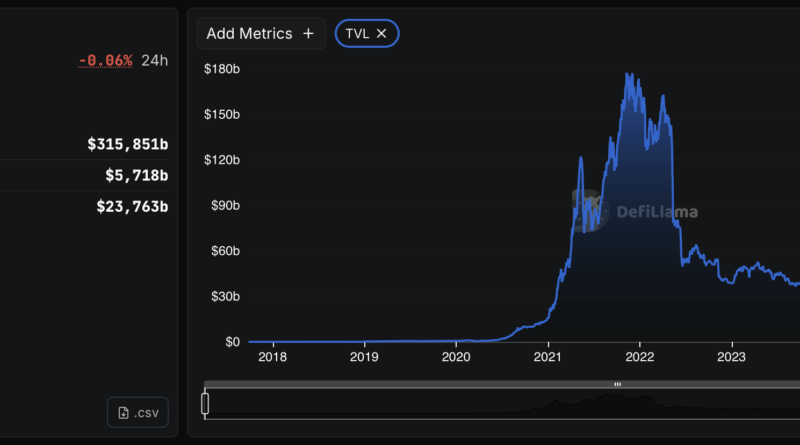
DeFi Didn’t Flinch: $97.6B in TVL While Bitcoin Bleeds 20% and Fear Hits Rock Bottom
🕑 5 min read
Fifty-three million dollars.
That’s the total liquidation exposure sitting within 20% of current prices across all of DeFi right now, according to on-chain data from DefiLlama and Aave risk dashboards. For context, that same number was $340 million in February 2025. An 84% drop – during a nastier market.
Bitcoin’s down 20% year-to-date. The Fear & Greed Index is camped at 10, a level we’ve only seen five times since 2018. Crypto Twitter is drafting its eulogies. And yet DeFi’s total value locked just climbed to $97.6 billion, up 4.44% in a single week.
Something doesn’t add up. Or maybe – for the first time – it finally does.
The Tide Went Out. DeFi Was Fully Dressed.
Warren Buffett’s famous line about swimming naked gets thrown around a lot in crypto. Usually after someone’s already exposed. But March 2026 is flipping that script.
When ETH cratered 21% during the February drawdown, the old playbook said DeFi should’ve imploded. Cascading liquidations. Protocols going underwater. The kind of death spiral that turned Luna into a $40 billion footnote and dragged Celsius, Voyager, and Three Arrows Capital into bankruptcy court back in 2022.
None of that happened.
Instead, DeFi deposits increased by 2.7 million ETH during the February crash – roughly $5.3 billion worth of fresh collateral pouring into protocols while prices were falling. Users weren’t getting liquidated. They were topping up.
Why? Because average collateral ratios across major lending protocols now sit above 250%. The 2022 wipeout – where over $450 billion vanished in a matter of months – left scars deep enough to change behavior. Degens learned to manage risk. Who knew.
Aave’s Quiet Dominance
If you want to know who’s winning the crash, start with Aave.
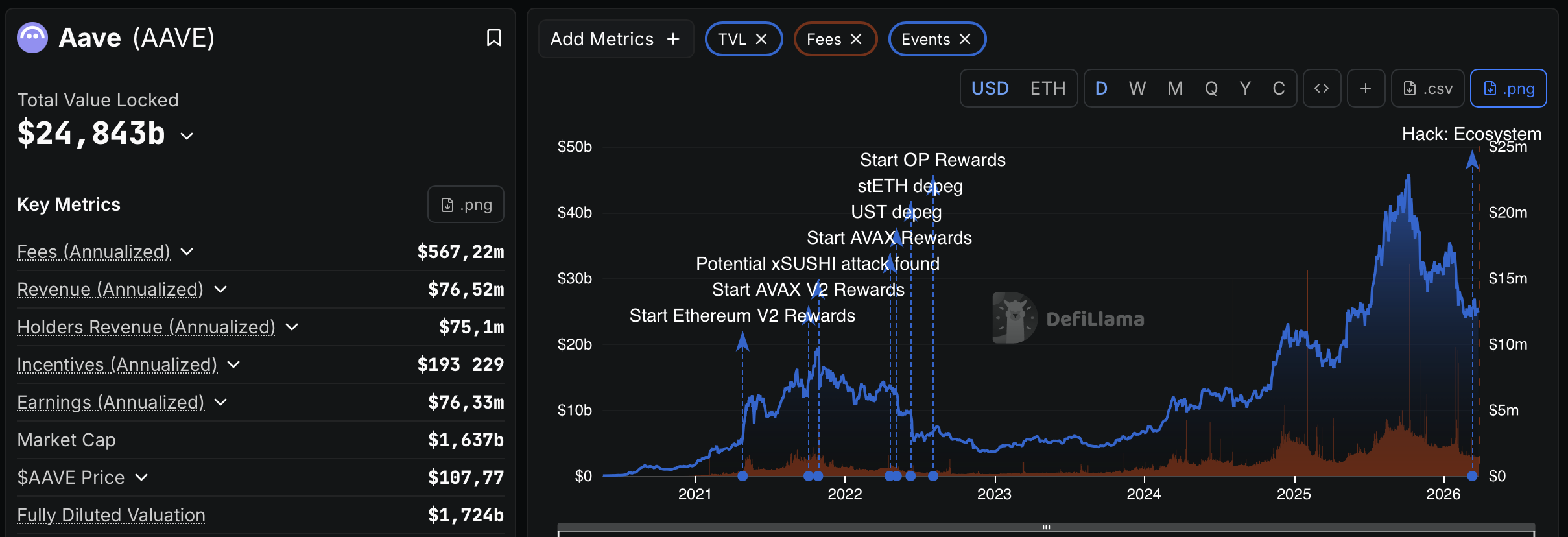
The protocol commands $26.46 billion in TVL – that’s $8.5 billion ahead of second-place Lido at $17.96 billion. Not close. In lending specifically, Aave owns 62.8% of the entire market and generates $83.3 million in fees over rolling 30-day periods, nearly four times its closest competitor Morpho.
And the headline number? Aave became the first DeFi protocol to cross $1 trillion in cumulative loan originations back in February. A permissionless smart contract – originally launched as “ETHLend” by Stani Kulechov in 2017 – now sits in the same conversation as JPMorgan’s lending desk. Except there’s no compliance department, no corner office, and no bailout option.
That $1 trillion figure is cumulative, worth noting – it includes repeat borrowing cycles and leverage loops, not outstanding balance. But even so. A trillion dollars through code that anyone can fork. The traditional finance crowd still doesn’t quite know what to do with that.
The Chains That Held
Ethereum remains the undisputed king with $56 billion in DeFi TVL. No surprise there – it’s where the institutional money lives, where the blue-chip protocols deploy, where the liquidity depth makes everything else look like a kiddie pool.
But the more interesting story is happening further down the rankings.
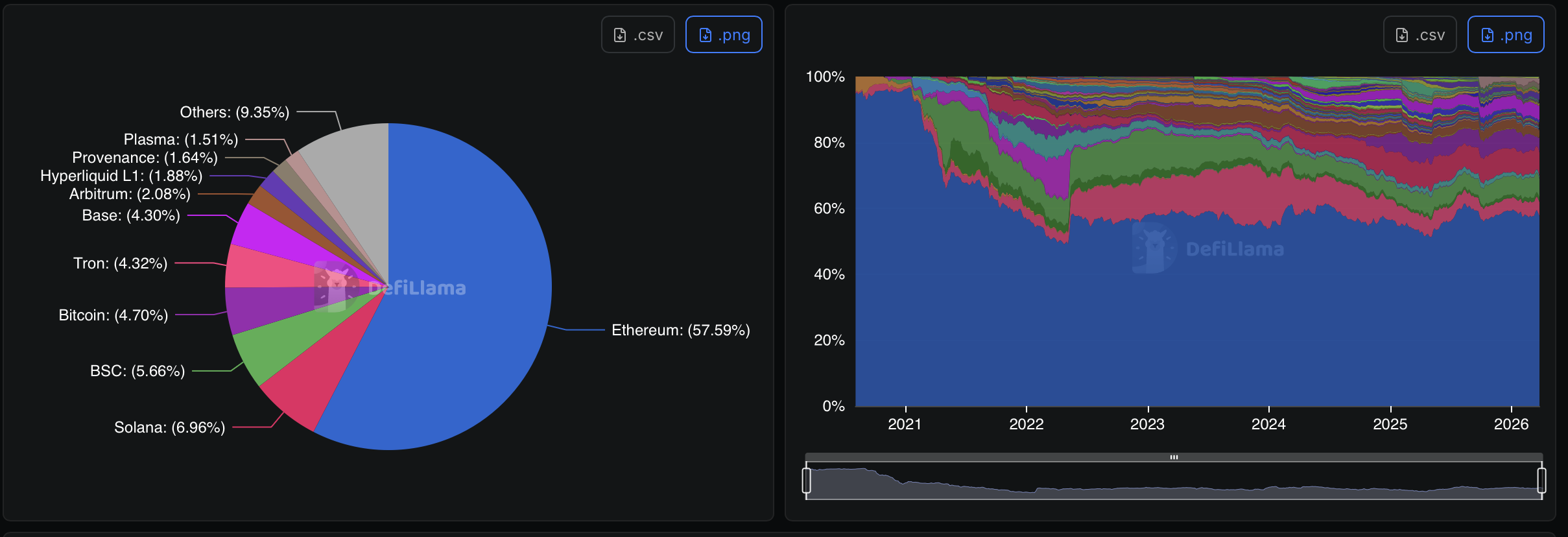
Mantle – a chain most retail traders couldn’t name six months ago – just crossed $755 million in TVL, a 230% surge since September 2025. It’s now ahead of both Avalanche and Sui. The catalyst? Aave’s deployment on Mantle drove $1.34 billion in lending and borrowing activity, making it the third-largest Aave market globally behind Ethereum and Polygon. Bybit’s Mantle Vault, powered by CIAN Protocol, crossed $150 million in assets under management on its own.
That’s not hype-driven. That’s infrastructure pulling real capital during a downturn.
Solana holds $6.8 billion in TVL and continues to dominate on revenue and retail activity – different strengths, same resilience. Base sits at $4.2 billion and keeps climbing. Mellow Protocol exploded from $180 million to over $300 million in TVL in the second half of March alone, riding a combination of institutional demand for its Core Vaults and airdrop-driven farming.
2022 vs. 2026: Two Crashes, Two Completely Different Outcomes
The comparison is worth spelling out because the contrast is that stark.
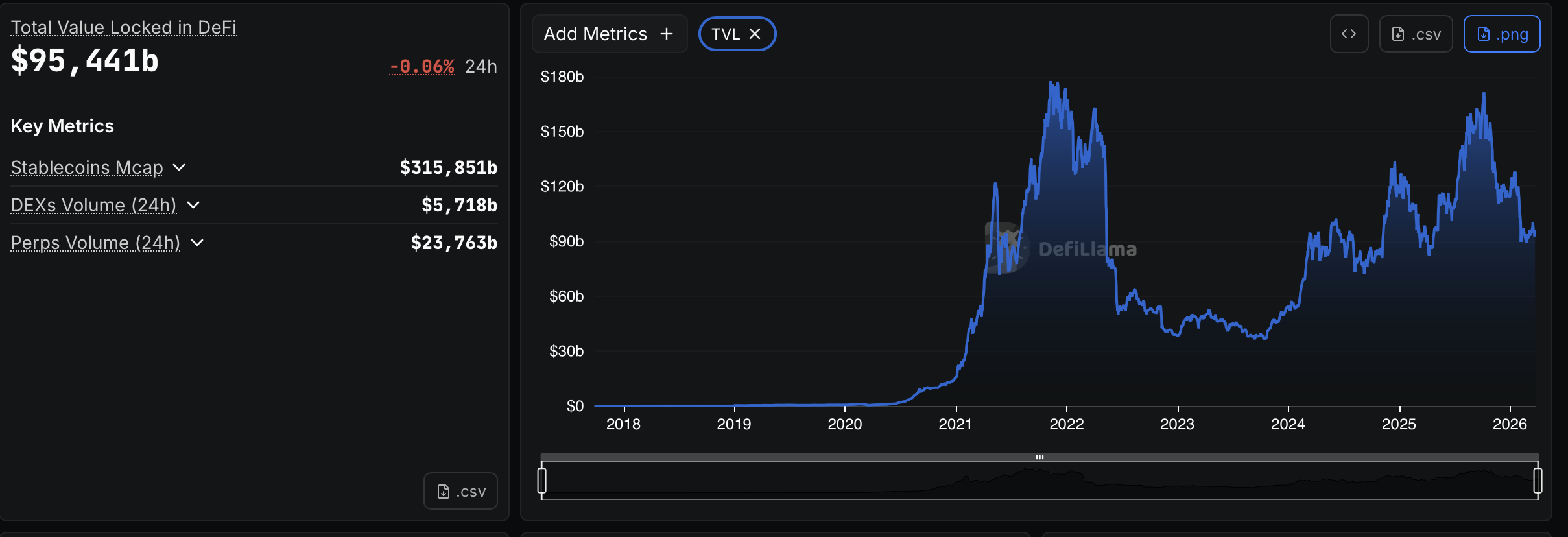
In May 2022, Luna’s collapse triggered a chain reaction that took out Anchor Protocol, then Three Arrows Capital, then Celsius, then Voyager Digital. Cascading liquidations fed on themselves. Risk management was a polite suggestion. Over-leveraged positions were the norm, not the exception. By November, when FTX fell, another $200 billion evaporated.
Fast forward to March 2026. Bitcoin’s down 20%. ETH dropped 21% in February alone. And the DeFi system responded by… getting healthier? Liquidation-eligible positions fell 84% year-over-year. Protocols enforce stricter thresholds. Users maintain conservative collateral ratios. The on-chain data is unambiguous: this ecosystem learned.
It’s the difference between a building with no fire exits and one that just passed inspection.
So What’s Actually Happening?
The capital flowing into DeFi during a crash tells you something about where the market is heading – even if the timeline is unclear.
Smart money doesn’t park billions in lending protocols during extreme fear because they’re feeling generous. They’re positioning. Aave’s TVL growing while BTC bleeds means someone – likely institutional players with longer time horizons – sees these yields and collateral ratios as a better risk-adjusted bet than sitting in stablecoins or exiting entirely.
And the liquidation data backs it up. When at-risk positions drop to $53 million in a $97.6 billion ecosystem, that’s a health ratio most banks would envy. DeFi isn’t overleveraged. It’s the most conservatively positioned it’s ever been – right at the moment everyone expects it to break.
Does that guarantee a recovery? No. Macro headwinds are real, rate cuts keep getting pushed, and the Iran situation could reignite at any moment. But the structural foundation under DeFi is incomparably stronger than it was the last time fear hit these levels.
The protocols that survived 2022 built moats. The users who got burned built discipline. And right now, while the rest of the market is frozen in fear, DeFi is quietly absorbing capital at $97.6 billion and counting.
The tide went out. Nobody’s naked this time.
Disclaimer: This is not financial advice. Always do your own research (DYOR). Data as of March 26, 2026.