
🕑 7 min read
Thirty million people use the MetaMask wallet every month. That’s more than the population of Australia.
And yet MetaMask charges 0.875% on every token swap – while competitors like Rabby charge 0.25% and Trust Wallet charges nothing at all. So what keeps 30 million users coming back to the most expensive hot wallet in crypto?
We spent the past week digging through MetaMask’s 2025-2026 product blitz, fee structures, security record, and the competitive landscape. The short answer: ecosystem lock-in is a hell of a drug.
From browser plugin to crypto super-app – one wild year
MetaMask shipped more products between May 2025 and February 2026 than most DeFi protocols ship in five years.
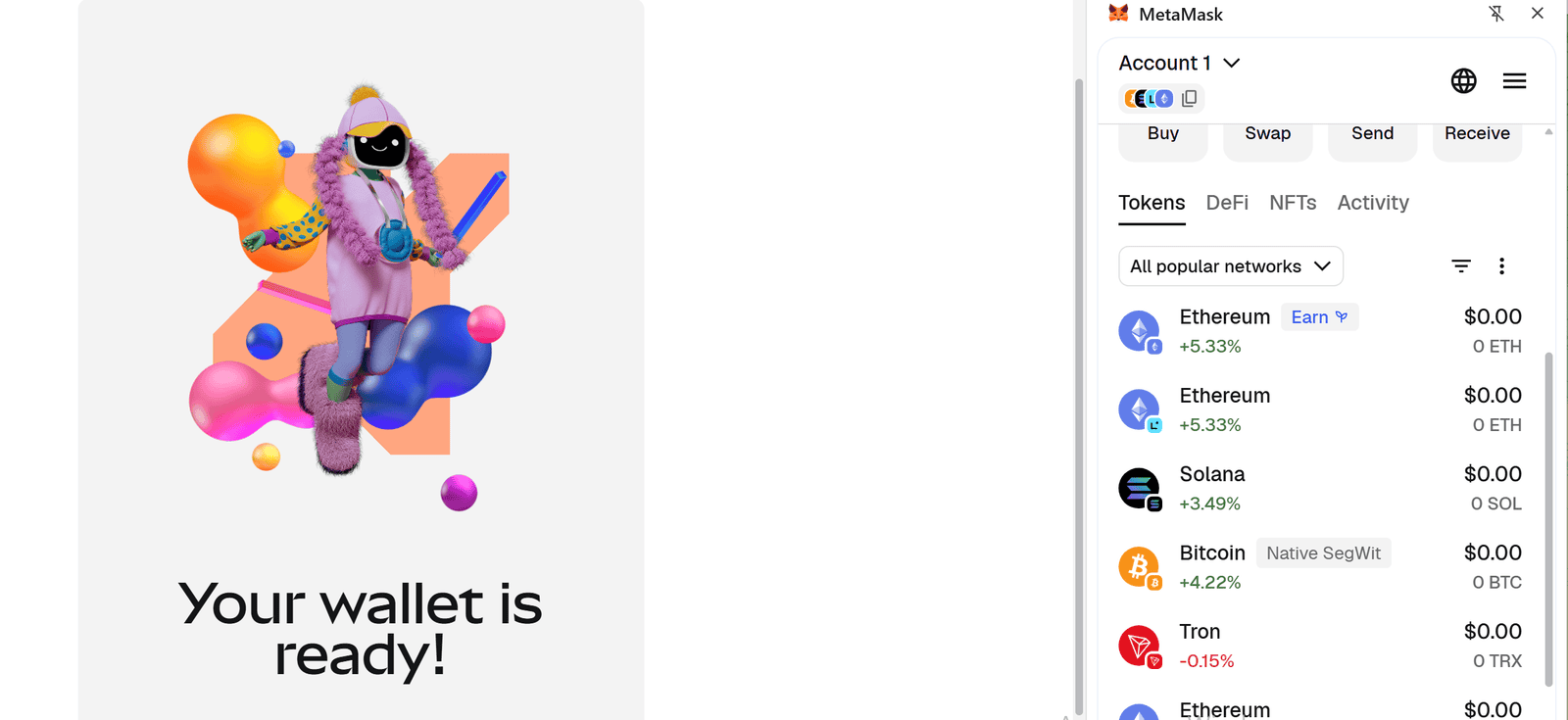
Native Solana support landed in May 2025. Bitcoin followed in December. A wallet-native stablecoin called mUSD – backed by US Treasury bills and built with Stripe’s Bridge infrastructure – launched in September. That alone would’ve been a big year for any wallet.
It wasn’t enough.
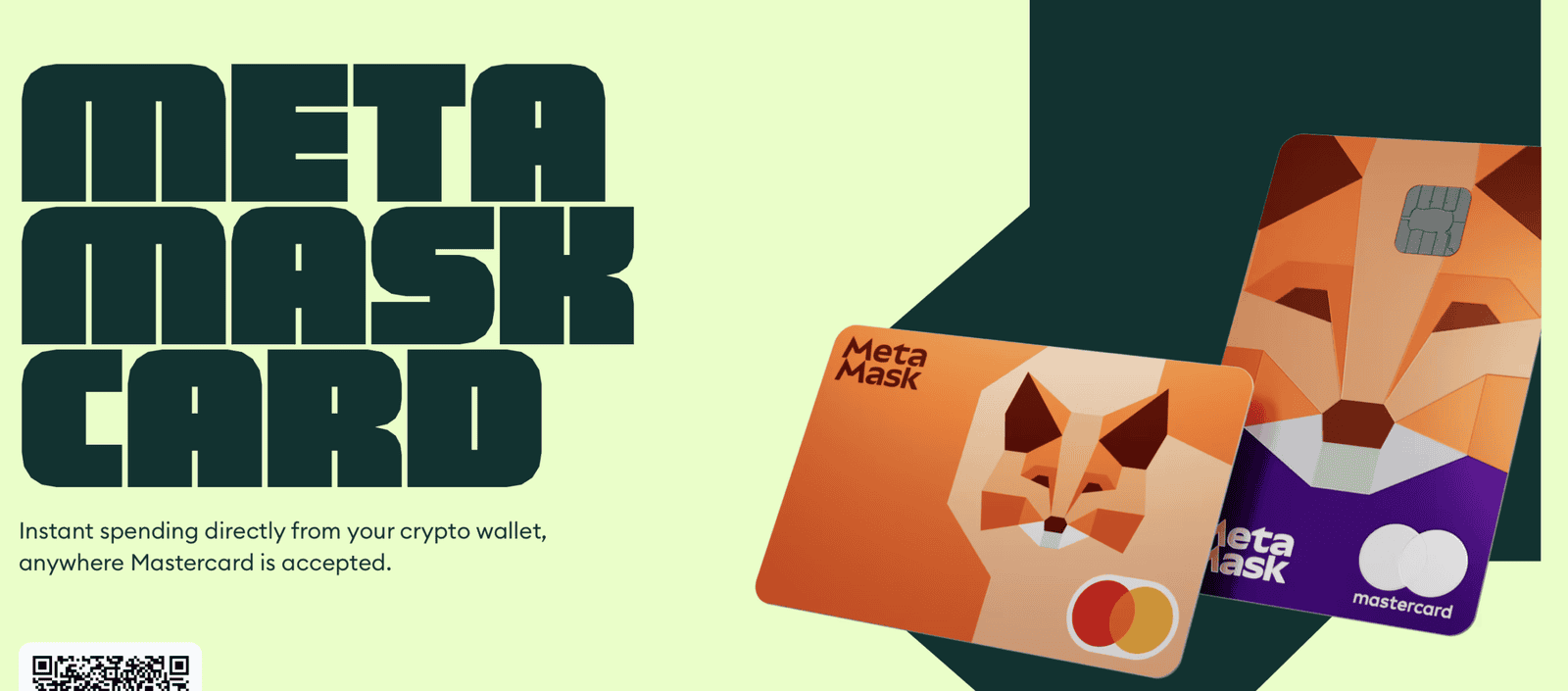
By October, MetaMask had bolted on perpetual futures trading through Hyperliquid (no swap fees on perps, oddly enough) and prediction markets via an exclusive Polymarket integration. The MetaMask Card, a Mastercard-backed debit card that lets you spend crypto directly from a self-custodial wallet, hit the US market on February 28, 2026 across 49 states.
The free virtual card earns 1% cashback in mUSD. The $199/year metal card – sixteen grams of stainless steel, if you’re curious – bumps that to 3% on the first $10,000 spent annually with no foreign transaction fees.
For anyone already inside the MetaMask ecosystem, the Rewards program functions as a de facto airdrop farm. Season 1 (October 2025 through January 2026) distributed over $30 million in $LINEA tokens. Points carry between seasons. The message from Consensys is clear: use MetaMask for everything, and something valuable comes later.
MetaMask in 2026 resembles a Swiss Army knife that somehow grew a credit card slot, a trading desk, and a betting window. Whether that’s genius product strategy or bloated feature creep depends on which blade you actually use.
The most popular wallet charges the highest swap fees
MetaMask dominates the wallet market. It also charges more per swap than every single major competitor.
The math isn’t subtle. Swap $1,000 worth of ETH through MetaMask and you’ll pay $8.75 in service fees – before gas. Run that same swap through Rabby and the damage drops to $2.50. Trust Wallet? Zero.
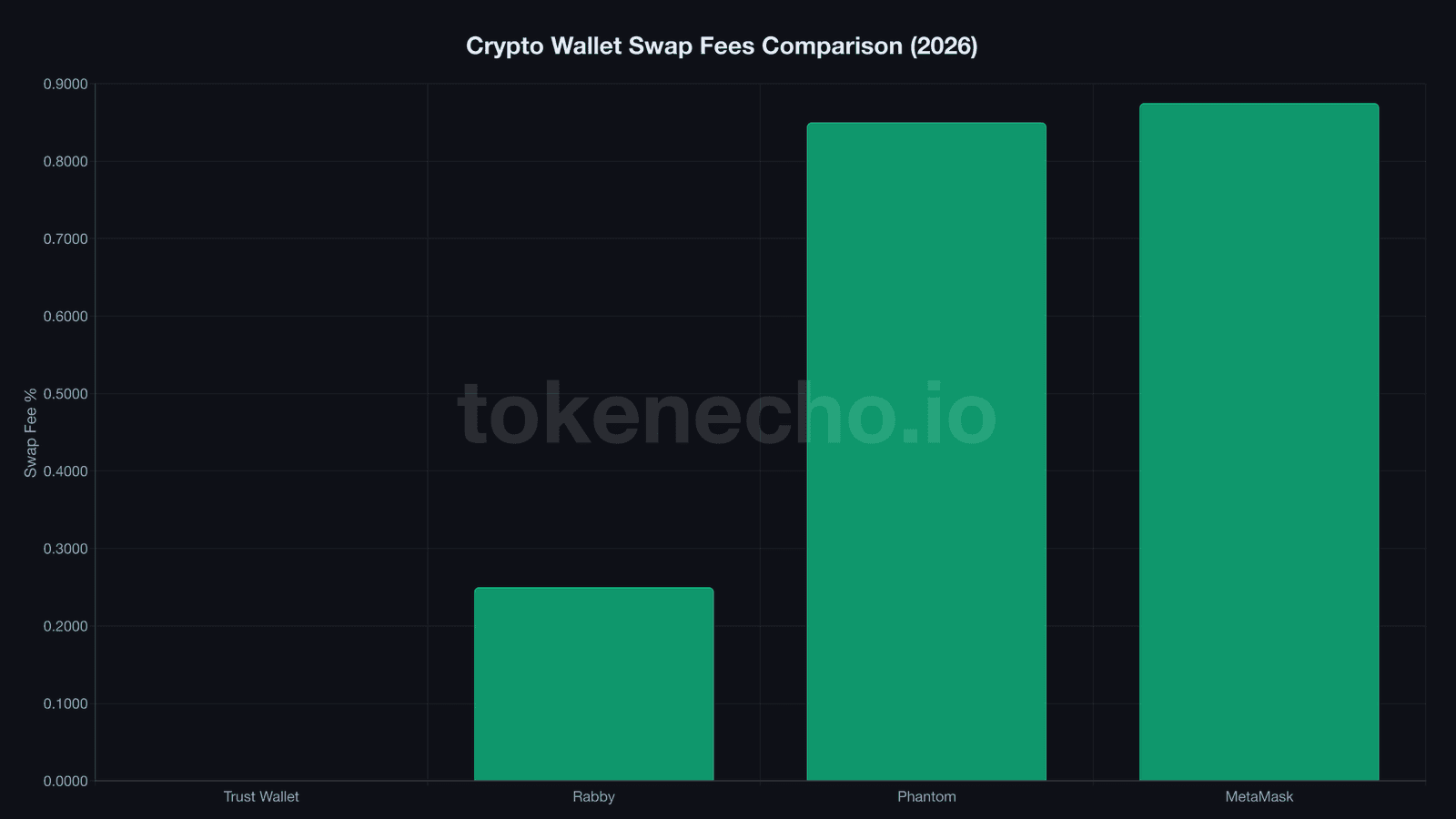
| Wallet | Swap fee | Staking cut | Card |
|---|---|---|---|
| MetaMask | 0.875% | 10-15% of rewards | $0-$199/yr |
| Phantom | 0.85% | SOL only | – |
| Trust Wallet | 0% | Multi-chain | $0 (Visa) |
| Rabby | 0.25% | – | – |
Swap $500 a week and MetaMask eats $227.50 per year in service fees alone. That’s before gas, before staking commissions, before the $9.99/month Transaction Shield subscription that covers up to $10,000 in monthly losses (but doesn’t cover phishing, seed phrase leaks, protocol exploits, or market losses – so what exactly does it cover?).
On top of that, MetaMask’s pooled staking takes a 15% cut of ETH rewards. Lido charges 10%. Rocket Pool charges 14% but routes it to node operators, not a corporation preparing for a stock market debut.
Why would anyone pay those premiums? Because most dApps still default to MetaMask as the connect-wallet option. Developers build MetaMask-first. That inertia – not the product, not the price – is MetaMask’s real moat.
The Ledger Connect Kit incident in December 2023 proved what that ecosystem is actually worth. MetaMask’s Blockaid security layer caught the supply chain attack in real time and shielded 100% of opted-in users – $1.15 million saved in a single afternoon. That kind of infrastructure doesn’t appear on a fee comparison chart.
30 million users, zero two-factor authentication
In January 2026, signature phishing attacks surged 207%, draining $6.27 million from 4,700 wallets in a single month according to Scam Sniffer data. Most victims were MetaMask users. Not because MetaMask was breached – because MetaMask’s user base is the biggest target in crypto.
MetaMask itself has never been hacked. The code sits publicly across 616 GitHub repositories with no known vulnerabilities. But Consensys swapped the license from MIT to a custom ConsenSys license that restricts commercial use above 10,000 monthly active users. Calling MetaMask “open-source” requires a pretty big asterisk now.
Blockaid, the default security layer since early 2025, scans transactions before signing and flags suspicious contracts across Ethereum, Polygon, Arbitrum, Avalanche, and Solana. Consensys claims it’s protected over $500 million in assets. Impressive.
But there’s no two-factor authentication. None.
For a wallet that now handles a debit card, stablecoin holdings, staking, and leveraged perp trading, the absence of 2FA feels like a bank that installed a vault but forgot the front door lock. Your entire MetaMask financial life hangs on a 12-word seed phrase and whatever password you picked for the browser extension. Pairing with a hardware wallet helps – Ledger and Trezor both work. Most of MetaMask’s 30 million users don’t bother.
MetaMask vs Phantom vs Trust Wallet vs Rabby – the honest comparison
So who actually threatens MetaMask’s crown?
Phantom raised $150 million at a $3 billion valuation in January 2025 and arguably ships the cleanest wallet UX in all of crypto. Built-in NFT gallery, transaction simulation before signing, 0.85% swap fees (barely below MetaMask’s 0.875%). But Phantom still feels Solana-first with Ethereum bolted on as an afterthought.
Trust Wallet boasts 220 million lifetime downloads and supports over 100 blockchains – more than any competitor. Zero swap fees sound incredible until you remember Trust Wallet makes its money through Binance’s broader ecosystem. The cost is subtler: you’re trading inside Binance’s orbit whether you realize it or not.
Rabby is the dark horse. Just 4.2 million installs, but beloved by DeFi power users for 0.25% swap fees, pre-sign transaction simulation, and support for 122+ EVM chains. No staking, no card, no stablecoin – just a clean, cheap wallet that does one thing well.
MetaMask’s edge comes down to breadth. No single competitor matches the full stack: 20+ native EVM chains plus Bitcoin, Solana, and TRON, a Mastercard integration, a native stablecoin, perp trading, prediction markets, an institutional version with Fireblocks and BitGo custody, and a looming token airdrop. Phantom can’t do that. Neither can Rabby.
Users exploring the Ethereum ecosystem – from buying ETH to staking it for yield – will find MetaMask handles the entire journey in one interface. That convenience has a price, though. Literally.
$MASK token, Consensys IPO, and what it means for wallet users
“There will be a MetaMask token,” said Joseph Lubin, Consensys CEO and Ethereum co-founder, in a September 2025 announcement – the first official confirmation from the company.
Consensys has raised $715 million across four rounds, with the March 2022 Series D pegging valuation at $7 billion. Secondary market shares on Forge traded near $29 in late 2025, implying a $10 billion+ valuation heading into the IPO.
And the regulatory headwind? Gone. The SEC agreed to dismiss all claims against Consensys – with prejudice – in February 2026. No fines. No conditions.
What caught our attention: the timing. SEC case dismissed in February. MetaMask Card launched the same month. IPO underwriters (JPMorgan, Goldman Sachs) hired in October. Token confirmed in September. Rewards program launched in October. This isn’t a company adding features for fun – it’s a company building a revenue flywheel before going public.
Polymarket odds place the $MASK launch somewhere in Q3-Q4 2026 with an estimated fully diluted valuation between $5 and $10 billion. Whether that makes the 0.875% swap fee feel more like a “membership cost” – well, that’s a personal calculation.
Who should use MetaMask in 2026 – and who shouldn’t
Is MetaMask the best crypto wallet? No. Is it the most complete? Probably.
MetaMask makes sense for users who want one app handling everything – swaps, staking, a debit card, perp trading, prediction markets – and don’t mind paying a premium for that convenience. The airdrop anticipation sweetens the deal if you’re already active.
Phantom is the better pick for Solana-native users who prize clean UX over feature breadth.
Rabby wins on cost for daily DeFi traders who don’t need a card or staking.
Trust Wallet works if you want maximum chain coverage and zero swap fees – just understand you’re trading inside Binance’s orbit.
And if security tops the priority list? Pair any of these with a Ledger or Trezor. MetaMask without a hardware wallet – especially now that it holds stablecoins, card funds, and staked assets – is a risk that 30 million people accept every single day.
For a deeper dive into wallet types and setup, see our complete crypto wallet guide.
MetaMask is betting its future on becoming the everything-app for crypto. The fees fund the ambition while the users fund the fees – and whether $MASK changes that equation depends on how Consensys prices the token and when the IPO actually lands.
This is not financial advice. DYOR. Data as of April 6, 2026.
Leave a Reply