



How to Buy Ethereum in 2026: A Step-by-Step Guide for Beginners
🕑 7 min read
You want in on the network that runs $97 billion in DeFi, processes the most stablecoin capital on Earth, and just got classified as a commodity by the SEC. Smart.
What Ethereum Actually Is (30-Second Version)
Bitcoin is digital gold. Ethereum is digital infrastructure – the operating system that most of crypto runs on.
Every time someone swaps tokens on Uniswap, borrows against their crypto on Aave, or buys an NFT on OpenSea, they’re using Ethereum. More than 52% of all stablecoins – $164 billion worth – live on this network. BlackRock’s tokenized money market fund runs on it. So does most of DeFi’s $97.6 billion in locked value.
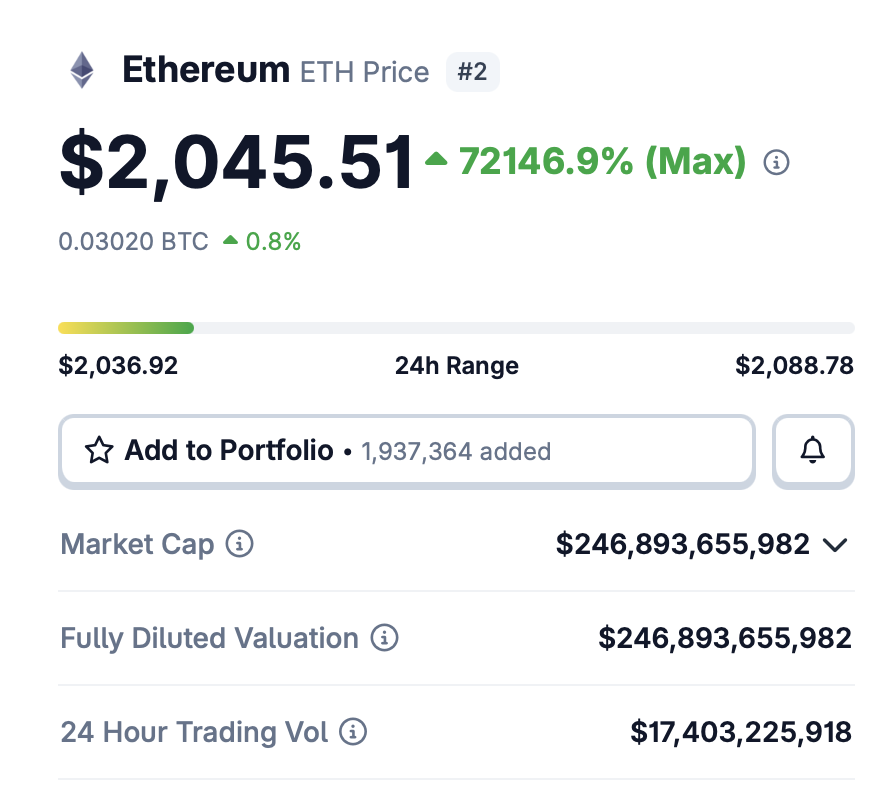
One ETH costs about $2,050 right now. Down 56% from its all-time high of $4,878. You don’t need a whole coin – $10 works fine. We’ll walk through everything.
Where to Buy ETH (Same Places, Different Details)
The same exchanges that sell Bitcoin sell Ethereum. But a few details change.
Coinbase is still the easiest on-ramp for Americans. Publicly traded, FDIC-insured cash deposits, clean interface. Fees sit around 1.5% per trade. They also let you stake your ETH directly for ~3.2% APY – which matters, because Ethereum pays you for holding it. More on that in a minute.
Kraken charges 0.16-0.26% and has been around since 2011. Their staking program offers 3-4% APY with flexible unstaking. If you’re buying more than $500 worth, the fee savings over Coinbase add up fast.
Binance.US has the lowest trading fees at 0.1%, but their interface looks like mission control at NASA. Great if you already know what a limit order is. Terrifying if you don’t.
One critical difference from buying Bitcoin: some platforms sell “wrapped” or synthetic ETH instead of actual ETH. On PayPal and Robinhood, you technically can’t move your ETH to your own wallet or stake it on-chain. For a first purchase that might be fine. For anything serious, use a real exchange.
The Sign-Up (You’ve Done This Before)
Passport or driver’s license. Maybe a selfie. Possibly a utility bill if the exchange is feeling thorough.
KYC verification takes anywhere from instant to 48 hours. Coinbase usually clears within minutes. Kraken can take a day. Binance is somewhere in between – depends on how many people are signing up that week.
Don’t bother with exchanges that skip ID verification. Every single one that did either got shut down by regulators or exit-scammed their users. Both outcomes involve you losing money.
Funding Your Account
Bank transfer (ACH): Free on most platforms. Takes 1-3 business days. Best option for 99% of people.
Debit card: Instant but 2-4% fee. Buying $500? You just donated $10-20 to Visa for the privilege of immediacy. Worth it exactly once – for your first test purchase.
Wire transfer: Same-day but $15-30 fee. Only makes sense above $5,000.
Apple Pay / Google Pay: Some exchanges support it now. Fees vary (usually 1-2%). Convenient for small buys under $200.
Go with the bank transfer. That 1-3 day wait disappears from memory. The fees don’t.
Buying Your First ETH
Open the app. Search “Ethereum” or “ETH.” Tap “Buy.” Enter a dollar amount. Confirm.
You now own Ethereum.
At $2,050 per coin, $100 gets you about 0.0488 ETH. Nobody measures their stack in whole coins anymore – that era ended when ETH passed $1,000. What matters is the dollar amount and whether you have a plan.
Speaking of plans: don’t dump your entire budget in one shot. ETH swung from $4,100 to $2,050 in three months. The person who went all-in at $4,100 is staring at a 50% loss. The person who bought $200 every week averaged in around $2,900 and feels completely different about their position.
Dollar-cost averaging isn’t exciting. It’s effective. There’s a reason every financial advisor on Earth recommends it – it works in stocks, it works in crypto, it works in anything that’s volatile.
The Thing Bitcoin Doesn’t Have: Staking
This is where Ethereum diverges from the Bitcoin playbook. When you stake ETH, you’re locking it up to help validate transactions on the network. In return, you earn roughly 3-4% annually. That’s yield. On a digital asset. Without lending it to anyone sketchy.
Three ways to do it:
Exchange staking (easiest). Coinbase and Kraken let you stake with one click. Coinbase takes a 25% cut of rewards (so your 3.2% becomes ~2.4% net). Kraken’s cut is smaller. You can unstake anytime – the days of locked staking ended in 2023.
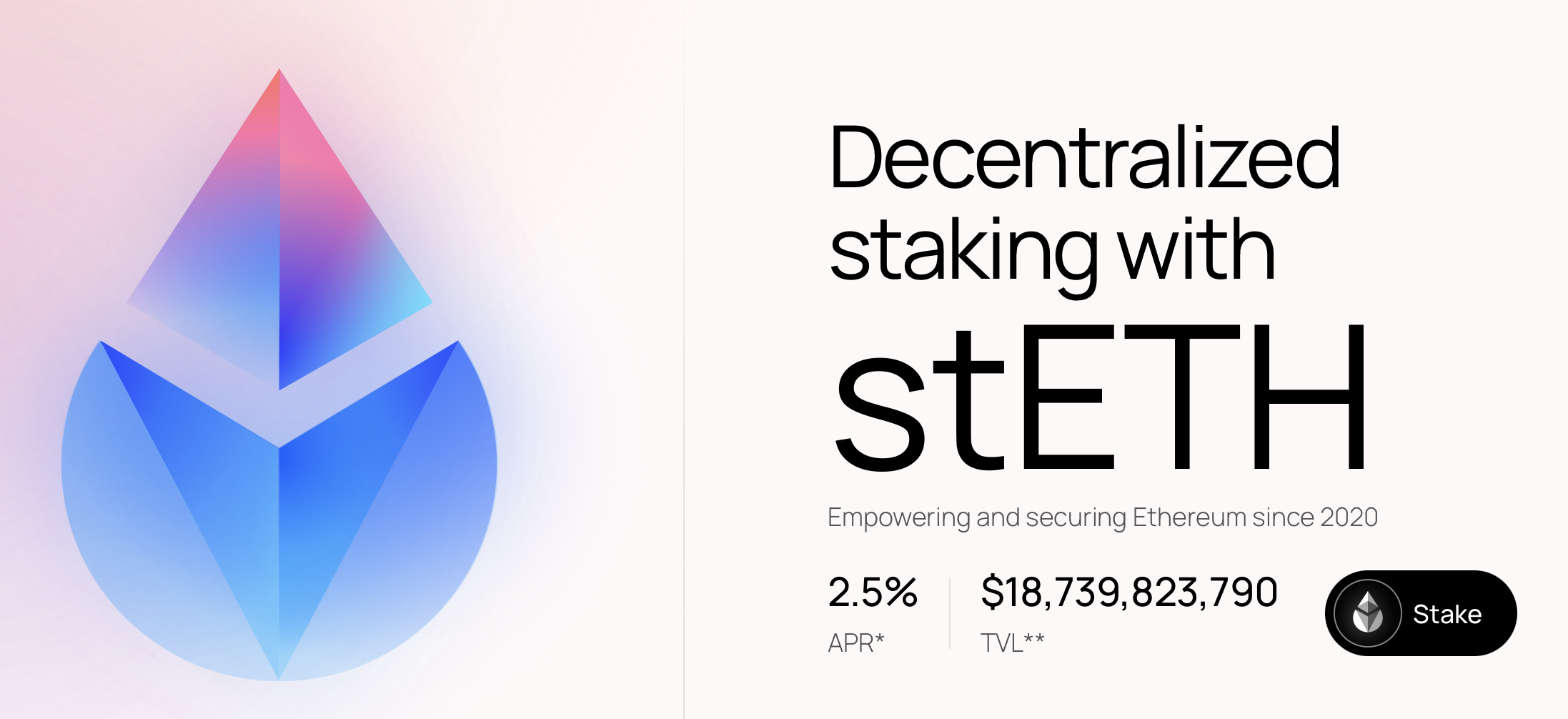
Lido (most popular). You deposit ETH into Lido’s smart contract and receive stETH – a liquid token representing your staked position. Current APY: ~2.5%. You can use stETH across DeFi while still earning rewards. Over $18.7 billion in ETH is staked through Lido. The tradeoff? Smart contract risk. If Lido gets hacked, your ETH goes with it.
Solo staking (hardest). Run your own validator node with 32 ETH ($65,600). Full rewards, no middleman cut. But you need technical skills, reliable hardware, and 99.9% uptime. This isn’t a beginner move.
For your first purchase? Exchange staking. Turn it on, forget about it, collect 2.4-3.4% while you sleep.
Moving ETH Off the Exchange
Same rule as Bitcoin: “not your keys, not your coins.” FTX didn’t distinguish between assets when it collapsed. Everything on the platform vanished – BTC, ETH, stablecoins, all of it.
Software wallets (free): MetaMask is the standard – works on mobile and browser. It’s the wallet that most DeFi apps connect to. Alternatively, Coinbase Wallet (separate from the exchange app) or Rainbow Wallet if you want something prettier.
Hardware wallets ($60-150): Ledger Nano S Plus ($79) or Trezor Safe 3 ($79). Physical device, offline storage. Your ETH can’t be stolen remotely even if your computer gets compromised. For anything over $1,000 in crypto, this is worth the investment.
When you withdraw from the exchange, you’ll need your wallet address – a long string starting with “0x”. Copy-paste it. Don’t type it manually. One wrong character sends your ETH into the void forever. And double-check the first and last four characters before hitting send.
Network fees (gas): Ethereum charges transaction fees that vary by network demand. Right now, a simple transfer costs $0.50-3.00. During peak congestion it can spike to $10-50. Check gas fees before withdrawing – etherscan.io/gastracker shows real-time prices.
The Mistakes That Cost Real Money
Buying altcoins before understanding ETH. Half the tokens on Ethereum are garbage. The other half might be, too. Master the base asset first. If you can’t explain what Ethereum does, you have no business buying tokens built on top of it.
Ignoring gas fees on small transactions. Sending $50 of ETH when gas costs $8 means you lost 16% to network fees. Batch your transactions. Or use Layer 2 networks (Base, Arbitrum, Optimism) where fees drop to pennies.
Panic-selling during crashes. ETH dropped 94% in 2018. Then hit new all-time highs. Dropped 82% after the 2021 peak. The SEC just classified it as a commodity alongside Bitcoin. Nobody’s telling you what to do – but history has a pattern, and people who sold the bottom tend to regret it.
Falling for “ETH giveaway” scams. No, Vitalik Buterin is not doubling your ETH. No, that YouTube livestream is not real. Every single crypto giveaway is a scam. Every. Single. One.
Not tracking taxes. In the US, every trade – ETH to USD, ETH to another token, even swapping on Uniswap – is a taxable event. CoinTracker or Koinly can pull your exchange history automatically. Do this before April, not during April.
What You’re Really Buying
Ethereum isn’t just a coin. It’s a revenue-generating network. In 2025, the network burned over $2.8 billion in ETH through its fee-burn mechanism (EIP-1559), making ETH deflationary during high-activity periods. Validators earned billions more in staking rewards and tips.
When you buy ETH and stake it, you’re buying a share of that economic engine. When BlackRock launches a staking ETH ETF – and they’ve filed for exactly that – institutional capital gets the same access.
That doesn’t mean the price goes up. It means the asset has fundamentals worth analyzing beyond “number go up.” For a deeper look at where ETH might head from here, we’ve published a data-driven Ethereum price prediction through 2030.
This is not financial advice. DYOR. Data as of March 27, 2026.