

🕑 7 min read
Every centralized exchange wants your passport before you trade a single dollar.
But millions of people swap crypto without KYC every day – no selfie, no utility bill, no “routine compliance review” that freezes funds for weeks. Decentralized exchanges, often called DEXs, let you trade directly from your own wallet.
Connect, swap, disconnect. Your private keys never leave your device.
And in April 2026, with Europe’s MiCA regulation tightening identity requirements on centralized platforms and the Travel Rule expanding to cover more transaction types, non-custodial swapping isn’t just convenient. It’s becoming the default for traders who value privacy and control.
Uniswap processes billions in weekly volume. Jupiter on Solana handles swaps for less than a penny in gas. ChangeNow converts BTC to ETH without even requiring a wallet connection.
This guide covers all of them – with real costs, actual steps, and the traps that catch beginners.
Your wallet already has a built-in exchange
Open Trust Wallet. Tap “Swap.” Pick ETH on one side, USDC on the other. Hit confirm.
Thirty seconds later, you’ve exchanged $500 in tokens without creating an account anywhere. Trust Wallet – with over 100 million downloads, the most popular non-custodial mobile wallet on the market – routes your trade through DEX aggregators like 1inch and Paraswap behind the scenes. It charges zero service fees on swaps. You only pay the underlying pool fee (typically 0.25-0.3%) and the blockchain’s gas cost.
That means a $500 ETH-to-USDC swap on BNB Chain costs about $1.35 total. On Solana, it drops below a dollar.
MetaMask offers the same “Swap” button – but the price tag stings. The wallet tacks on a 0.875% service fee on every trade, which on a $500 swap means $4.38 gone before gas even kicks in. We covered MetaMask’s full fee breakdown in our review – the short version: convenient, but expensive.
Both wallets get one critical thing right: your tokens stay in your wallet until the moment the swap executes on-chain. No deposits, no withdrawal queues, no exchange-side “maintenance windows” that conveniently appear when a coin pumps 40%.
DEX fees are lower than you’d expect (mostly)
A $500 swap through MetaMask costs $4.38 in service fees alone. Going directly to a DEX cuts that by 70% or more.
Uniswap started this entire category back in 2018. It now runs on Ethereum, Arbitrum, Base, Optimism, and Polygon. Pool fees vary by pair – stablecoin swaps cost as little as 0.01%, while most token pairs charge 0.3%. On Ethereum mainnet, gas adds $2-15 depending on congestion.
But swap through Uniswap on Arbitrum or Base instead, and gas drops to under $0.10. Same liquidity, same interface, a fraction of the cost.
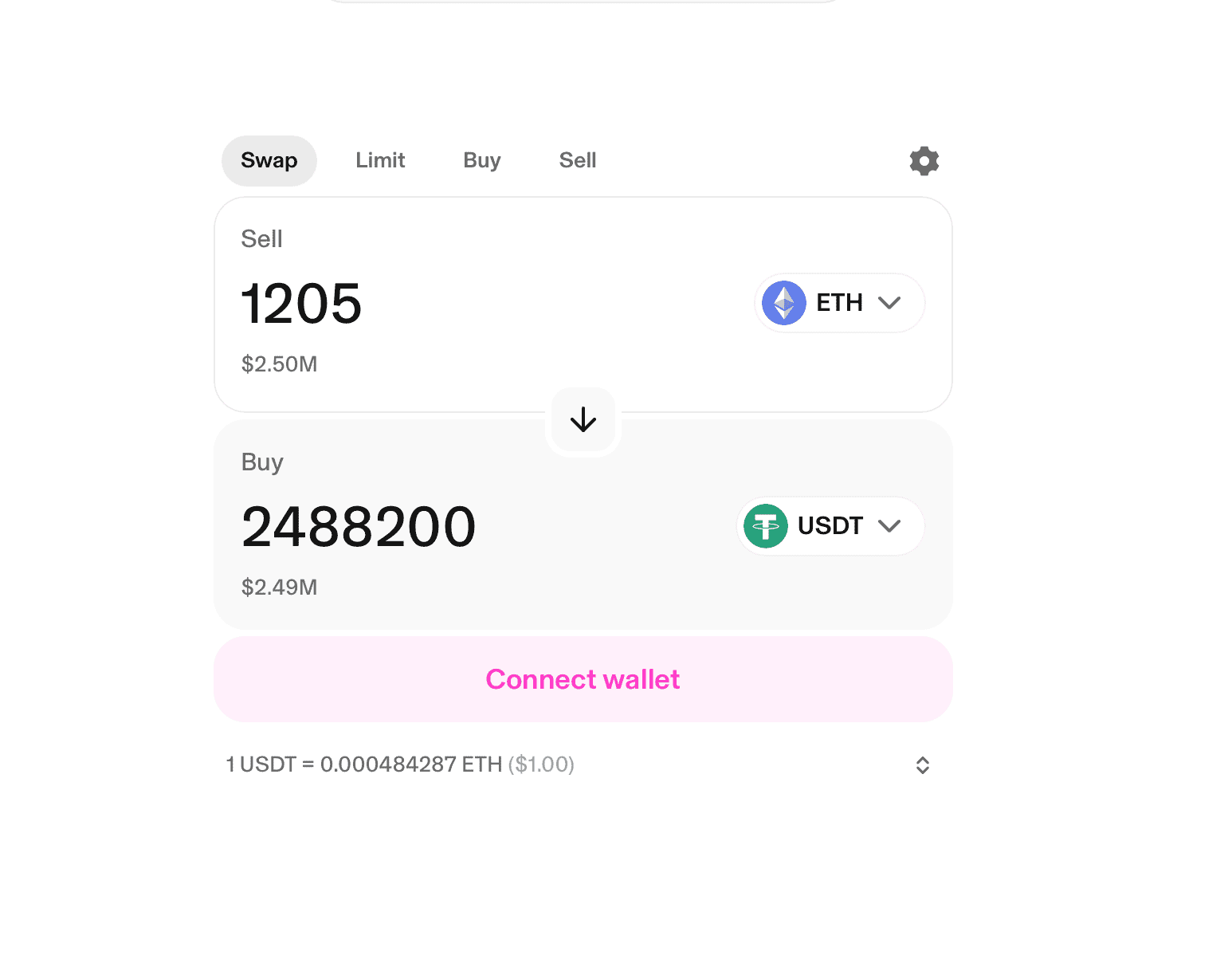
“I definitely hope that centralized exchanges go burn in hell as much as possible,” Vitalik Buterin said at TechCrunch Sessions in July 2018. Eight years later, DEXs haven’t killed centralized exchanges. But they’ve made them optional.
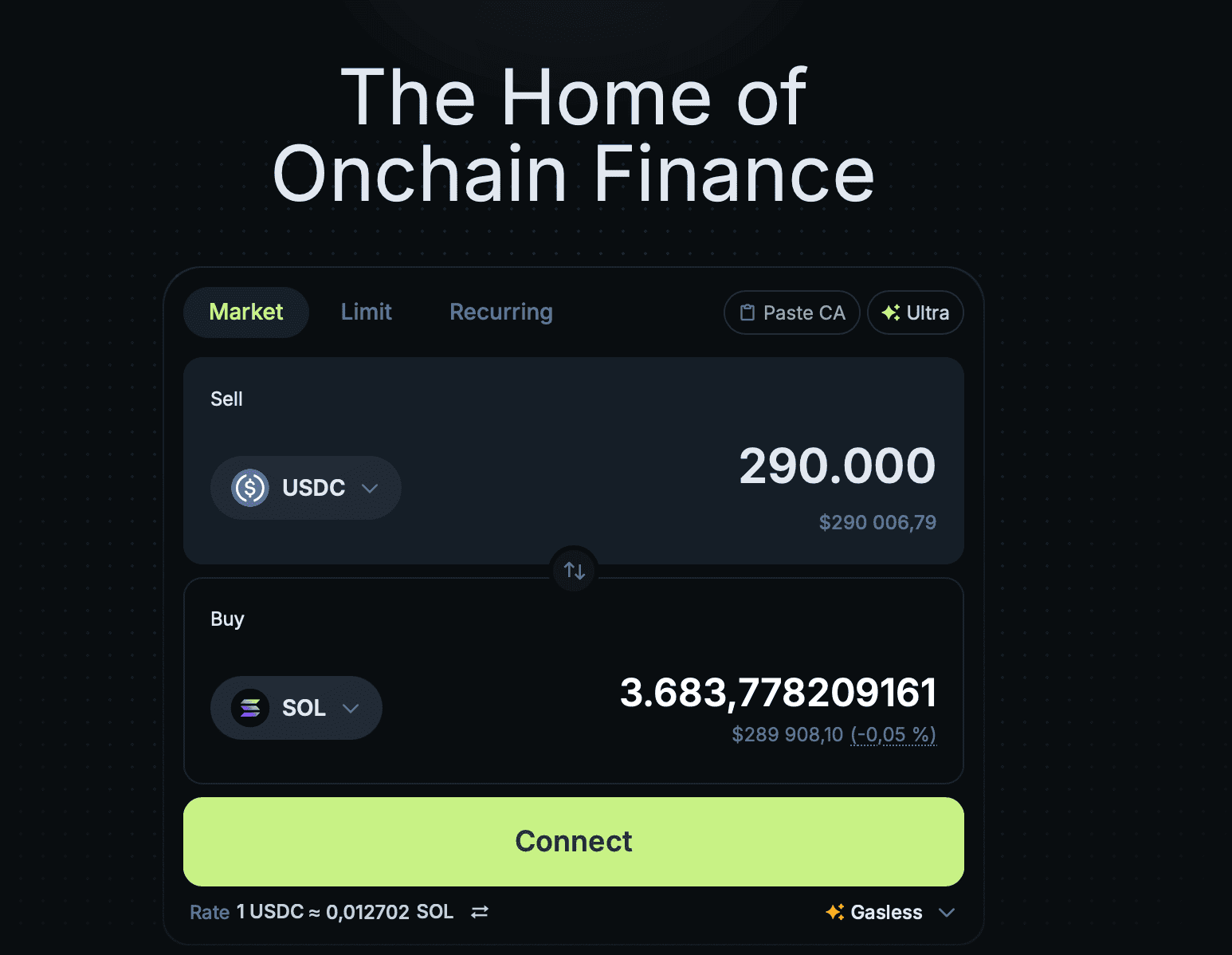
Jupiter is the Solana equivalent – and in many ways, the better product. It aggregates liquidity from every DEX on Solana and automatically splits trades across pools for the best price. Total cost: less than $0.01 in gas.
Jupiter also offers limit orders and DCA, features most CEXs charge premium accounts for. For anyone swapping SOL-based tokens, it’s hard to justify using anything else.
PancakeSwap owns BNB Chain with a 0.25% trading fee and roughly $0.10 gas per swap. The interface feels cluttered – lottery buttons, prediction games, and NFT promotions compete for screen space – but the swap engine itself works fine.
And then there’s 1inch, which isn’t a DEX at all. It’s an aggregator that scans dozens of DEXs simultaneously and routes your trade through whichever combination gives the best price. No extra fee.
Its “Fusion” mode deserves special attention. Resolvers execute your swap and cover the gas cost for you – meaning you can trade on Ethereum without holding any ETH for gas. Why do you need ETH to swap tokens that aren’t ETH? That question trips up every newcomer. 1inch Fusion just makes it irrelevant.
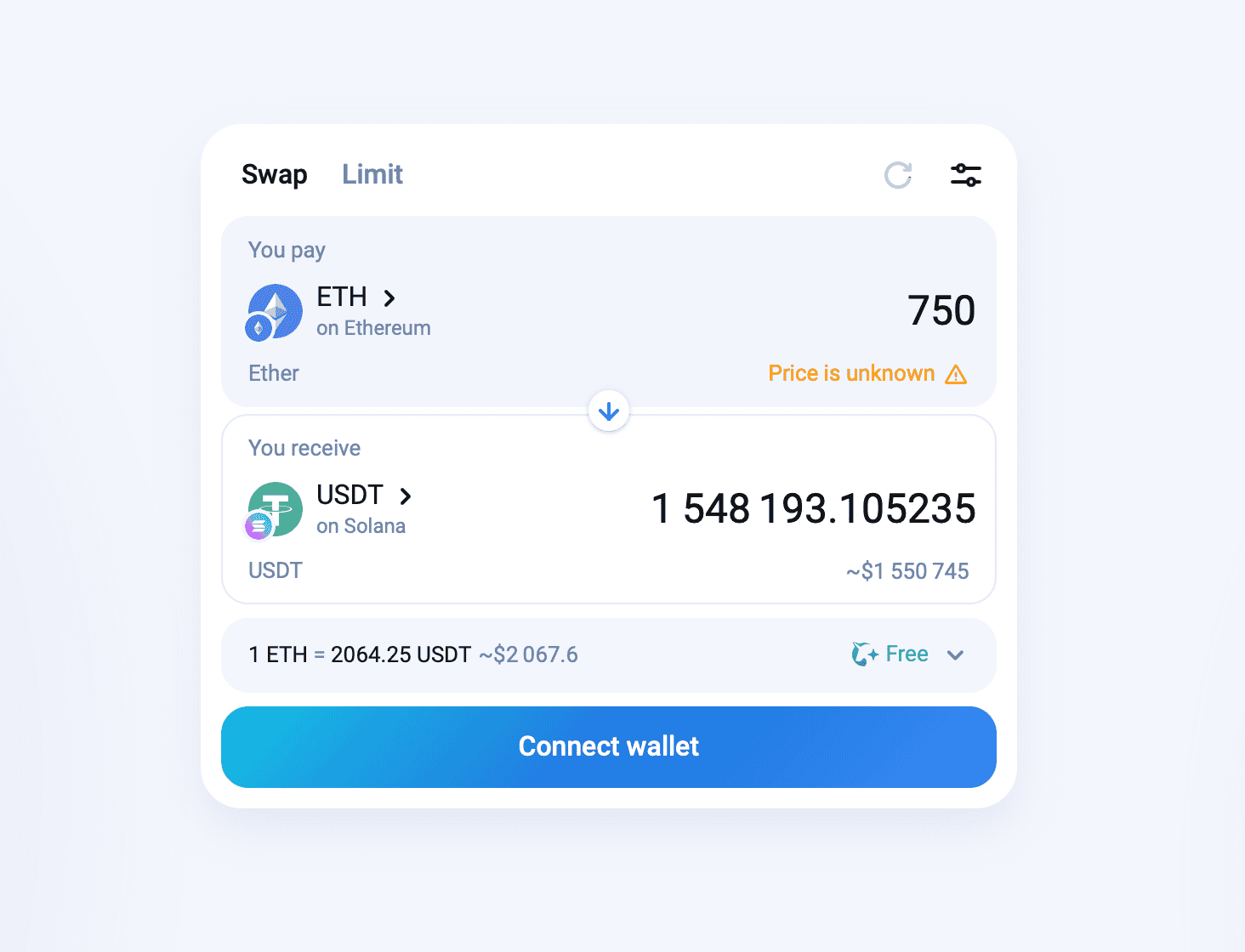
Uniswap and PancakeSwap are the airline websites. 1inch is Kayak – it searches every carrier and picks the cheapest route. Same destination either way.
Cross-chain swaps – no registration, no waiting
What happens when you need to convert BTC to ETH? Uniswap can’t help – it only works within a single blockchain. Neither can Jupiter.
That’s where instant swap services fill the gap.
ChangeNow is the most straightforward option. Visit the site, pick your input coin, pick your output, enter a recipient wallet address, and send. No account, no wallet connection, no KYC for standard-sized trades – though unusually large amounts may trigger a verification request.
The trade completes in 5-30 minutes depending on network confirmations. The cost sits inside the exchange rate – usually a 0.5-2% spread versus the mid-market price.
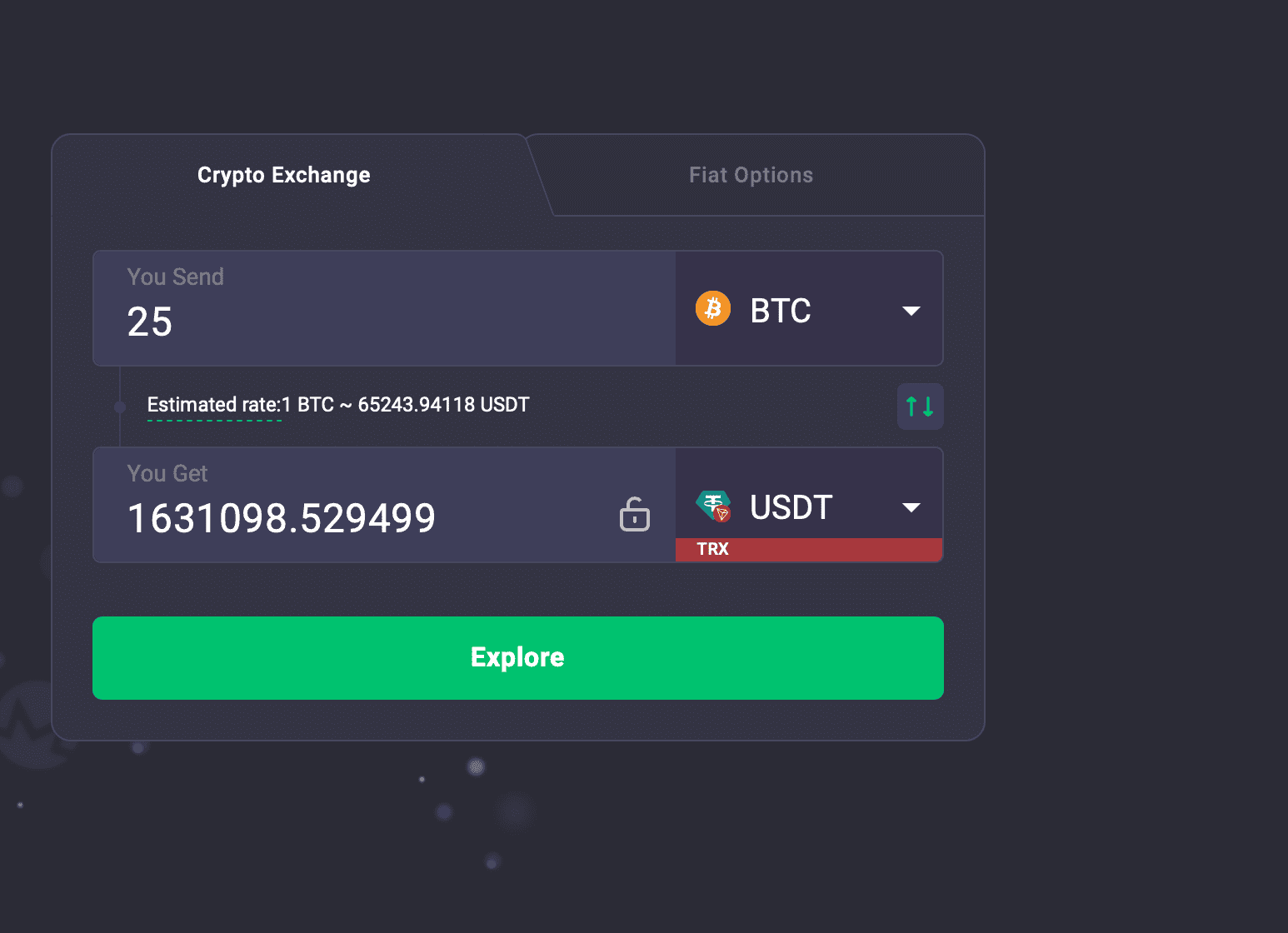
Changelly has operated since 2015 – one of the longest-running instant swap platforms still standing. It offers fixed-rate and floating-rate options. Fixed rate locks your price for 30 minutes, which matters when BTC drops 2% in an hour like it did this morning.
Registration is optional.
SimpleSwap follows the same model: no registration, 1,500+ coins, clean interface. All three services compete mostly on spread and pair selection, so checking rates across each before a large swap can save real money.
The FTX lesson nobody wants to repeat
There’s a practical reason self-custody matters, and it isn’t philosophical.
When FTX collapsed in November 2022, $8.7 billion in customer funds got trapped overnight. No warning. No appeal.
The third-largest exchange in the world – endorsed by Super Bowl celebrities, valued at $32 billion – simply stopped processing withdrawals. It’s the crypto equivalent of a bank locking its doors mid-business day, except this bank had no FDIC insurance and no phone number to call.
Every single DEX swap in this guide avoids that scenario. Your tokens sit in your wallet.
The smart contract executes atomically – either both sides of the trade complete, or neither does. No intermediary holds your funds “for safekeeping.”
Gas fees, slippage, and the traps worth knowing
Swapping without KYC doesn’t mean swapping without costs. Three things eat into your returns – and all of them are avoidable.
Gas varies wildly by chain. A Uniswap swap on Ethereum mainnet runs $5-15 during peak hours – that’s enough to wipe out the savings on a small trade.
Drop down to Arbitrum, and the same swap costs $0.05-0.15. Jupiter on Solana? Under a penny.
If you’re swapping less than $200, mainnet gas alone eats 3-7% of your trade value. Stick to an L2 or a cheaper chain for small amounts.
Slippage – the difference between the quoted price and the execution price – hits hardest on low-liquidity pairs. New or micro-cap tokens can slip 2-5% or worse. Most DEXs default to a tolerance around half a percent, which works for major pairs like ETH/USDC.
And if a token “requires” 10%+ slippage to trade? That’s almost always a scam.
Fake tokens are the one risk centralized exchanges genuinely protect against. Anyone can deploy a contract called “USDC” or “Wrapped Bitcoin” on Ethereum or Solana. Always verify token contract addresses through CoinGecko or the project’s official site before confirming. Uniswap and Jupiter both display warnings for unverified tokens. Don’t dismiss them.
If you don’t have a non-custodial wallet yet, our beginner’s guide to crypto wallets covers Trust Wallet, MetaMask, and hardware options. And for buying your first crypto before swapping, our step-by-step Bitcoin guide walks through the cheapest fiat on-ramps.
DEXs keep getting cheaper and more capable every quarter. The unresolved question is whether regulators let that trend continue – or whether non-custodial swaps face the same KYC mandates as centralized exchanges before 2027.
This is not financial advice. DYOR. Data as of April 7, 2026.
Sources
- Uniswap – DEX, Ethereum + L2s
- Jupiter – DEX aggregator, Solana
- PancakeSwap – DEX, BNB Chain
- 1inch – DEX aggregator, multi-chain
- ChangeNow – instant swap, cross-chain
- Changelly – instant swap, cross-chain
- SimpleSwap – instant swap, cross-chain
- Trust Wallet – non-custodial wallet with built-in swap
- MetaMask – non-custodial wallet with built-in swap
- CoinGecko – market data (ETH $2,069, SOL $78.86, BNB $596 as of April 7, 2026)
Leave a Reply