

🕑 3 min read
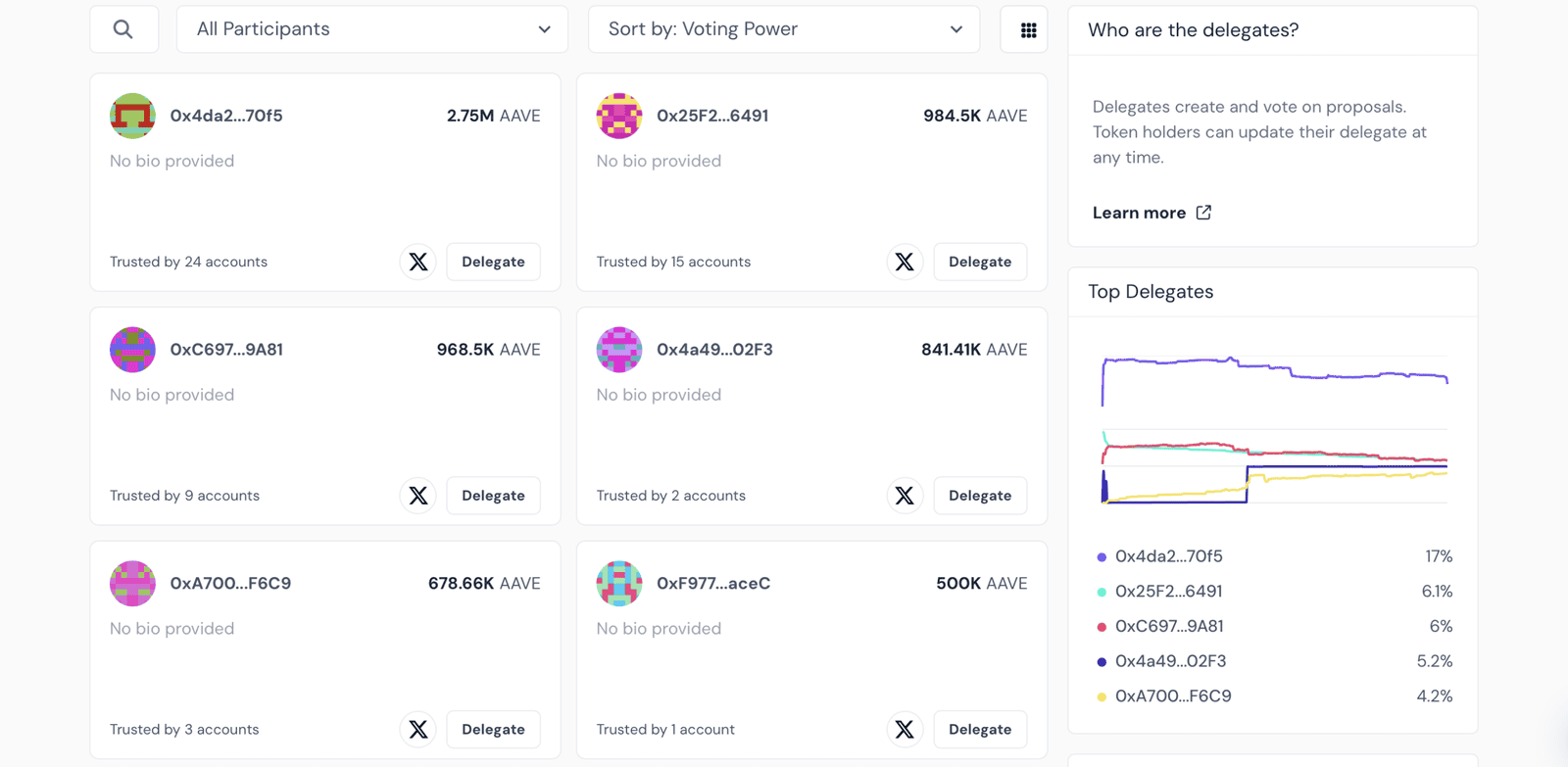
A new ECB working paper found that top-100 holders control over 80% of governance tokens across four major DeFi protocols – and one-third of the biggest voters can’t even be identified.
So much for decentralization.
The European Central Bank dropped a working paper on March 26 that examined governance structures inside Aave, MakerDAO, Uniswap, and Ampleforth. What they found isn’t subtle: decision-making power in these “decentralized” protocols sits with a handful of wallets. And that matters, because it could strip them of their EU regulatory exemption.
The Numbers Are Brutal
The ECB team analyzed token holdings and voting patterns across all four protocols. The concentration was consistent – and stark.
Ampleforth’s top 20 voters control 96% of all delegated voting power. Not 96% of tokens – 96% of actual votes. MakerDAO’s top 10 voters hold 66%. Uniswap’s top 18 account for 52%. In every case, the top 100 token holders own more than 80% of the governance supply.
And roughly one-third of these top voters? They can’t be publicly identified. The ECB found that major wallet holders include protocol teams, venture capital firms, university blockchain clubs, and centralized exchanges – with Binance as the single largest identified CEX holder across all four protocols.
“Some major DeFi projects are not as decentralized in practice as they seem, especially early on, when a small group still has meaningful influence over decisions,” said Kavi Jain, Senior Research Associate at Bitwise.
Why This Matters: MiCA’s “Decentralization” Loophole
Europe’s Markets in Crypto-Assets Regulation, which went fully live in late 2024, includes a carve-out for “fully decentralized” crypto services. If a protocol has no identifiable issuer or service provider, MiCA doesn’t apply.
That exemption was always fragile. Now the ECB just handed regulators the data to challenge it.
If Aave, Uniswap, or MakerDAO can’t prove sufficient decentralization, they’d need to register as Crypto Asset Service Providers under MiCA. That means capital requirements, formal governance structures, consumer protection obligations, and regulatory reporting. For protocols that operate through smart contracts and community votes, that’s a fundamental redesign – or an EU exit.
The timing isn’t coincidental. European regulators have been watching DeFi protocols navigate the growing wave of global crypto regulation with increasing skepticism. The ECB paper gives them ammunition.
Market Reaction: Crickets (For Now)
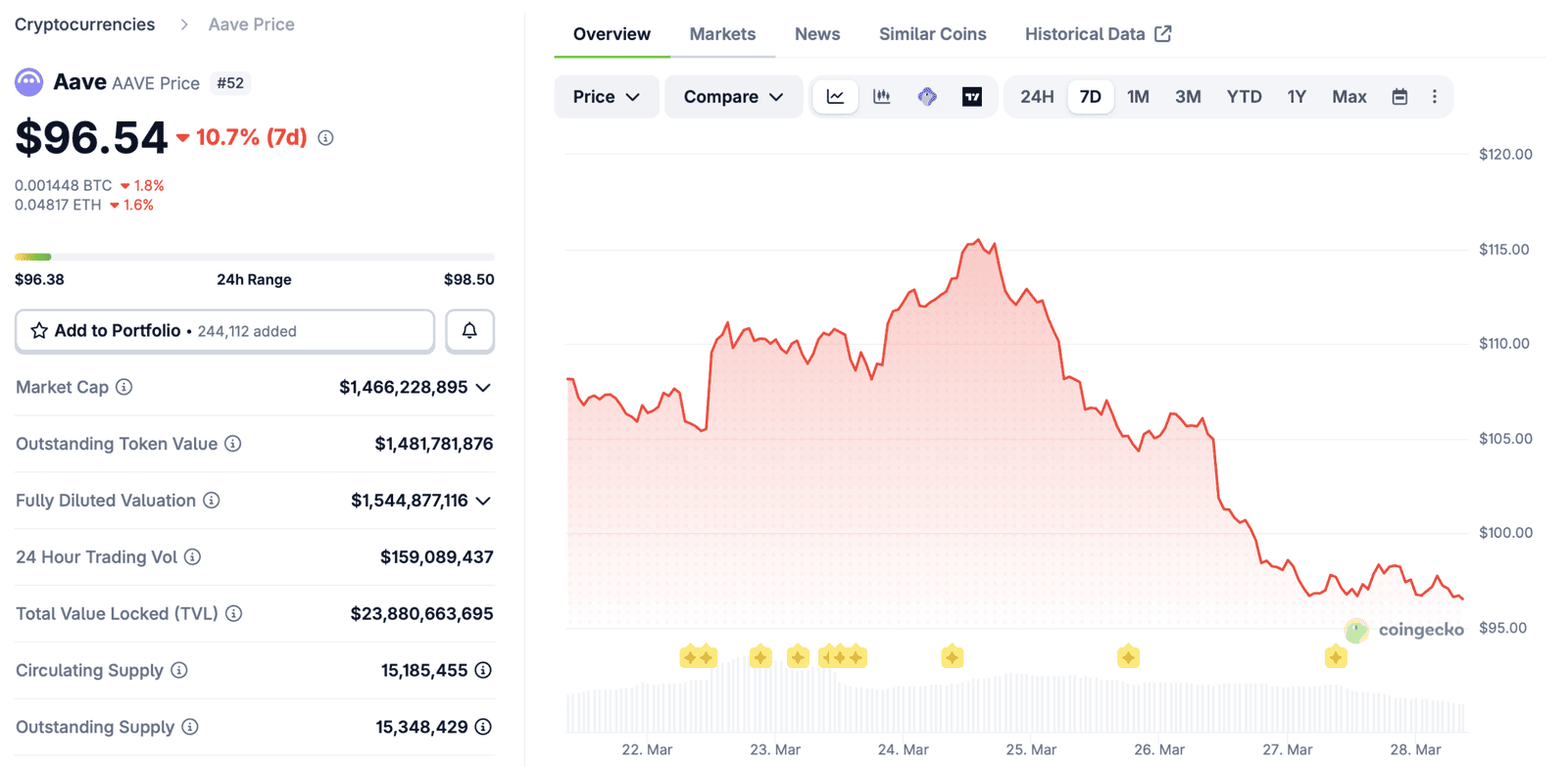
You’d think a direct threat to EU market access would move prices. It hasn’t. AAVE trades at $96.56 with $1.47 billion market cap. UNI sits at $3.39 ($2.15 billion). MKR holds $1,644.
None of these tokens flinched – which is either the market dismissing the ECB paper as academic noise, or simply not paying attention yet. The same market that shrugged off DeFi’s $97.6 billion TVL resilience during the crash might also be ignoring the regulatory iceberg ahead.
The Uncomfortable Question
The ECB paper doesn’t say these protocols are bad. It says they’re not what they claim to be. When 20 wallets control 96% of votes in a “decentralized” protocol, that’s a corporation with extra steps.
And here’s the real problem: blockchain data can’t clearly distinguish whether those major wallets belong to founders, developers, treasury accounts, or exchange customers. If regulators can’t identify who’s steering the ship, they’ll default to treating the whole thing as a regulated entity.
DeFi has always argued that code is law and governance is distributed. The ECB just measured it. The numbers say otherwise.
Whether Brussels actually acts on this paper or lets it gather dust is the next question. But for the first time, a central bank put hard data behind what skeptics have argued for years: DeFi governance isn’t decentralized. It’s oligarchic.
This is not financial advice. DYOR. Data as of March 29, 2026.
Leave a Reply