


Congress Just Voted to Regulate a $26B Market Most Crypto Traders Don’t Know Exists
🕑 5 min read
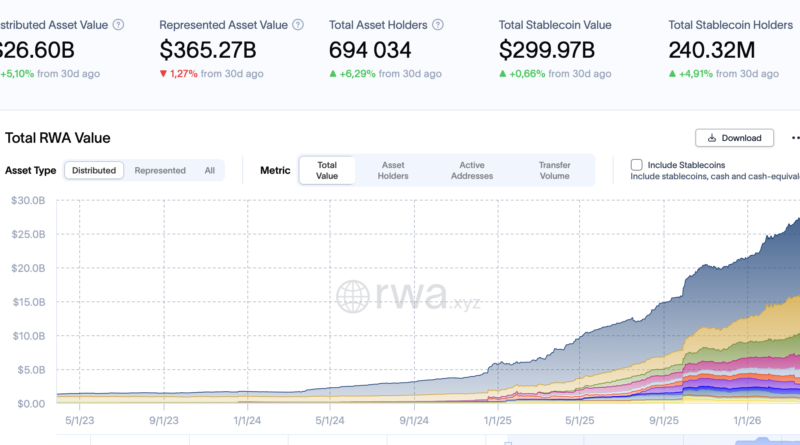
There’s a $26.48 billion market growing on-chain right now that gets almost zero attention on crypto Twitter. No memes. No price predictions. No Elon tweets. Just quiet, steady capital flowing into tokenized treasuries, real estate, and private credit – and it grew 5.25% last month while Bitcoin was busy crashing on Iran headlines.
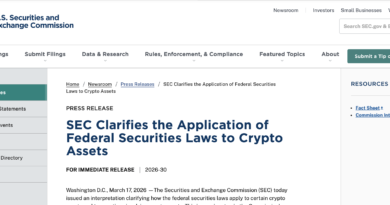
Yesterday, the House Financial Services Committee held the most significant tokenization hearing in congressional history. The room was packed. The agenda was dense. And the outcome could determine whether traditional finance merges with blockchain or stays on the sidelines for another decade.
We’ve been watching the CLARITY Act inch through Congress for months. What happened this week changes the timeline for everyone holding crypto.
What Actually Happened on March 25
Two things landed within hours of each other.
The House hearing – titled “Tokenization and the Future of Securities: Modernizing Our Capital Markets” – brought together regulators, asset managers, and blockchain builders to answer a question that’s been hanging over the industry since 2017: can you legally put stocks, bonds, and real estate on a blockchain?
The consensus in the room was yes. The debate was about how.
Separately, Senators Thom Tillis and Angela Alsobrooks confirmed they’ve reached an “agreement in principle” on the provision that had blocked the CLARITY Act for months: stablecoin yield. The deal is clean – passive yield from simply holding a stablecoin is banned. Activity-based rewards tied to transactions and platform usage stay legal. The White House backed it.
That single compromise unblocks the entire Digital Asset Market Clarity Act from moving to Senate markup, now targeted for the second half of April. Senator Bernie Moreno put it bluntly: if the bill doesn’t pass by May, digital asset legislation may not move again for years.
The $26 Billion Nobody’s Watching
While Congress debates frameworks, the market isn’t waiting.
Tokenized real-world assets have reached $26.48 billion in distributed on-chain value as of March 23, according to rwa.xyz. But that number undersells what’s actually happening. The represented asset value – including platform-locked tokens – stands at $387 billion. That’s the pipeline of capital sitting at the door, waiting for legal clarity to enter.
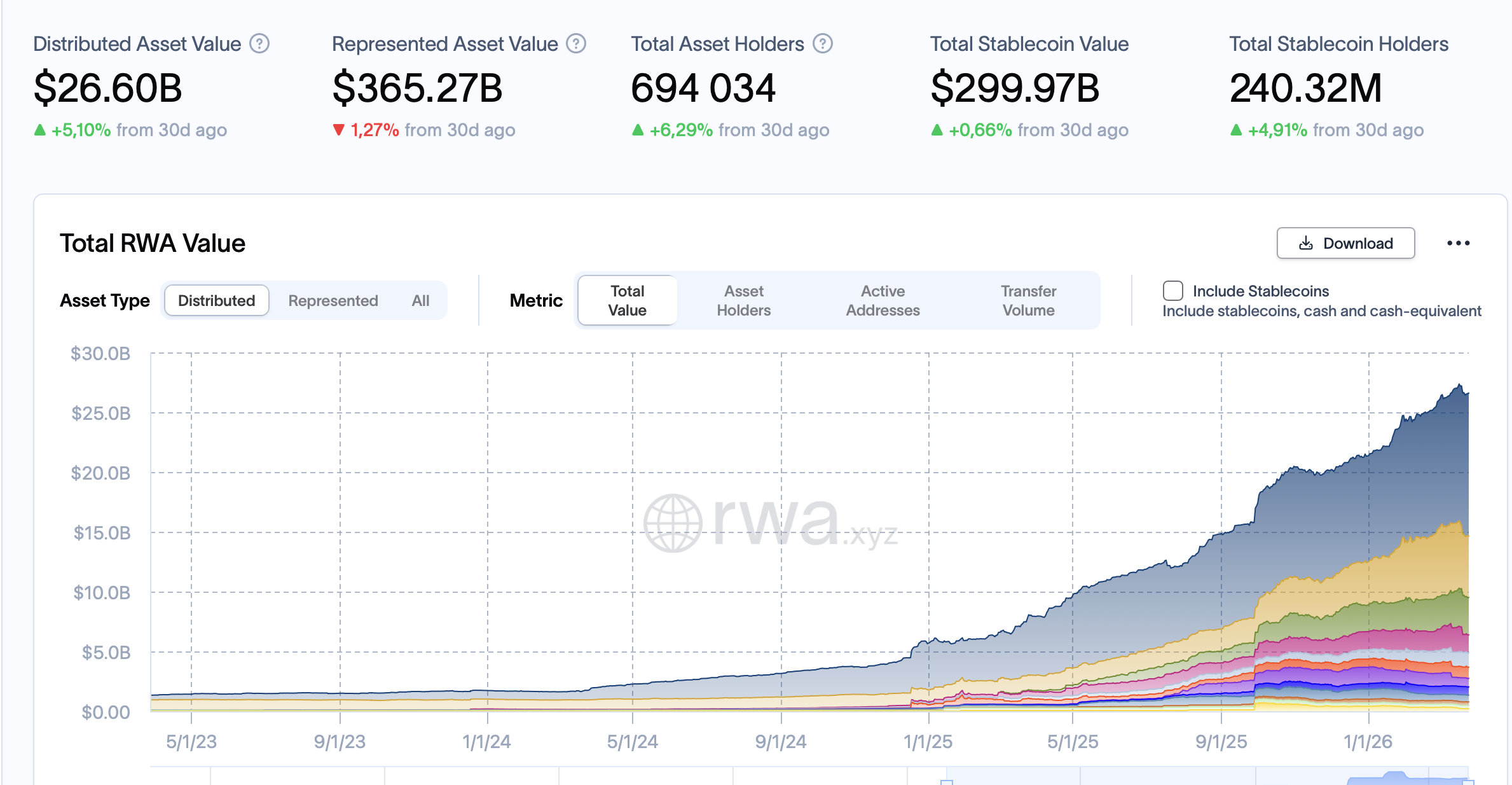
To put $26 billion in context: that’s larger than the entire DeFi ecosystem was in January 2021, before the bull run turned DeFi into a household word. And unlike DeFi summer’s speculative yield farms, RWA tokenization is backed by actual assets – U.S. Treasuries, corporate bonds, commercial real estate.
BlackRock’s BUIDL fund alone holds over $1 billion in tokenized treasuries. Franklin Templeton’s BENJI fund is live. JPMorgan’s Onyx platform processes billions in repo transactions using tokenized collateral. This isn’t experimental anymore. Wall Street is already here – they’re just waiting for Congress to make it officially legal.
What the CLARITY Act Actually Does (And Why It Matters)
The bill answers one question that has paralyzed institutional adoption: is a tokenized asset a security or a commodity?
That question sounds academic until you realize it determines everything. Which regulator oversees it. Which exchanges can list it. Which investor protections apply. Which compliance frameworks are required. Whether your fund can buy it without triggering a regulatory violation.
The CLARITY Act creates a statutory framework – not guidance, not enforcement actions, actual law – that classifies tokenized assets into five categories: digital commodities, digital collectibles, digital tools, stablecoins, and digital securities. Only the last category falls under full SEC oversight. Everything else sits outside securities regulation.
For institutional capital, this is the difference between “we’d love to allocate but our lawyers said no” and “here’s the compliance checklist, let’s deploy.” Survey data shows 43% of family offices plan to allocate to digital assets within 12 months once regulatory clarity exists. The CLARITY Act is that clarity.
Who Wins and Who Loses
Not every crypto project benefits equally from this bill. The winners are protocols that serve as infrastructure for tokenized assets.
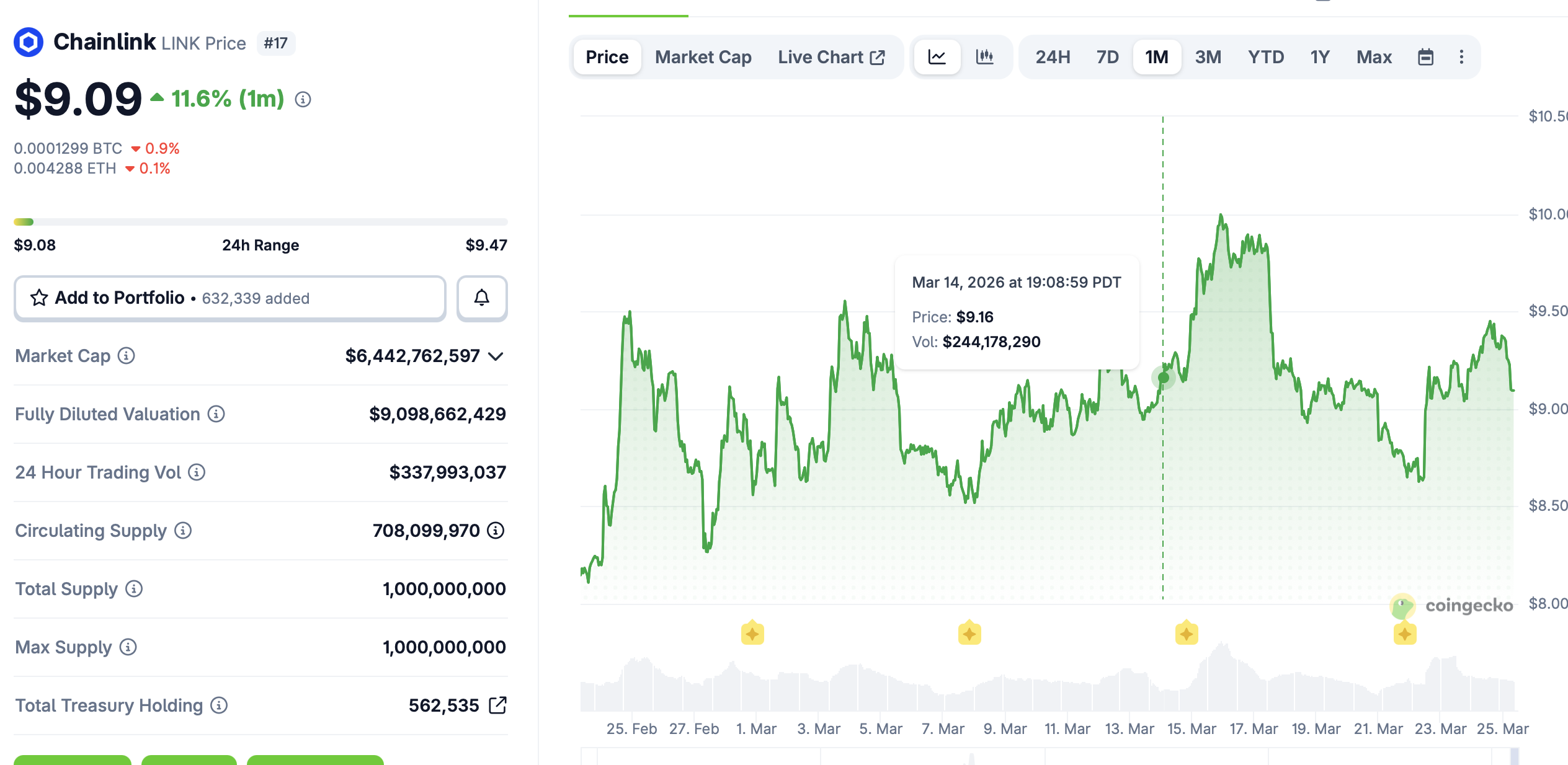
Chainlink sits at the center of the RWA ecosystem. Almost every major tokenization project uses Chainlink’s oracles to verify off-chain asset prices and feed them to on-chain contracts. LINK is up 11.3% over 30 days – and if RWA tokenization scales from $26 billion to $100 billion+, oracle demand scales with it.
Ondo Finance has built its entire business around tokenized treasuries and yield products. The CLARITY Act’s framework would validate Ondo’s core product line under federal law.
Aave and Maple Finance benefit as lending protocols that could serve as the DeFi infrastructure for tokenized asset collateralization – imagine borrowing against tokenized real estate at DeFi rates instead of bank rates.
The losers are stablecoin projects built entirely around passive yield. The Tillis-Alsobrooks compromise bans earning rewards simply for holding a stablecoin. Projects whose entire value proposition is “park your dollars and earn yield” need to pivot to activity-based models or face regulatory headwinds. This potentially affects smaller stablecoin issuers more than Tether or Circle, which have diversified revenue streams.
The May Deadline Nobody’s Pricing In
The Senate Banking Committee markup is targeted for mid-to-late April. If it passes committee, floor vote follows. If it doesn’t pass by May – according to Senator Moreno – the legislative window closes.
Why May? Congressional calendars fill up with budget negotiations, midterm positioning, and recess schedules. Digital asset legislation isn’t a priority for most senators – it’s being carried by a small bipartisan coalition that needs momentum. Lose momentum, lose the bill.
For crypto markets, this creates a binary event horizon. Either the CLARITY Act passes and unlocks institutional RWA flows at a scale that dwarfs current DeFi TVL – or it stalls and the regulatory ambiguity that has kept trillions on the sidelines persists for the foreseeable future.
The $26.48 billion already on-chain is what happens without legal clarity. Imagine what happens with it.
This is not financial advice. DYOR. Data as of March 26, 2026.
Sources
- rwa.xyz – Tokenized RWA market data ($26.48B on-chain, $387B represented value)
- Congress.gov – H.R.3633 CLARITY Act full text
- FinTech Weekly – Tokenization hearing details
- CoinDesk – Tillis-Alsobrooks stablecoin yield agreement
- CoinGecko – LINK price data
- SEC.gov – SEC/CFTC commodity classification framework