
🕑 4 min read
Twenty-eight trillion dollars.
That’s how much transaction value has flowed through Chainlink’s infrastructure since launch. The network controls over 70% of the global oracle market. JPMorgan and UBS are running live settlement tests on it. Visa just completed a cross-border payment pilot using it.
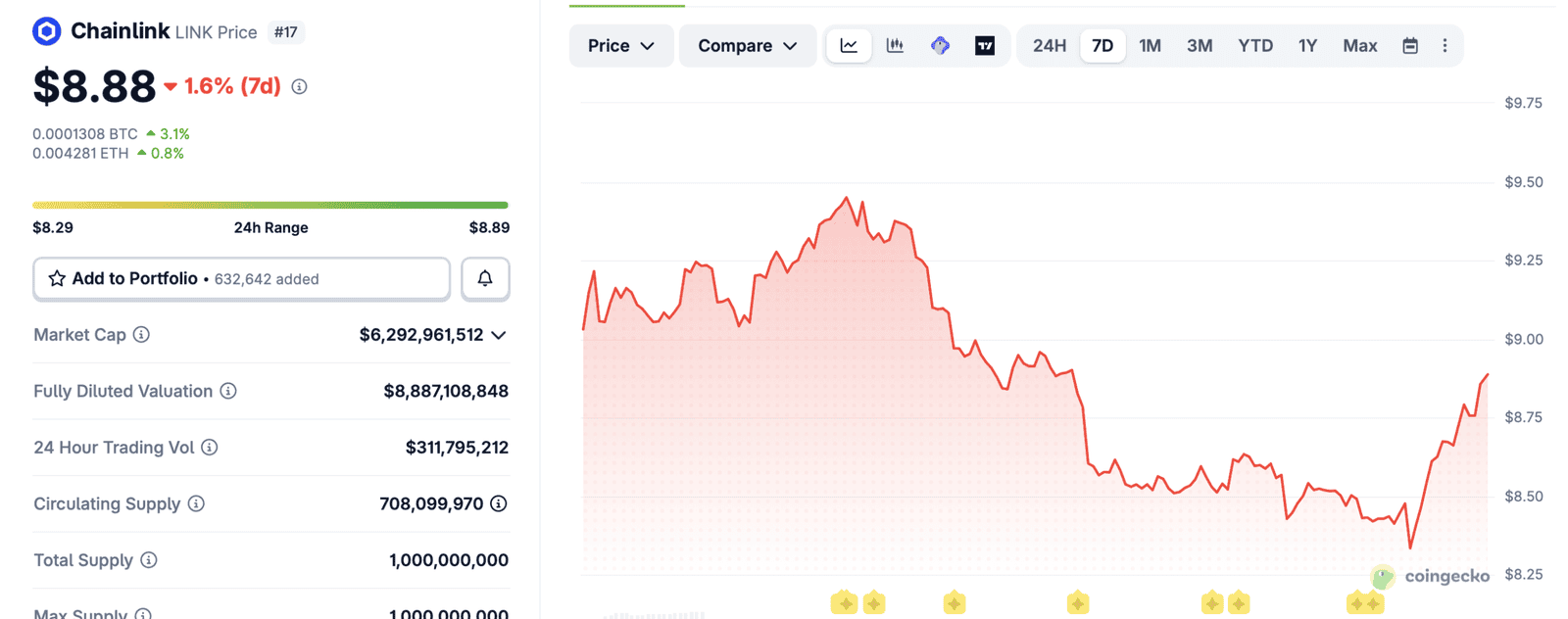
And LINK trades at $8.87. Down 83% from its all-time high of $52.70, set back in May 2021. With a market cap of $6.28 billion, Chainlink is valued less than a mid-tier regional bank – while processing more institutional volume than most of them.
Something doesn’t add up. Or maybe it does, and the answer is just uncomfortable.
$18 Billion a Month, and Accelerating
Chainlink’s Cross-Chain Interoperability Protocol – CCIP – just crossed $18 billion in monthly transfer volume for the first time. That’s a 62% jump from February alone.
The protocol now spans 17 blockchains after adding 26 new integrations in March. SBI Group, Japan’s largest financial conglomerate, recently joined the ecosystem. Engagement metrics spiked 499% as institutions tested blockchain infrastructure through Chainlink’s rails.
For context, $18 billion a month puts CCIP ahead of several mid-size payment networks. And this is just cross-chain transfers – it doesn’t include Chainlink’s core oracle business, which feeds price data to virtually every major DeFi protocol in existence.
So why is the token languishing below $10?
Crypto’s Biggest Free-Rider Problem
Where does the $75 million in annual oracle fees go? Not to LINK holders. Every dollar flows to node operators – the entities running Chainlink’s infrastructure. Holders bear 100% of the price risk and receive exactly 0% of the revenue.
This isn’t a bug. It’s the design.
LINK functions as utility collateral, not an equity-like asset. You need it to pay for oracle services. But owning it gives you no claim on the cash flows the network generates. It’s like owning stock in a toll road company – except the tolls go to the construction workers, and shareholders get a thank-you note.
That $18 billion in monthly CCIP volume? Node operators capture the fees. The $28 trillion in secured value? Great for Chainlink Labs’ pitch deck. Irrelevant to your portfolio.
This is the core tension institutional analysts keep flagging. Standard Chartered projects LINK reaching $25 to $45 by mid-2026, driven by CCIP adoption. But even they acknowledge the value accrual question remains unresolved.
The Visa Pilot Nobody Noticed
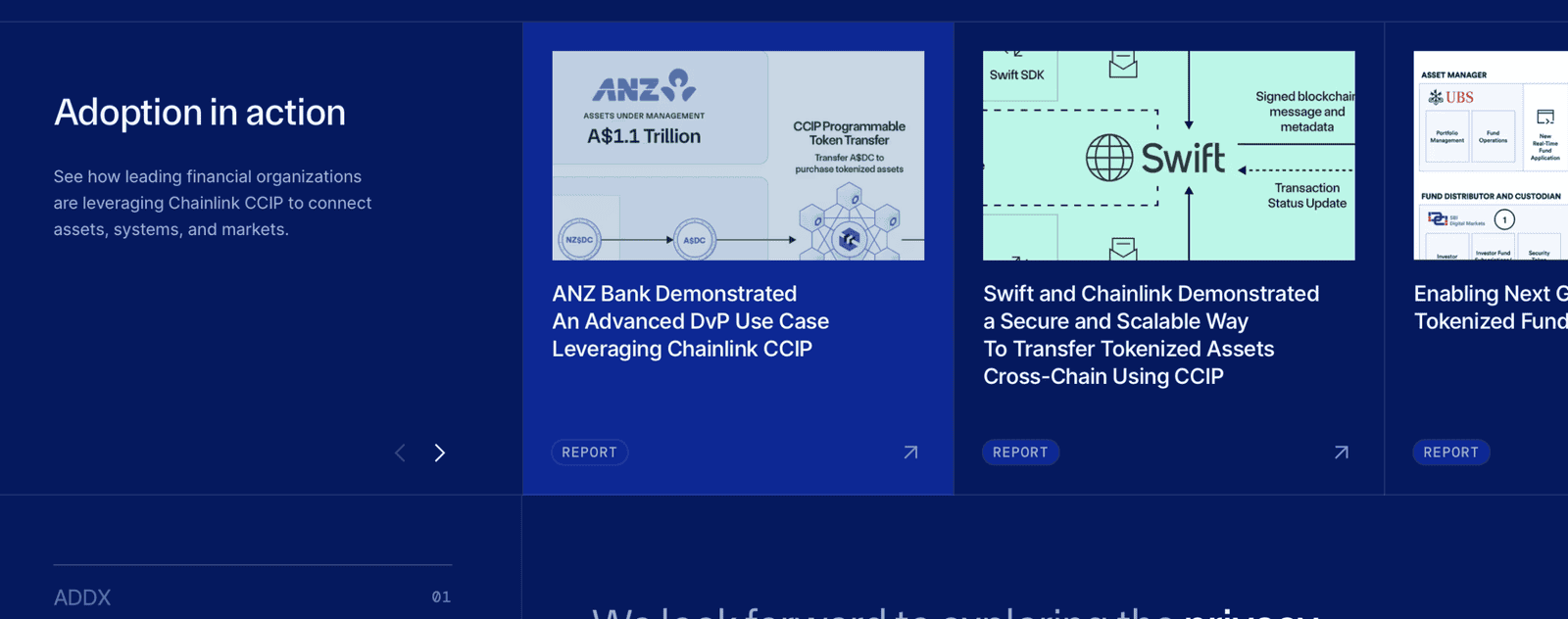
On March 5, Visa, Fidelity International, ANZ, and China Asset Management completed a cross-border settlement pilot using Chainlink’s CCIP under the Hong Kong Monetary Authority’s e-HKD programme.
Read that again. Visa. Fidelity. A central bank programme. Settled through a crypto protocol.
The pilot achieved near real-time atomic settlement – simultaneous payment and asset delivery – reducing cycles from days to seconds. It used Chainlink’s Digital Transfer Agent standard to automate tokenized fund issuance with on-chain NAV data.
In any other context, a crypto project getting Visa and Fidelity to run live settlements through its infrastructure would be front-page news for weeks. LINK moved about 2% that day.
The market has become numb to Chainlink’s enterprise wins because enterprise wins don’t translate to token holder value. Not yet, anyway.
The RWA Trigger That Could Change Everything
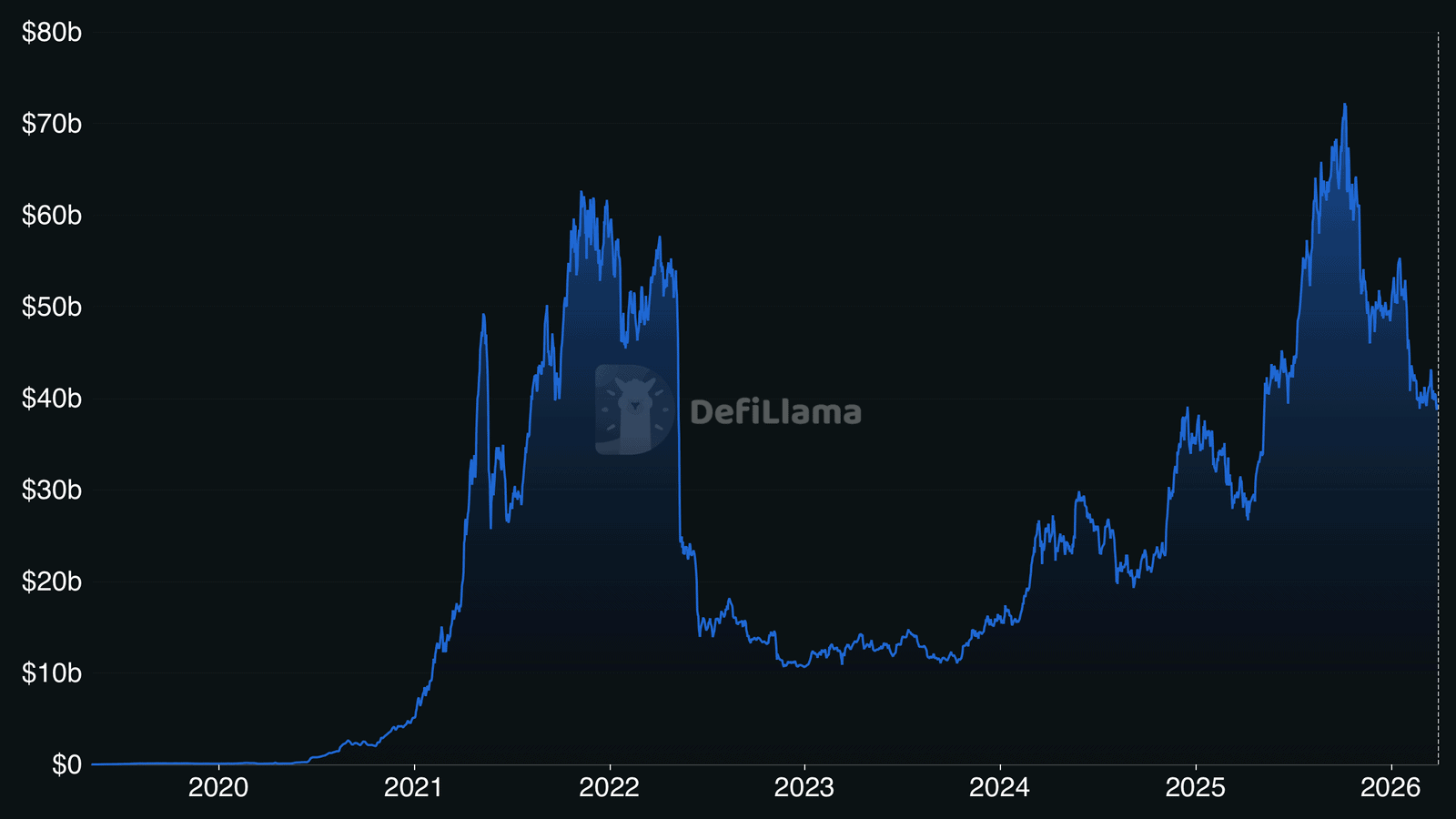
There’s a reason Chainlink keeps showing up in every tokenization and RWA conversation. The CLARITY Act, which passed committee in late March, creates a regulatory framework for the $26.48 billion tokenized asset market. Chainlink’s oracle infrastructure is the backbone – it provides the off-chain data feeds that tokenized assets need to function.
JPMorgan’s Kinexys platform. UBS’s settlement tests. SBI Group’s integration. These aren’t experiments anymore. They’re production pipelines for a market that banks estimate could reach $150 trillion in digitized assets by 2030.
And Chainlink sits at the center of all of it. With a market cap smaller than Dogecoin’s.
Can Anything Actually Fix the Token?
Two mechanisms could bridge the gap between Chainlink’s utility and LINK’s price:
Chainlink Reserve. This newer system automatically converts fees paid in USDC or ETH into LINK on the backend. Institutional users don’t need to touch the “volatile crypto token” – but LINK still captures 100% of the demand. It’s clever. Whether it generates enough buying pressure to move a $6 billion market cap is another question.
Staking v0.2. Chainlink has been rolling out staking with modest yields, but the real prize is fee redistribution – giving stakers a cut of oracle and CCIP revenue. If that happens, LINK transforms from a utility token into something resembling a yield-bearing asset. The staking roadmap has been painfully slow, though. Holders have been waiting since 2022.
The bear case is straightforward: Chainlink’s adoption is priced in, the token economics are fundamentally broken, and no amount of enterprise partnerships will fix a utility token with zero yield. CoinCodex models LINK staying near $10 through mid-2026.
The bull case requires you to believe that $18 billion in monthly volume, $28 trillion in secured value, and the entire RWA tokenization wave will eventually force a redesign of the token’s economics. Standard Chartered’s $25-$45 target assumes exactly that.
Between those two camps, LINK sits at $8.87, up 5% today and still 83% below its peak – the most adopted and least rewarded token in crypto.
This is not financial advice. DYOR. Data as of March 30, 2026.
Sources
- CoinGecko – LINK price, market cap, ATH, supply data
- Chainlink Blog – Enterprise partnerships, CCIP milestones
- CoinReporter – CCIP $18B monthly volume milestone
- MEXC News – Visa, ANZ, Fidelity e-HKD pilot details
- DefiLlama – Chainlink oracle market data
Leave a Reply