
🕑 4 min read
Bitcoin adoption just hit its biggest milestone since El Salvador – and almost nobody noticed.
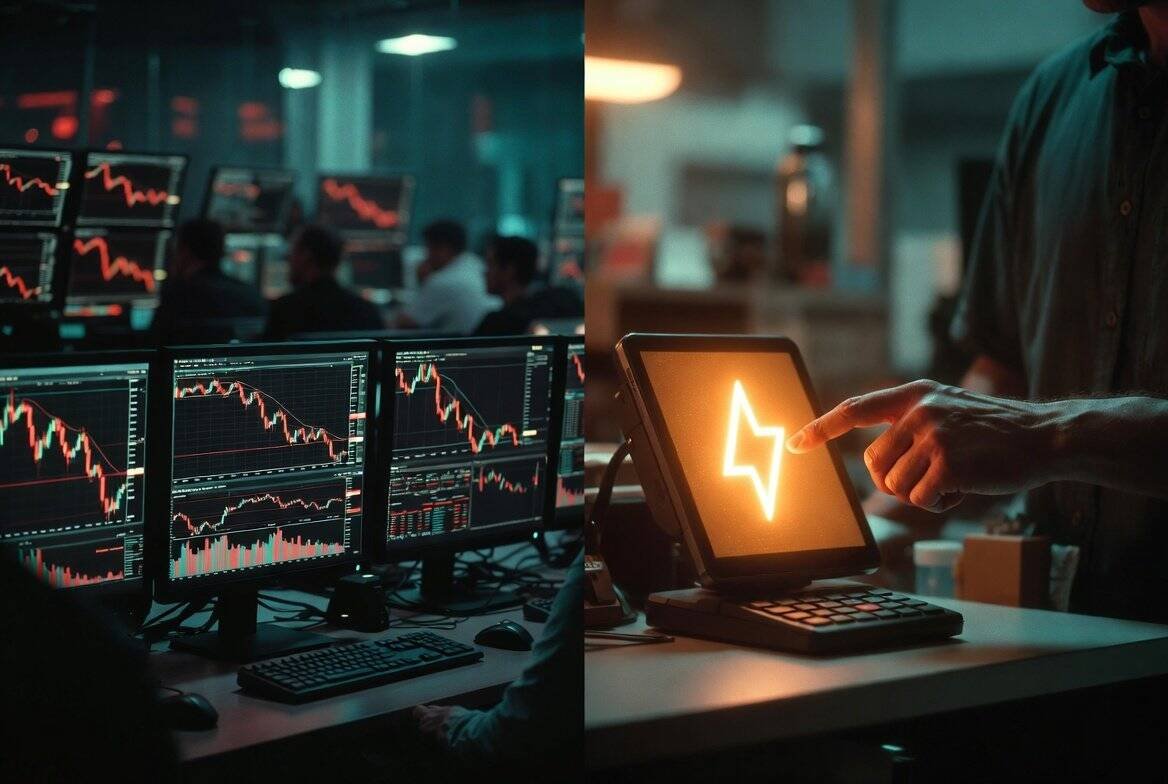
Four million businesses woke up on Sunday morning with Bitcoin payments enabled by default on their Square terminals. No opt-in required. No new hardware. No permission asked.
Square just auto-enabled Bitcoin payments across its entire U.S. merchant base, and it did so while Bitcoin trades at $66,396 – down 47% from its all-time high – and the Fear & Greed Index clings to 11. That’s 59 consecutive days of extreme fear, the longest streak since FTX imploded.
The timing isn’t accidental. It’s strategic.
Lightning at the Register: Zero Fees, Instant Settlement
The mechanics are straightforward. A customer scans a QR code at checkout, pays in BTC through the Lightning Network, and the merchant receives U.S. dollars in seconds. No volatility risk. No custody headaches. No processing fees – Square is waiving them entirely through the end of 2026. Starting 2027, a flat 1% fee kicks in.
For context, Visa and Mastercard charge merchants 2-3% per swipe. That’s the real story buried underneath the Bitcoin headline – Square isn’t just offering crypto payments. It’s undercutting the entire card network on price.
“We have a lot of hope for this,” Jack Dorsey said during Block’s November earnings call, when beta merchants described the system as “really easy” to use.
And the Lightning Network can handle the load. Capacity recently hit an all-time high of 5,637 BTC, with monthly transactions exceeding 8 million and a 99%+ success rate in controlled deployments.
The Opt-Out Gamble That Could Change Everything
What makes this rollout fundamentally different from Stripe’s stablecoin integration or Shopify’s Coinbase Commerce plug-in? The default setting.
Stripe and Shopify require merchants to opt IN to crypto. Square flipped the script – merchants are opted in automatically. They can turn it off, sure. But behavioral economics tells us most won’t bother. That’s the same principle that turned employer 401(k) auto-enrollment from a niche idea into the backbone of American retirement savings.
This single design decision could do more for Bitcoin’s payment utility than every Lightning wallet startup combined.
$139 Billion Waits on the Sidelines
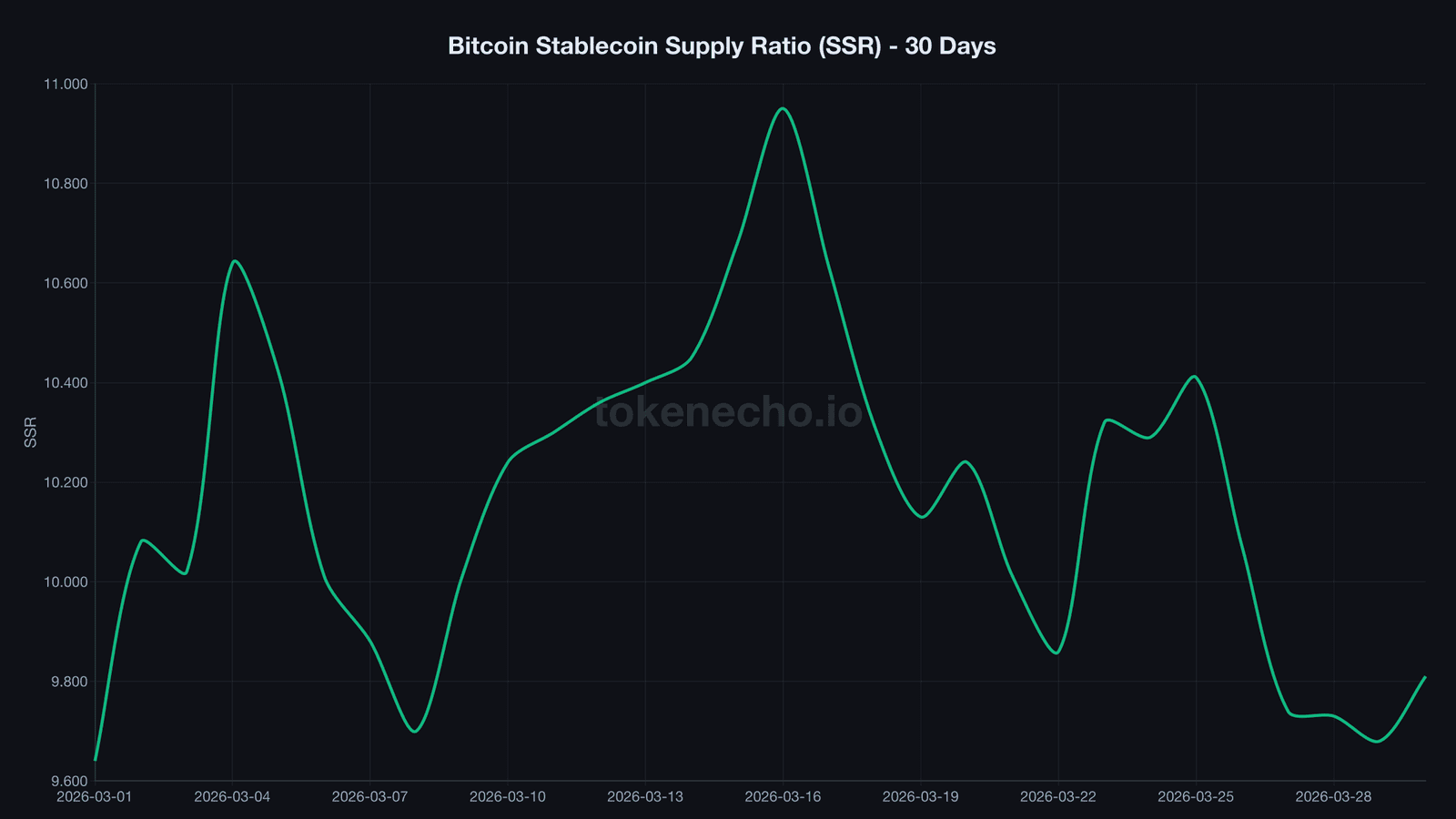
The on-chain backdrop makes this even more compelling. According to CryptoQuant data as of March 30, the Stablecoin Supply Ratio sits at 9.81 – meaning roughly $139 billion in stablecoin purchasing power is parked and waiting relative to Bitcoin’s market cap.
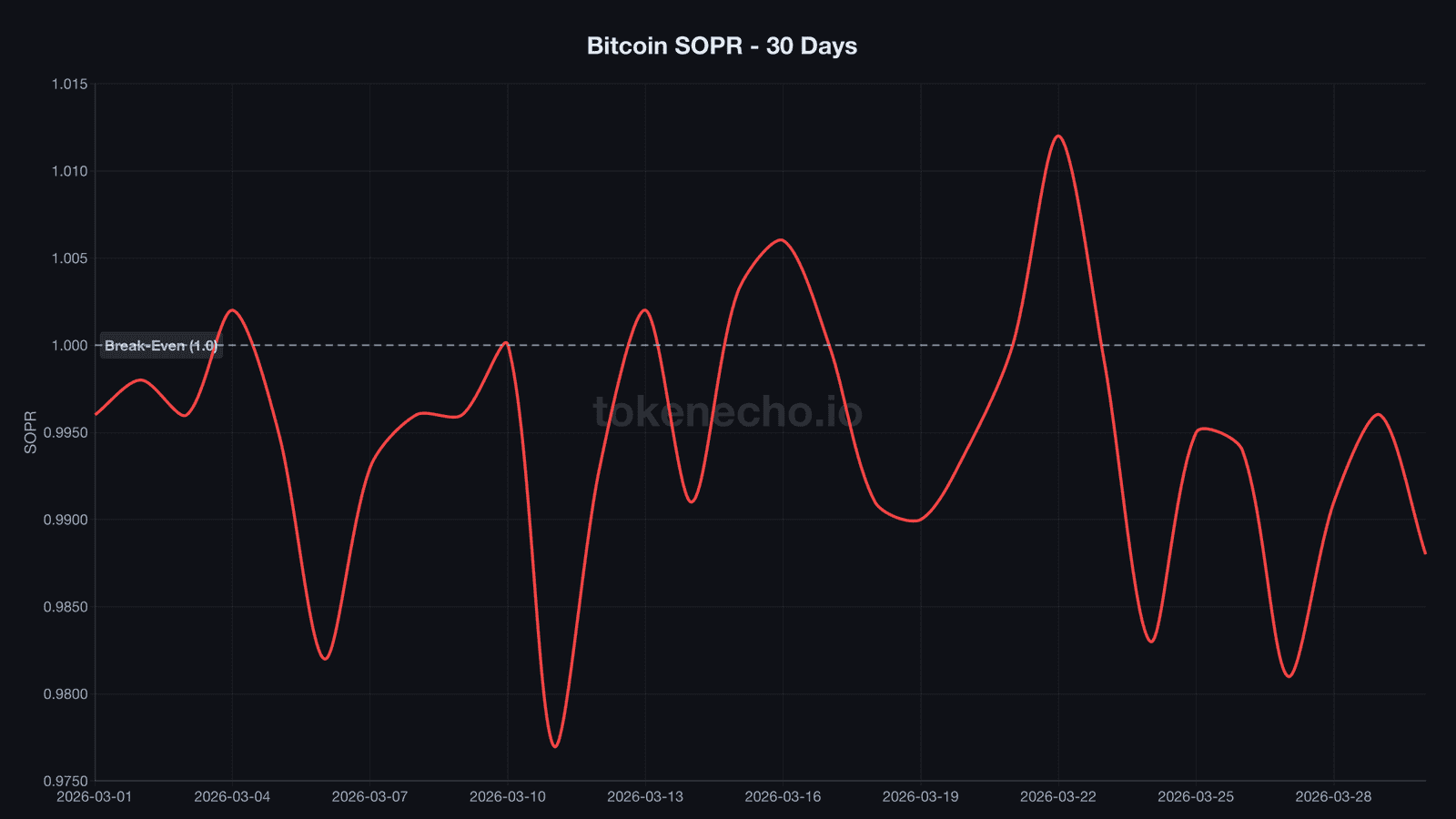
SOPR, the Spent Output Profit Ratio, has stayed below 1.0 for nine straight days. Sellers are taking losses. Long-term holders specifically? Their SOPR crashed to 0.681, meaning the most battle-hardened Bitcoin veterans are dumping at a 32% loss. That hasn’t happened since FTX.
NUPL – Net Unrealized Profit/Loss – sits at 0.188, barely above the capitulation threshold.
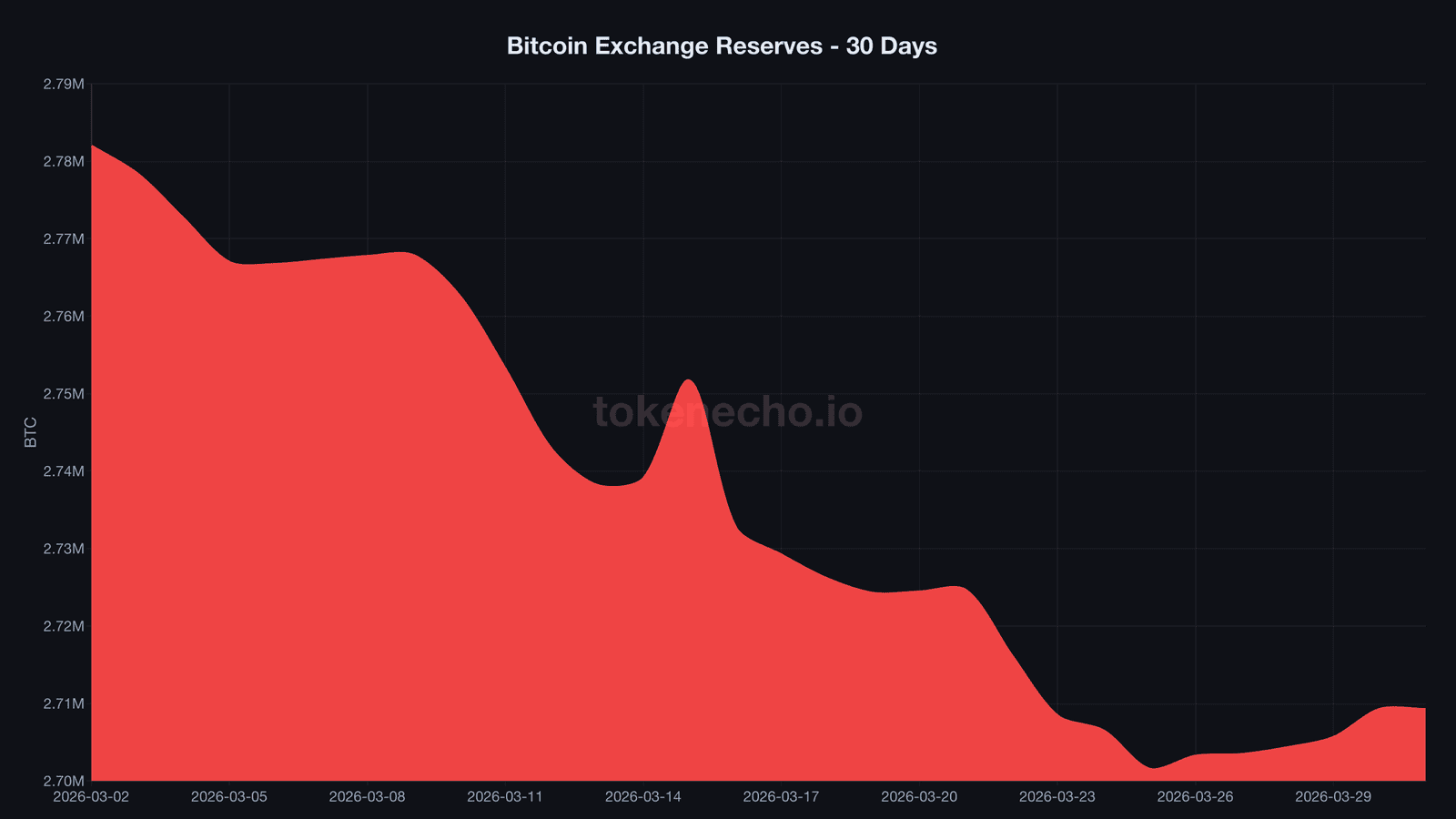
But exchange reserves tell a split story. They’ve risen by about 7,700 BTC over the past six days to 2.71 million, while ETF holdings stayed flat around 1.32 million BTC. Smart money isn’t running. It’s repositioning.
So who’s right – the Fear & Greed crowd at 11, or Jack Dorsey betting Bitcoin payments infrastructure on 4 million businesses?
Actions Speak Louder Than Sentiment
David Marcus, CEO of Lightspark and former president of PayPal, called the Square rollout a potential “TCP/IP moment” for money. “Enabling Bitcoin payments at scale could mirror how TCP/IP became the foundational protocol of the internet,” Marcus said.
That comparison sounds grandiose. But consider what just happened in a single week: Square auto-enabled BTC for 4 million merchants, Kraken secured the first-ever Federal Reserve master account for a crypto firm, and the SEC’s 16-token commodity classification from March 17 continues reshaping the regulatory landscape.
And all of it happened while Bitcoin sat 47% below its all-time high and the market screamed pure panic.
We’ve covered the capitulation signals extensively – NUPL at 0.178, CDD collapsing 90%, the works. But capitulation signals measure what retail is doing. What institutions are doing is building payment rails, securing Fed accounts, and quietly absorbing supply.
The last time this kind of infrastructure-vs-sentiment divergence happened was late 2022. BTC was at $16,000. It hit $126,080 less than two years later.
Nobody’s saying Square’s move guarantees a rally. But when the Fear Index says 11 and a $55 billion fintech company bets its payment platform on Bitcoin – one of those signals is wrong.
If you’re looking to buy Bitcoin for the first time, you might soon be spending it at the corner coffee shop without even knowing it runs on Lightning.
This is not financial advice. DYOR. Data as of March 31, 2026.
Sources
- Square Official Press Release
- CoinDesk: Square Auto-Enables Bitcoin Payments
- CryptoQuant API – SOPR, NUPL, SSR, exchange reserves data
- CoinGecko API – BTC price, ATH, market cap
- Lightning Network Statistics
Leave a Reply