

🕑 6 min read
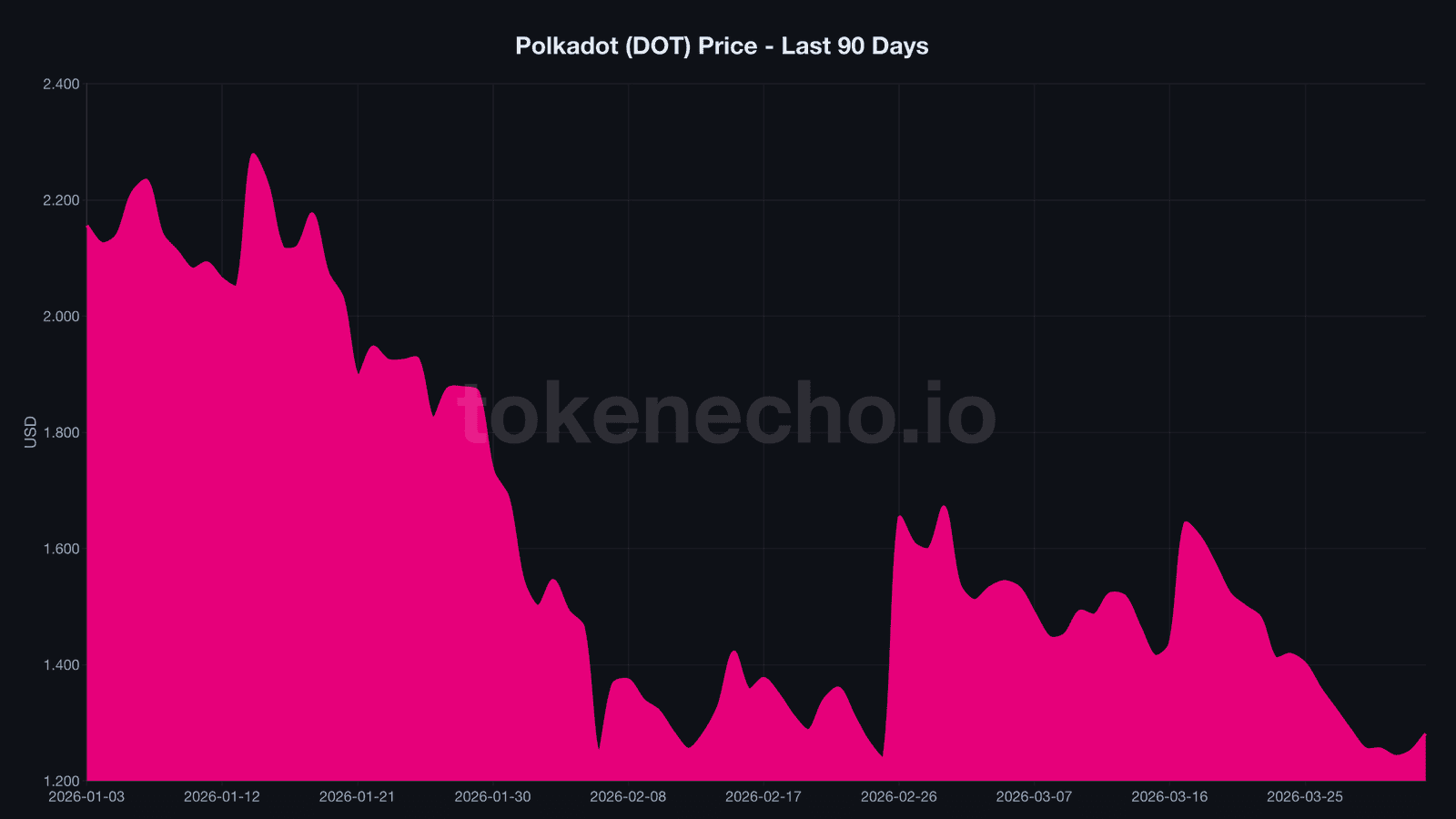
Polkadot trades at $1.28 right now. That’s 97% below its all-time high of $54.98.
Whether that screams “bargain” or “falling knife” depends on who you ask. But if you’re looking at how to buy Polkadot while it sits just $0.13 above its all-time low, you’re not alone – DOT is trending on CoinGecko as of April 1, 2026, and the staking yield north of 15% APY keeps pulling in new buyers who want their tokens working for them.
This isn’t a “Polkadot will 50x” pitch. This is the nuts-and-bolts walkthrough: where to buy it, what you’ll pay in fees, how to stake it, and the mistakes that cost beginners real money.
The 30-Second Version (For People Who Won’t Read the Whole Thing)
Open an account on Coinbase, Kraken, or Binance. Verify your identity. Deposit dollars or euros. Buy DOT. Transfer to a self-custody wallet like Polkadot Vault or Ledger. Stake it for roughly 15% annual yield through the native nomination system.
That’s it. Everything below is the “why” and “how” behind each of those steps.
Picking Where to Buy DOT – And Why It Actually Matters
Every major exchange lists Polkadot. But the fees and experience vary wildly enough that your choice of platform can eat 3-5% of a small purchase before you even own a single token.
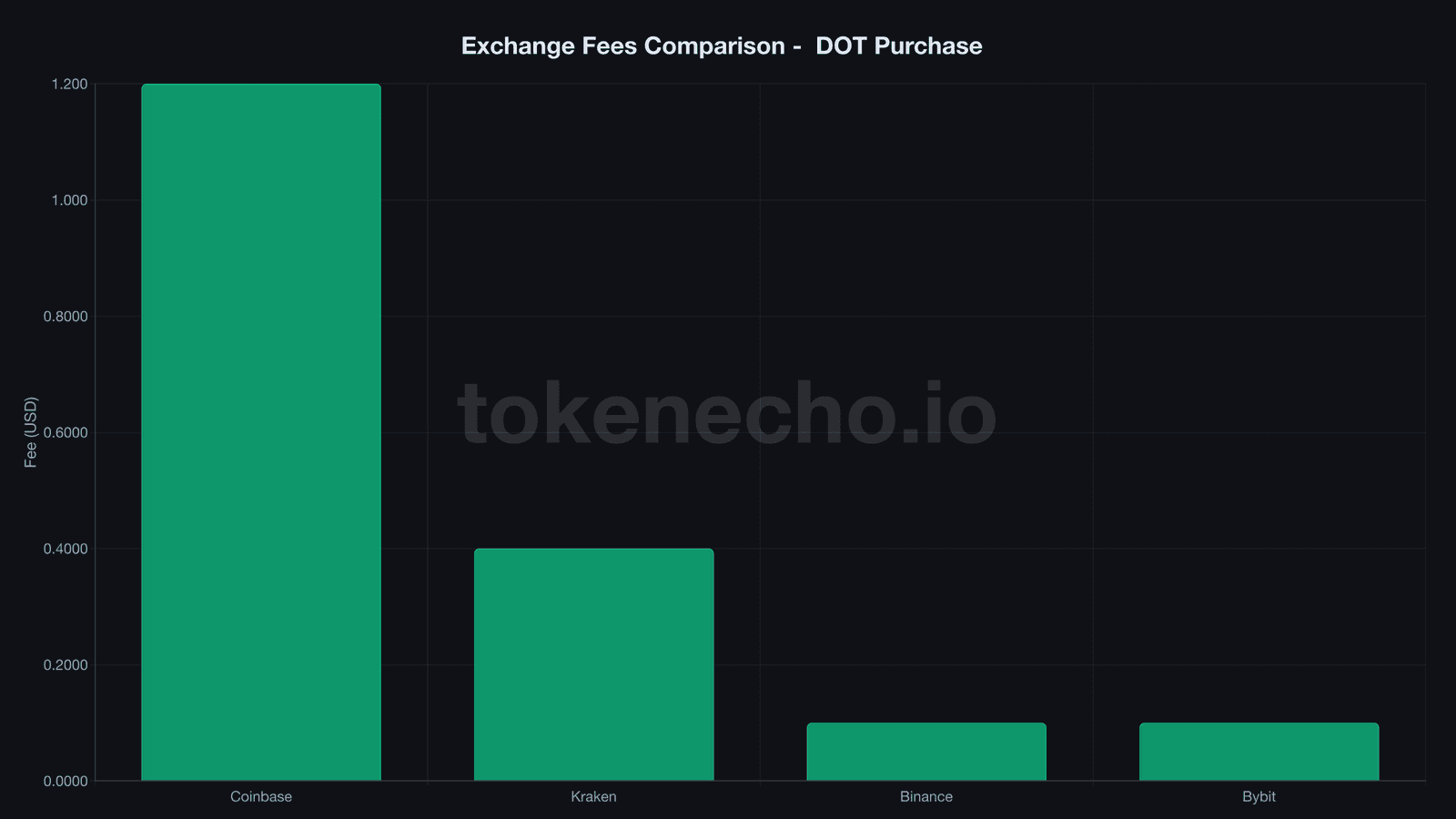
Coinbase charges the most and makes no apologies for it. Maker/taker fees start at 0.60%/1.20% on Coinbase Advanced – and if you use the simple buy button, you’re looking at a flat spread that quietly takes even more. A $100 DOT purchase costs roughly $1.20 in fees on Advanced, or up to $2.99 on simple mode. So why does anyone use it? Because Coinbase is publicly traded on NASDAQ, holds 98% of assets in cold storage, and carries FDIC insurance up to $250,000 on USD balances. For a first-time buyer in the US who values sleep over savings, that peace of mind has a price tag.
Kraken tells a different story. The exchange slashed fees in late 2025 to 0.25%/0.40% for most users – roughly a third of what Coinbase charges. That same $100 buy costs $0.40. Kraken also runs proof-of-reserves audits every quarter, and its security record since launching in 2011 remains spotless. No hacks, no missing funds, no SEC enforcement actions.
Then there’s Binance, which processes more DOT volume than any other platform – $8.5 million in 24 hours on the DOT/USDT pair alone. Fees bottom out at 0.10% with BNB discounts. But Binance isn’t available to US customers (Binance.US is a separate, smaller entity), and the regulatory scrutiny following its 2023 DOJ settlement still lingers.
“Polkadot’s NPoS is one of the more sophisticated staking models in production,” said Bill Laboon, former Director of Education at Web3 Foundation. That sophistication starts with choosing where you hold your DOT.
The Fastest Route to Buying Polkadot
You’ll spend the first five to ten minutes on KYC – uploading a selfie, confirming your address, the usual. Coinbase and Kraken typically approve US and EU residents within minutes. Binance can take longer depending on jurisdiction.
Fund your account next. Bank transfer (ACH in the US, SEPA in Europe) costs nothing on most exchanges but takes one to three business days. Card deposits land instantly but Coinbase charges 3.99% and Kraken charges 1.5%. On a $500 deposit, that’s the difference between $0 and $20 gone before you’ve bought anything. Worth the wait? Probably.
Once funded, search for DOT and place your order. A market order fills instantly at whatever the current price is. A limit order lets you set your price – say, $1.20 if you think DOT will dip from $1.28. Limit orders are free on most exchanges if you’re the maker.
One more thing: enable two-factor authentication before you deposit a single dollar. Not SMS-based 2FA – that’s vulnerable to SIM swaps. Use an authenticator app like Google Authenticator or Authy. This isn’t optional paranoia. It’s the bare minimum.
Staking DOT – The Reason Most Buyers Stick Around
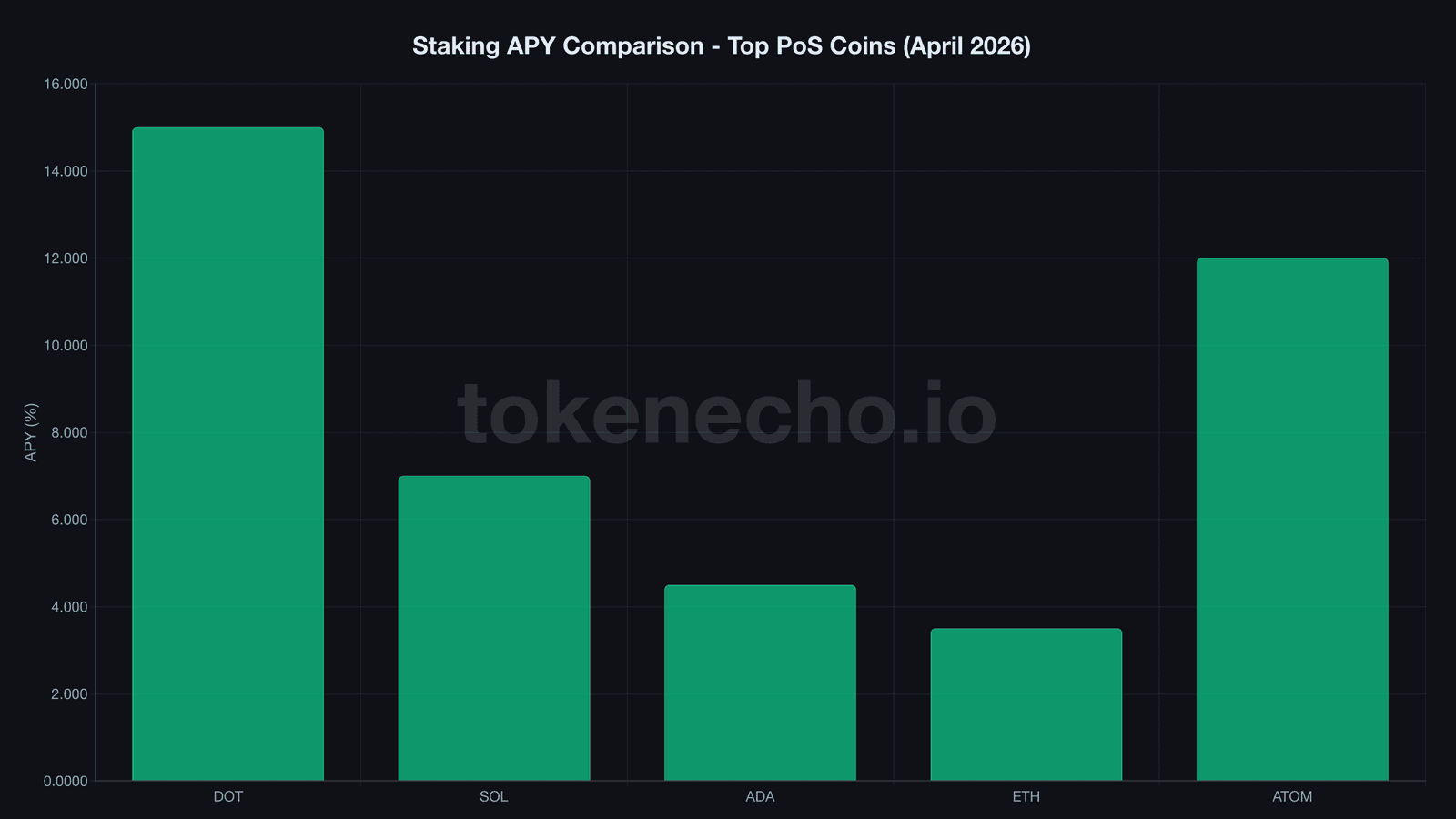
Polkadot runs on Nominated Proof of Stake, a system where you don’t just lock your tokens – you actively choose which validators secure the network. Current staking yield sits around 15% APY, which blows past anything Ethereum (3-4%) or Solana (6-8%) offers.
But 15% comes with caveats.
The minimum stake fluctuates. As of April 2026, you need roughly 550 DOT ($704 at current prices) to nominate directly on-chain. That’s a real barrier for someone throwing $50 at DOT to test the waters.
The workaround: nomination pools. Polkadot introduced these to let smaller holders stake with as little as 1 DOT. You join a pool, the pool operator nominates validators, and rewards flow proportionally. Yields run slightly lower – call it 13-14% after pool commission – but it’s still remarkably high for a top-50 asset.
And there’s a 28-day unbonding period. Unstake your DOT and you wait four weeks before you can sell or transfer. During a crash, that lockup can feel like a prison sentence. During steady accumulation, it’s forced diamond hands.
You can stake directly through Polkadot’s native staking dashboard, through Ledger Live, or via exchange staking on Kraken (up to 12% APY) and Binance (variable rates). Exchange staking is simpler but means your tokens stay on the exchange – a tradeoff between convenience and the “not your keys, not your crypto” principle.
Where to Store DOT After You Buy It
Polkadot Vault (formerly Parity Signer) turns an old phone into an air-gapped cold wallet. No internet connection, no attack surface. Free and built by the Polkadot team itself. The catch? Setup takes 20 minutes and feels like a cybersecurity exercise.
Ledger Nano S Plus ($79) or Nano X ($149) are the hardware wallet standards. Both support DOT natively through Ledger Live, including staking. If you’re buying more than $500 worth of any crypto, a hardware wallet pays for itself in peace of mind the first time an exchange gets hacked.
SubWallet and Nova Wallet are the go-to mobile options for the Polkadot ecosystem. Both support staking, governance voting, and parachain interactions. SubWallet also works as a browser extension – think MetaMask, but for Polkadot.
The Parachain Thing (A Brief Detour)
What makes Polkadot different from just another Layer 1? Parachains. Polkadot is actually a Layer 0 – a network of networks. Independent blockchains (parachains) plug into Polkadot’s relay chain and share its security without building their own validator set from scratch.
Moonbeam runs EVM-compatible smart contracts on Polkadot. Acala handles DeFi. Astar targets enterprise dApps. There are over 50 live parachains as of Q2 2026.
Why does this matter for someone buying DOT? Because DOT isn’t just a currency – it’s the gas that powers governance votes, staking security, and parachain bonding. The more active the ecosystem, the more utility DOT carries beyond simple price speculation.
Fees Cheat Sheet
| Exchange | Maker/Taker | $100 Buy Cost | Deposit (Bank) | Deposit (Card) |
|---|---|---|---|---|
| Coinbase Advanced | 0.60%/1.20% | ~$1.20 | Free (ACH) | 3.99% |
| Kraken | 0.25%/0.40% | ~$0.40 | Free (ACH/SEPA) | 1.5% |
| Binance | 0.10%/0.10% | ~$0.10 | Free (SEPA) | 1.8% |
| Bybit | 0.10%/0.10% | ~$0.10 | Free (SEPA) | varies |
Don’t Skip the Tax Part
In the US, buying DOT isn’t a taxable event. Selling it is. So are swapping DOT for another token, spending DOT, and – yes – earning staking rewards. The IRS treats staking income as ordinary income at the fair market value when received.
At 15% APY on 1,000 DOT, that’s roughly 150 DOT per year in rewards – about $192 at current prices. Taxable the moment it hits your wallet, whether you sell or not.
Use a crypto tax tool like Koinly, CoinTracker, or TokenTax to auto-import your transactions. Manually tracking staking rewards across nomination pools is the kind of headache nobody needs during tax season.
Want to understand how whale wallets handle their positions? Our guide on how to track crypto whale movements breaks down the tools and signals. And if you’re expanding beyond DOT, our how to buy Ethereum walkthrough covers the second-largest crypto asset with similar detail.
This is not financial advice. DYOR. Data as of April 1, 2026.
Sources:
- CoinGecko – Polkadot – price, market cap, supply data
- Polkadot Staking Dashboard – staking rates, nomination pools
- Polkadot Wiki – Staking – NPoS mechanics, unbonding period
Leave a Reply