
🕑 7 min read
Tether just hired KPMG for its first Big Four audit – but Circle’s been doing monthly Deloitte reviews for years.
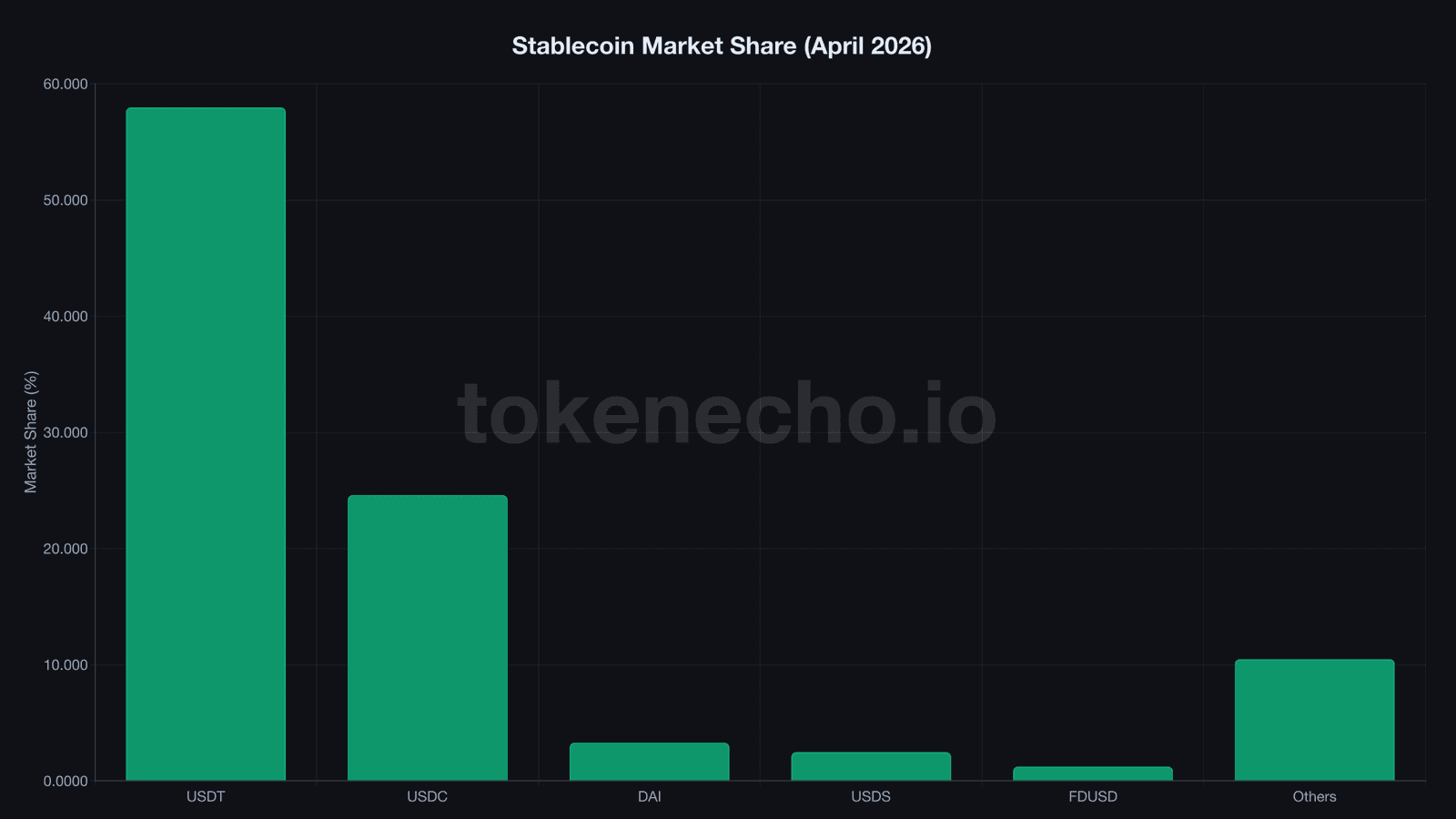
Everyone defaults to USDT. It’s bigger, it’s older, and it dominates nearly 58% of the stablecoin market.
But USDC quietly captured 64% of all stablecoin transaction volume in Q1 2026 – the first time it overtook Tether in almost a decade. And Tether just hired KPMG because ignoring the transparency gap wasn’t really working anymore.
The USDT vs USDC debate isn’t about which dollar token sits closer to $1.00. They both do. It’s about what happens when they don’t – and who you trust to make you whole when the peg slips.
What you’ll learn
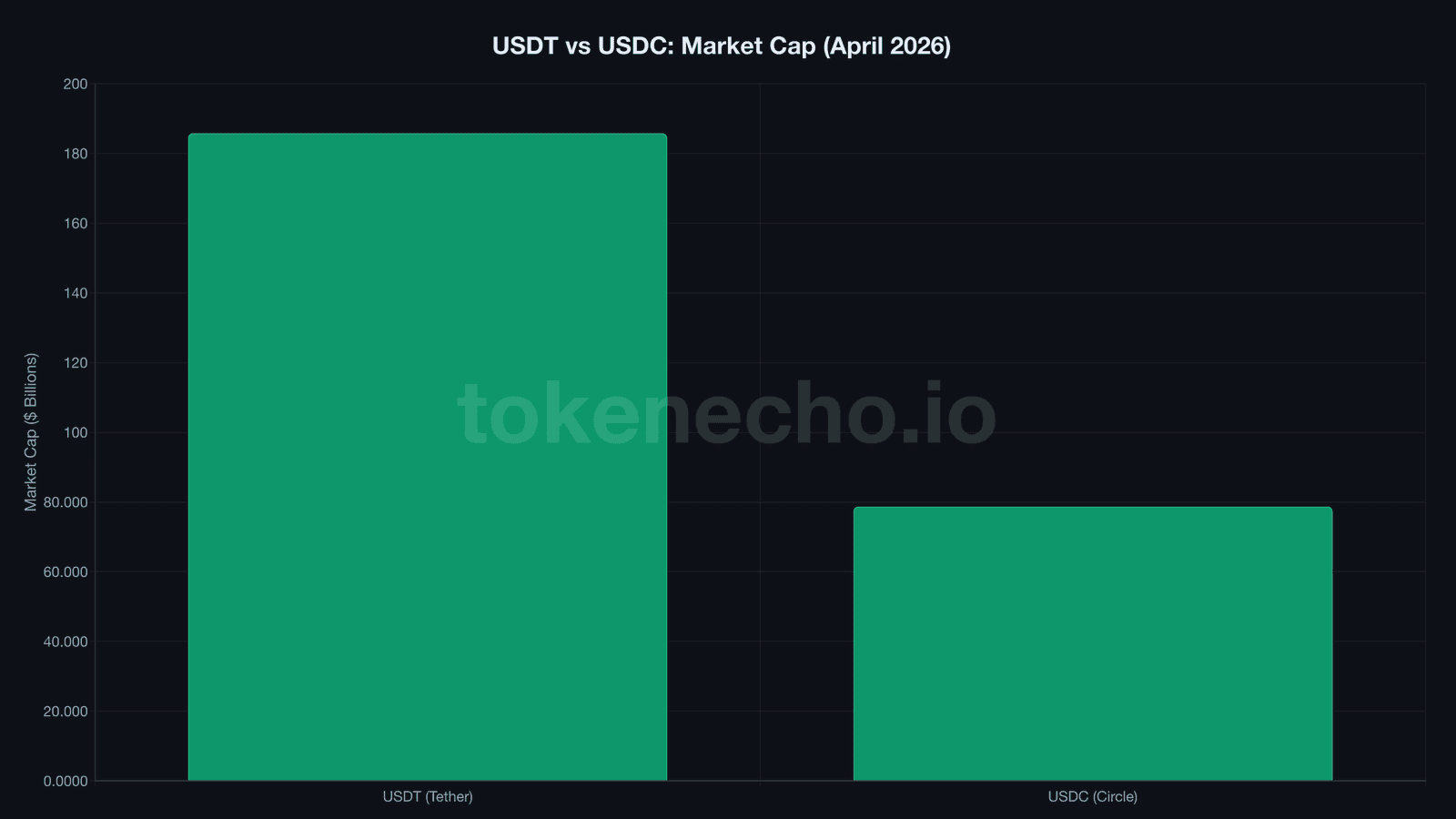
- USDT holds $185.8 billion in reserves (57.96% of all stablecoins) but didn’t get its first Big Four audit until March 2026. USDC’s $78.7 billion gets monthly Deloitte attestations.
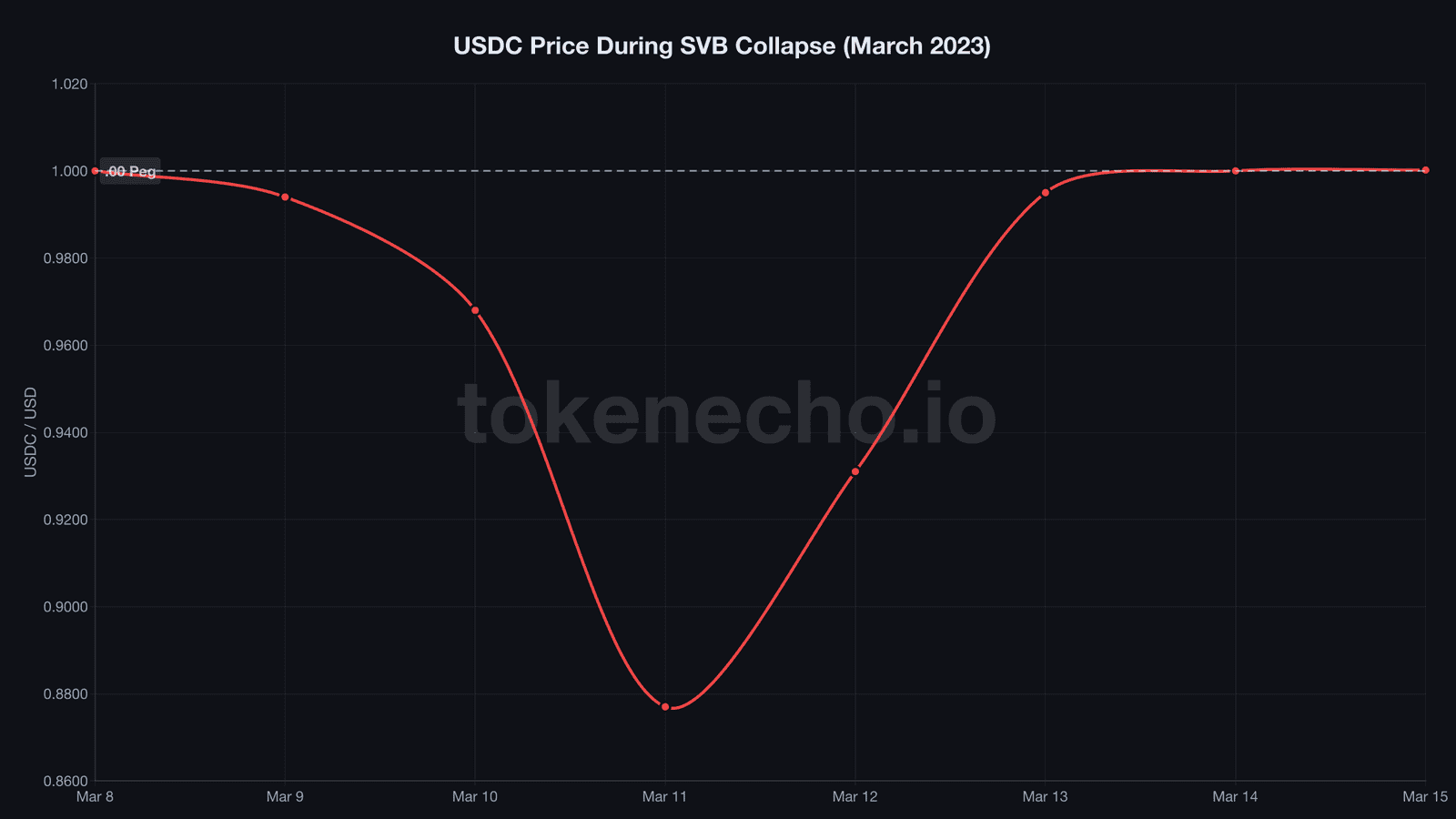
- USDC crashed deeper – to $0.87 during the Silicon Valley Bank collapse – but recovered in 48 hours. USDT’s worst depeg ($0.96) was milder, yet raised questions about reserve quality that took months to fade.
- USDC is the only major stablecoin compliant with Europe’s MiCA framework. USDT was delisted from EU exchanges in early 2025 and hasn’t returned.
Two stablecoins, $264 billion – and one transparency gap that just closed
$185.8 billion. That’s how much money sits in Tether’s USDT reserves as of April 2026 – more than the GDP of Hungary.
Circle’s USDC holds $78.7 billion. Less than half of Tether’s war chest, but it’s been gaining ground. USDC’s share grew while Tether’s stablecoin dominance slipped from 60.46% to 57.96% over the past quarter.
But the real gap isn’t size. It’s what backs each dollar.
USDC reserves consist entirely of short-dated U.S. Treasury securities and cash deposits at regulated banks – JPMorgan Chase, BNY Mellon, the institutional heavyweights you’d expect. Deloitte publishes monthly attestation reports verifying every cent, and you can download them directly from Circle’s website.
Tether’s reserve mix is more creative. U.S. Treasury bills form the bulk, but the portfolio also includes gold, Bitcoin, secured loans, and reverse repos. Until March 2026, the company relied on quarterly attestations from BDO Italia – a respectable but mid-tier firm offering point-in-time snapshots rather than continuous audits.
That changed on March 27.
“Trust is built when institutions are willing to open themselves fully to scrutiny,” said Paolo Ardoino, Tether’s CEO, announcing KPMG – a genuine Big Four firm – as the company’s first full auditor. PwC was brought in separately to overhaul internal systems. For a company that spent years deflecting transparency demands, it’s a seismic shift.
Whether the audit silences critics or surfaces uncomfortable findings remains an open question. But the gap between Tether and Circle just got measurably smaller.
Stablecoin reserves function a bit like FDIC insurance on a bank account – they’re supposed to guarantee that every digital dollar can be redeemed for a real one. The critical difference? There’s no government backstop if the issuer stumbles. The reserves ARE the safety net, and their composition matters more than their size.
Both depegged. Only one crashed to $0.87.
Friday night, March 10, 2023. Circle disclosed that $3.3 billion of USDC reserves were trapped inside Silicon Valley Bank, which had just failed. By Saturday morning, USDC was trading at $0.87 on decentralized exchanges.
Panic lasted exactly one weekend.
On Monday, the Federal Reserve and FDIC guaranteed all SVB deposits – and USDC snapped back to $1.00 within 48 hours. Anyone who bought that dip at $0.87 pocketed a 15% return on a “stablecoin” in two days.
USDT’s depeg history reads differently. In May 2022, amid regulation fears following the Terra/Luna collapse, Tether briefly dropped below $0.96 – a smaller deviation, but the recovery dragged on and questions about reserve backing lingered for months. Then in June 2023, a Curve Finance liquidity pool imbalance shoved USDT down to $0.977 when Tether’s share of the pool ballooned past 70%.
So which depeg was actually worse?
USDC’s crash was deeper and genuinely terrifying – losing 13 cents on the dollar within hours – but it had a clear cause in the form of a specific bank failure, and a clear resolution when federal regulators stepped in that Monday morning to guarantee deposits and restore confidence across the entire banking system. USDT’s episodes were milder in magnitude but murkier in origin, driven by market anxiety about reserves that couldn’t be independently verified at the time.
Traders holding significant stablecoin positions during a crisis will recognize the difference: USDC’s risks are banking-sector risks – external and identifiable. USDT’s risks historically centered on opacity, which is harder to price and harder to hedge.
Both survived their worst days. Whether regulators let them keep operating everywhere – that’s the question worth more than any past depeg.
Europe kicked USDT out. America might welcome it back.
Europe already made its choice.
When MiCA, the EU’s Markets in Crypto-Assets regulation that established licensing and reserve requirements for stablecoin issuers across the continent, took full effect, Circle became the first global stablecoin issuer to comply. The company secured an Electronic Money Institution license from France’s ACPR and published updated white papers for both USDC and EURC.
Tether didn’t qualify. In early 2025, Binance delisted USDT for European customers. Other regulated exchanges followed. If you’re trading from an EU address, your access to Tether on compliant platforms ranges from limited to nonexistent.
America’s playing a different game. The GENIUS Act, federal legislation establishing stablecoin licensing requirements, was signed into law in July 2025 with bipartisan support – 68 votes in the Senate. The OCC and FDIC are currently drafting final implementation rules expected by mid-2026, with full stablecoin issuer compliance required by January 2027 – barely nine months from now, which doesn’t leave much runway for companies still figuring out their reserve structure.
And Tether isn’t sitting idle. The KPMG audit and PwC systems overhaul look like groundwork for a U.S. market push. Ardoino’s team clearly sees American compliance as worth the investment.
For anyone holding stablecoins across jurisdictions, geography now determines which token you can actually use on regulated platforms. That wasn’t true two years ago.
USDT for trading, USDC for sleeping at night
So which one should you actually hold?
Depends on what you’re doing with it. And where.
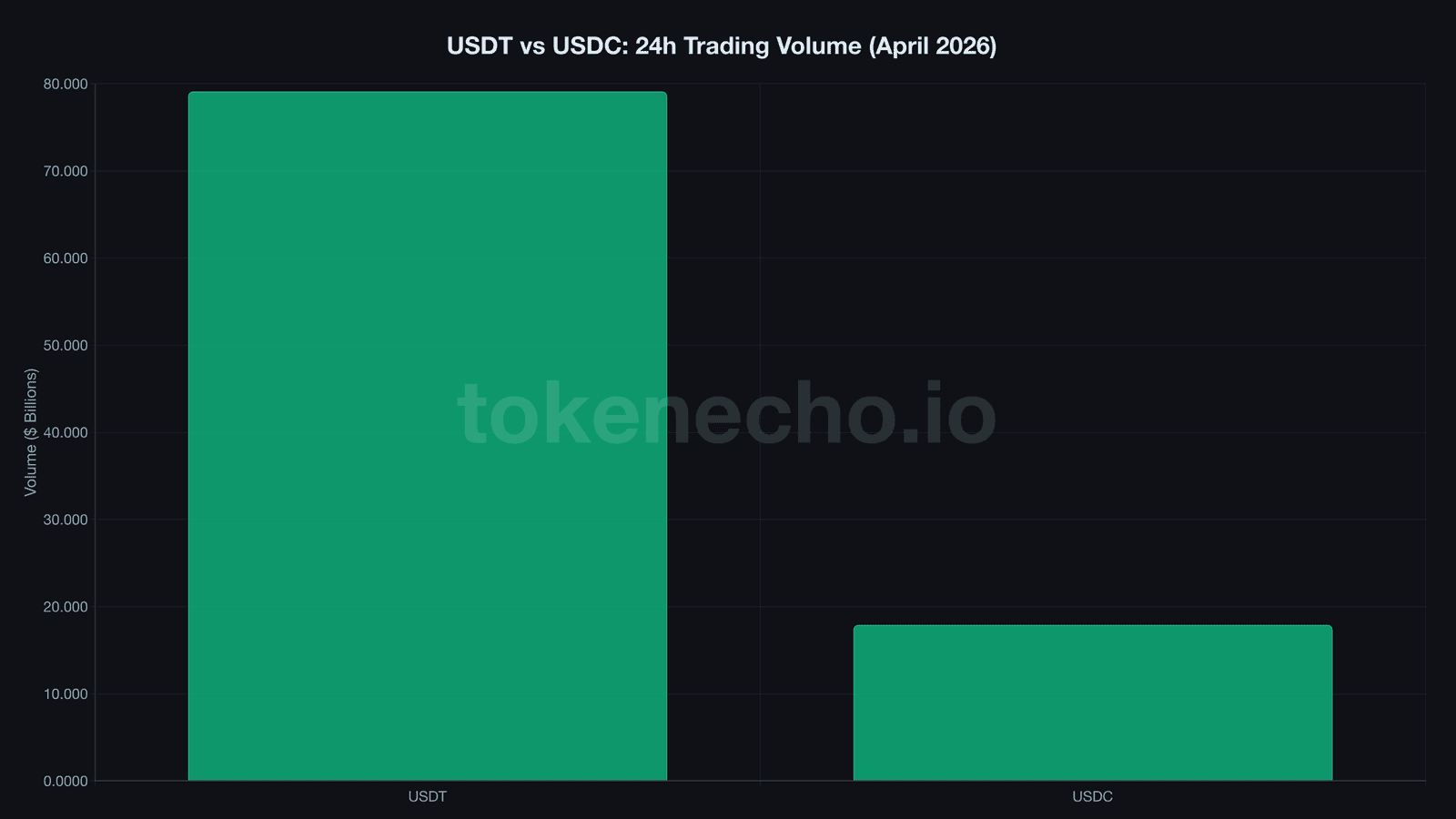
USDT still dominates exchange liquidity. It moves $79.1 billion in daily trading volume – roughly 4.4 times USDC’s $17.9 billion. If you’re actively trading on Binance or OKX, USDT pairs are everywhere and spreads run tighter. It lives on 11+ blockchain networks including Tron, which handles the majority of USDT transfers thanks to sub-cent fees.
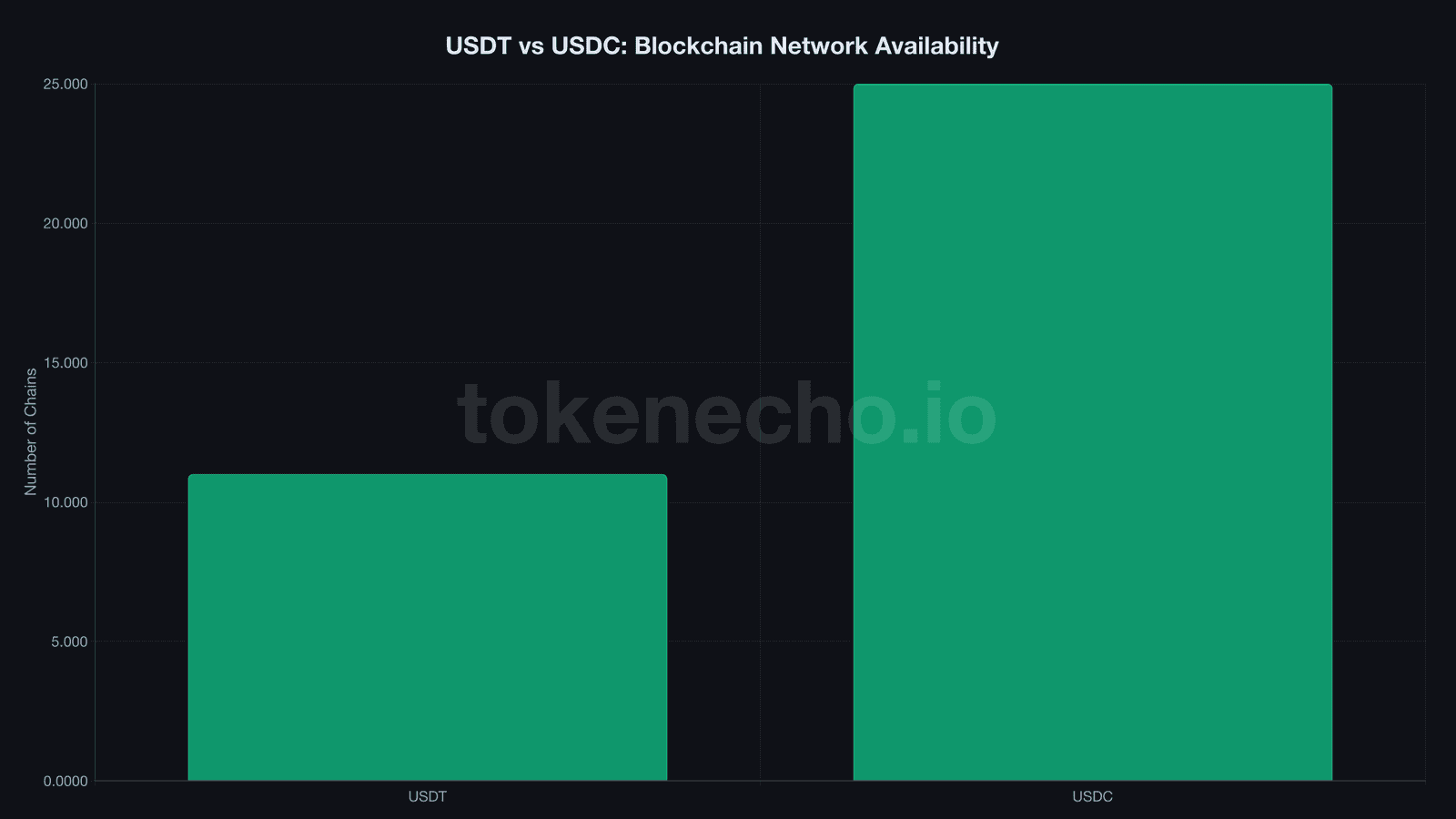
USDC wins on breadth and regulatory standing. It’s deployed across 25+ chains – Ethereum, Solana, Base, Arbitrum, Polygon, Stellar, and growing.
DeFi protocols lean toward USDC for lending pools and yield strategies. And if you’re running a business that touches fiat banking or needs to move stablecoins across European exchanges where MiCA compliance isn’t optional, USDC’s monthly Deloitte attestations and regulatory licensing make the due diligence conversation with your legal and compliance teams significantly shorter.
The tangent nobody asked for: Tron handles roughly half of all USDT transfers globally. That’s a $90+ billion daily ecosystem running on a blockchain most Western crypto media barely mentions. Justin Sun’s network isn’t glamorous, but for stablecoin transfers across Southeast Asia and Latin America, it’s the rail that actually moves the money. Don’t sleep on infrastructure just because it lacks brand prestige.
A practical split: USDT for exchange trading where liquidity matters, USDC for self-custody and long-term holding in your wallet. Some people run both – and honestly, that’s not a bad call given that the stablecoin market just crossed $320 billion with room to grow.
If the GENIUS Act’s final rules align with Circle’s existing framework, USDC’s regulatory moat widens. If Tether’s KPMG audit comes back clean and the company secures U.S. licensing, the transparency gap closes for good. The answer to “which is safer” might look very different by January 2027.
New to crypto entirely? Start with our beginner’s guide to cryptocurrency to understand where stablecoins fit in the broader market.
Tether’s KPMG audit could reshape the trust equation between these two stablecoins – or confirm what skeptics have suspected for years. The results will speak louder than promises.
This article is for informational purposes only and does not constitute financial advice. Always do your own research. Data as of April 17, 2026.
Sources
- CoinGecko – USDT and USDC market data
- CryptoQuant – Stablecoin Supply Ratio
- CoinDesk: Tether hires KPMG for USDT audit – March 27, 2026
- Circle MiCA compliance
- Congress.gov: GENIUS Act S.1582
Leave a Reply