



How to Track Crypto Whale Movements: Tools, Signals and Strategies (2026 Guide)
🕑 6 min read
In March 2026, while Bitcoin was trading sideways near $70,000, on-chain data revealed something the price chart could not: whales were quietly accumulating over 270,000 BTC as exchange reserves dropped to multi-year lows. Traders who spotted this signal early positioned themselves ahead of the market.
Whale tracking is not about copying trades. It is about reading the footprint that large capital leaves on the blockchain and using that information to build context around price action. Whether you are a day trader looking for short-term signals or a long-term investor trying to understand market cycles, on-chain whale data gives you an edge that pure technical analysis cannot.
This guide covers the key signals to watch, the best tools available in 2026, and a practical framework for integrating whale data into your own strategy.
What Is a Crypto Whale?
A crypto whale is any wallet or entity that holds enough of a particular asset to influence its market. There is no universal threshold, but the commonly accepted benchmarks are:
- Bitcoin: 1,000+ BTC (approximately $70 million at current prices)
- Ethereum: 10,000+ ETH (approximately $20 million)
- Altcoins: Varies by market cap, but generally the top 1% of holders
Whales include institutional funds, early adopters, exchange cold wallets, project treasuries, and high-net-worth individuals. What makes them worth tracking is not their identity, but their behavior – specifically, how and when they move assets on-chain.
The Four On-Chain Signals That Matter
Not every large transaction is meaningful. Here are the four signals that consistently provide actionable intelligence:
1. Exchange Inflows (Bearish Signal)
When whales move large amounts of crypto from private wallets to exchange wallets, it typically indicates preparation to sell. A spike in exchange inflows often precedes downward price pressure.
What to watch: Sudden inflows exceeding 5,000 BTC to major exchanges like Binance, Coinbase, or Kraken.
2. Exchange Outflows (Bullish Signal)
The opposite pattern – large withdrawals from exchanges to cold storage or multi-signature wallets – signals accumulation and long-term holding conviction. This reduces available supply on exchanges, which can support higher prices.
What to watch: Sustained outflows over multiple days, especially when price is flat or declining. This was exactly the pattern observed in mid-March 2026, when whales withdrew over 91,000 BTC from exchanges despite the Fear and Greed Index sitting at extreme fear levels.
3. Exchange Whale Ratio
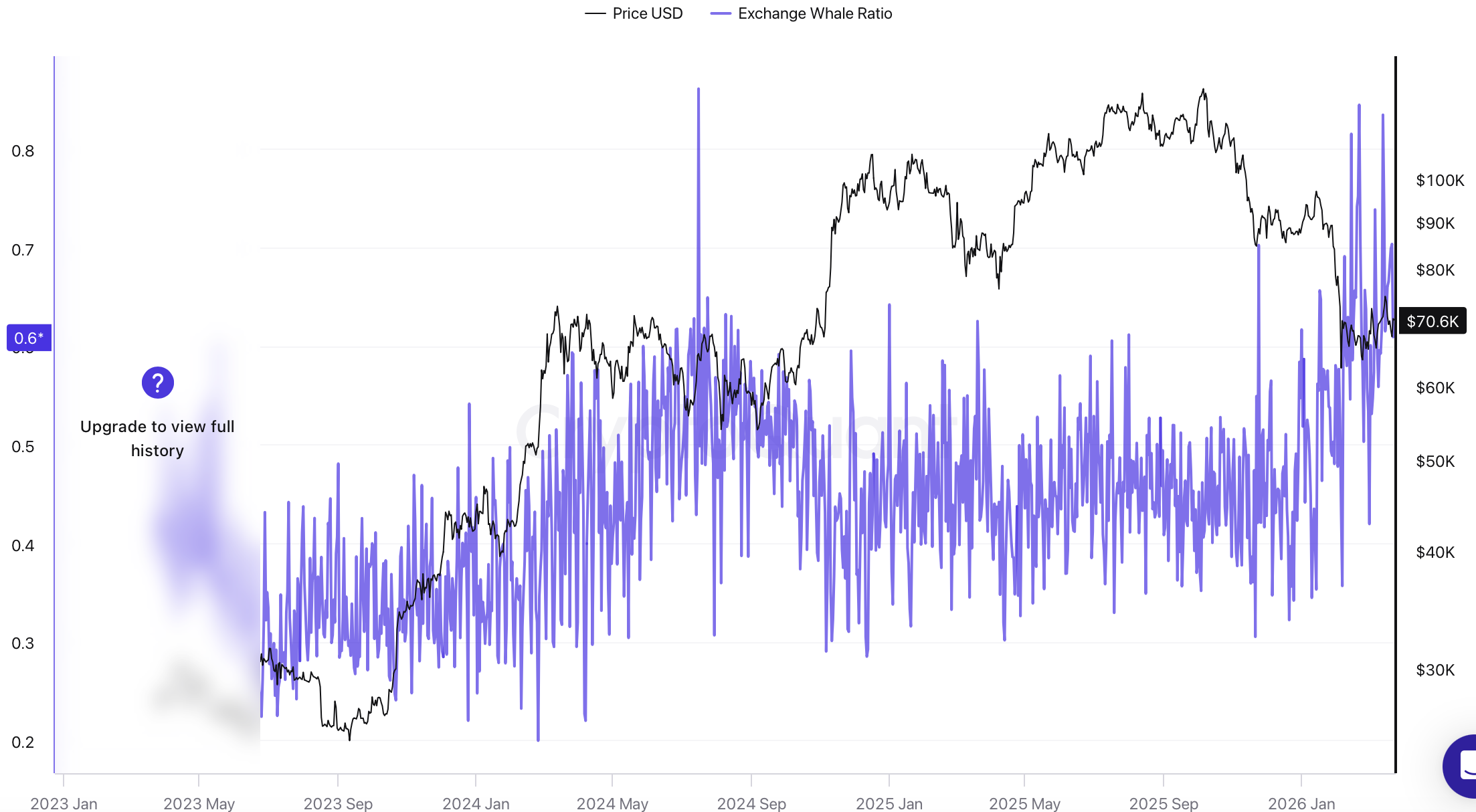
This metric, tracked by CryptoQuant, measures the proportion of the top 10 exchange inflows relative to total inflows. A high ratio means whale activity dominates exchange deposits.
What to watch: In February 2026, the exchange whale ratio hit 0.64, its highest level since October 2015. This signaled that 64% of all Bitcoin exchange inflows came from whales – a concentration level that historically precedes significant price moves.
4. Wallet-to-Wallet Transfers
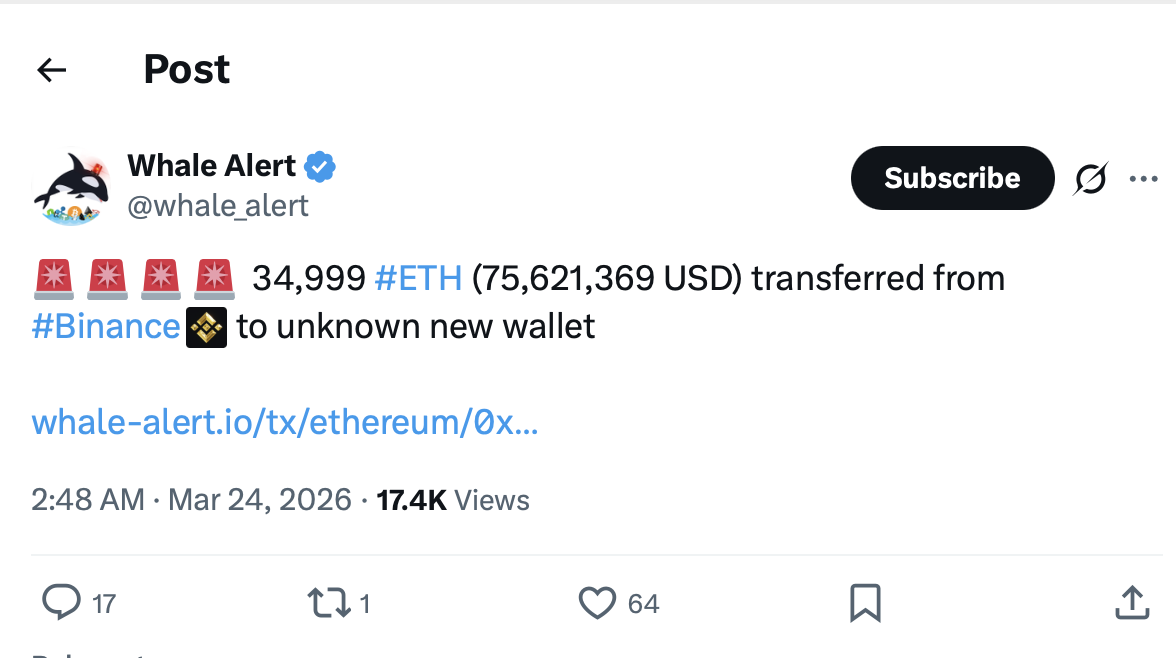
Large transfers between unknown wallets can signal OTC deals, fund rebalancing, or preparation for strategic moves. These are harder to interpret without context, but tools like Arkham Intelligence can help identify the entities behind the addresses.
What to watch: Transfers exceeding $50 million between wallets not labeled as exchanges.
The Best Whale Tracking Tools in 2026
Free Tools
Whale Alert (whale-alert.io)
The simplest entry point. Whale Alert monitors major blockchains in real time and flags large transactions via Twitter/X and its website. It tags known addresses (exchanges, funds) and shows the direction of the transfer. Best for: quick, raw transaction alerts.
Arkham Intelligence (arkm.com)
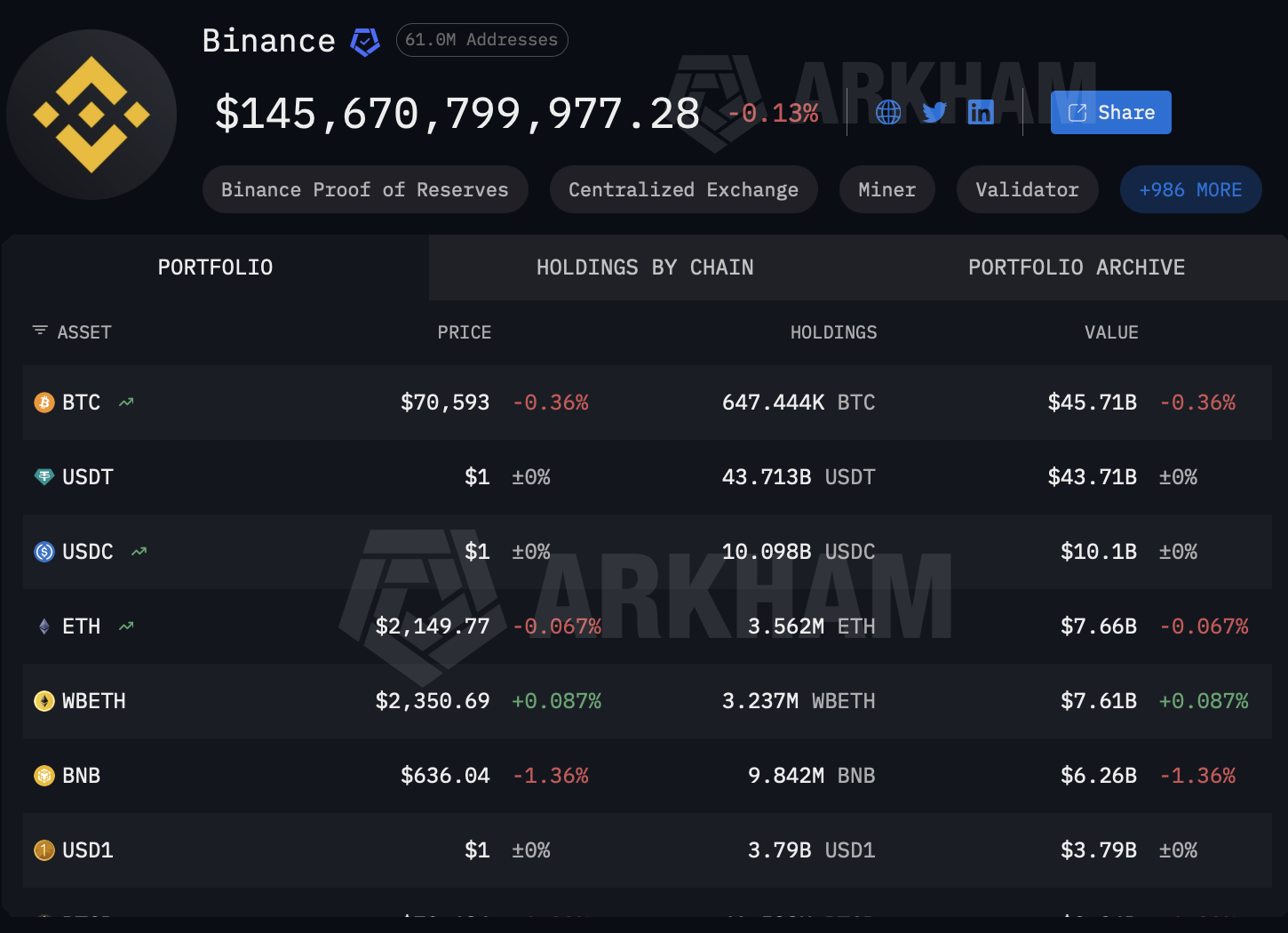
The most powerful free platform. Arkham deanonymizes blockchain addresses, mapping them to real-world entities – exchanges, institutions, individuals, and DAOs. You can search any address, see its full transaction history, portfolio breakdown, and connections to other entities. Best for: identifying who is behind a transaction.
Etherscan / Solscan / Blockchain Explorers
Every blockchain has a public explorer. These let you look up any address, trace transaction paths, and see token holdings. Essential for manual research when you spot an interesting address from Whale Alert or Arkham.
Dune Analytics (dune.com)
A community-driven analytics platform where users build custom dashboards. Over 100,000 public dashboards exist covering whale tracking, DEX volumes, protocol health, and more. You can fork any dashboard and customize it. Best for: custom queries and deep research.
Paid Tools
Glassnode (glassnode.com)
Institutional-grade on-chain analytics focused on macro market cycles. Instead of tracking individual wallets, Glassnode aggregates behavior across entire cohorts – long-term holders vs. speculators, exchange balances, miner positions – to identify whether the market is in accumulation or distribution phase. Free tier available with limited metrics. Best for: cycle analysis and macro positioning.
Nansen (nansen.ai)
Tracks over 500 million labeled addresses across 20+ chains. Nansen classifies entities by behavior – VCs, institutions, skilled traders, whales – and tracks their portfolio moves, win rates, and realized P&L. Best for: following specific smart money wallets and spotting early token accumulation.
Building Your Whale Tracking System: A Practical Framework
Here is a step-by-step approach to integrating whale data into your trading or investment process:
Step 1: Set up alerts. Follow @whale_alert on Twitter/X and enable notifications. Create a free Arkham account and set up watchlists for addresses that interest you.
Step 2: Check exchange flows daily. Visit CryptoQuant or Glassnode (free tier) to review the exchange netflow chart. Sustained outflows = bullish context. Sudden inflows = caution.
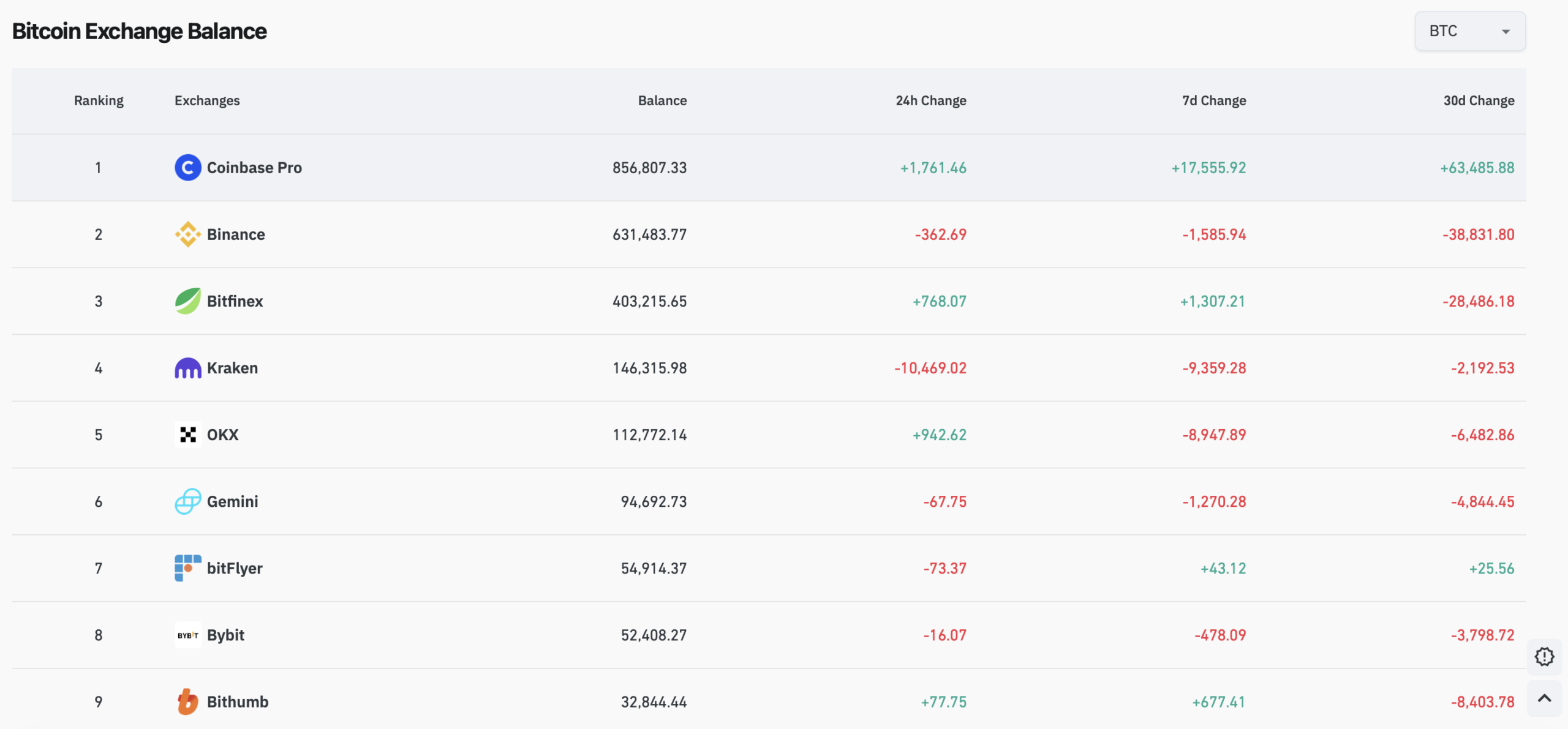
Step 3: Cross-reference with price action. Whale signals alone are not enough. A large exchange outflow during a price dip is far more bullish than the same outflow during a rally. Context matters.
Step 4: Identify accumulation patterns. Use Arkham to research wallets that appear in Whale Alert notifications. Are they new wallets? Are they connected to known funds? Have they been accumulating over days or weeks?
Step 5: Build your watchlist. Over time, you will identify wallets with strong track records. Add these to your Arkham or Nansen watchlist and monitor their activity regularly.
Common Pitfalls to Avoid
Blindly copying whale trades. Whales have different time horizons, risk tolerance, and portfolio sizes. A whale buying $50 million in ETH might represent 2% of their portfolio. For you, it could be everything.
Confusing exchange movements with whale trades. Exchanges regularly move funds between hot and cold wallets for security. These internal transfers can trigger false alerts. Always check if both addresses belong to the same exchange.
Ignoring the timing lag. By the time a transaction appears on Whale Alert, price may have already adjusted. Treat whale data as context, not as instant trade signals.
Overreacting to single transactions. Research indicates that isolated whale transactions show weak correlation with immediate price movements, with accuracy rates around 55-60% for directional prediction within 24 hours. Whale data works best when combined with technical analysis, order book depth, and funding rates.
Key Takeaways
Whale tracking is a skill that improves with practice. The blockchain is transparent by design – every transaction is public. The question is whether you know where to look and how to interpret what you find.
Start with the free tools – Whale Alert for alerts, Arkham for entity research, and blockchain explorers for manual verification. As you build pattern recognition, you will start seeing accumulation and distribution cycles before they show up in price.
The whales are always moving. Now you know how to follow them.
This is not financial advice. DYOR. Data as of March 24, 2026.
Sources
- CryptoQuant – Exchange Whale Ratio data
- Arkham Intelligence – On-chain entity tracking
- Whale Alert – Real-time large transaction monitoring
- Glassnode – On-chain market analytics
- Nansen – Smart money wallet tracking
- Dune Analytics – Community-built on-chain dashboards
- CoinGlass – Exchange balance and flow data