

🕑 5 min read
Morgan Stanley just became the first major US bank to file its own spot Bitcoin ETF. Its second pick was Solana. Ethereum came last – and the order tells a story.
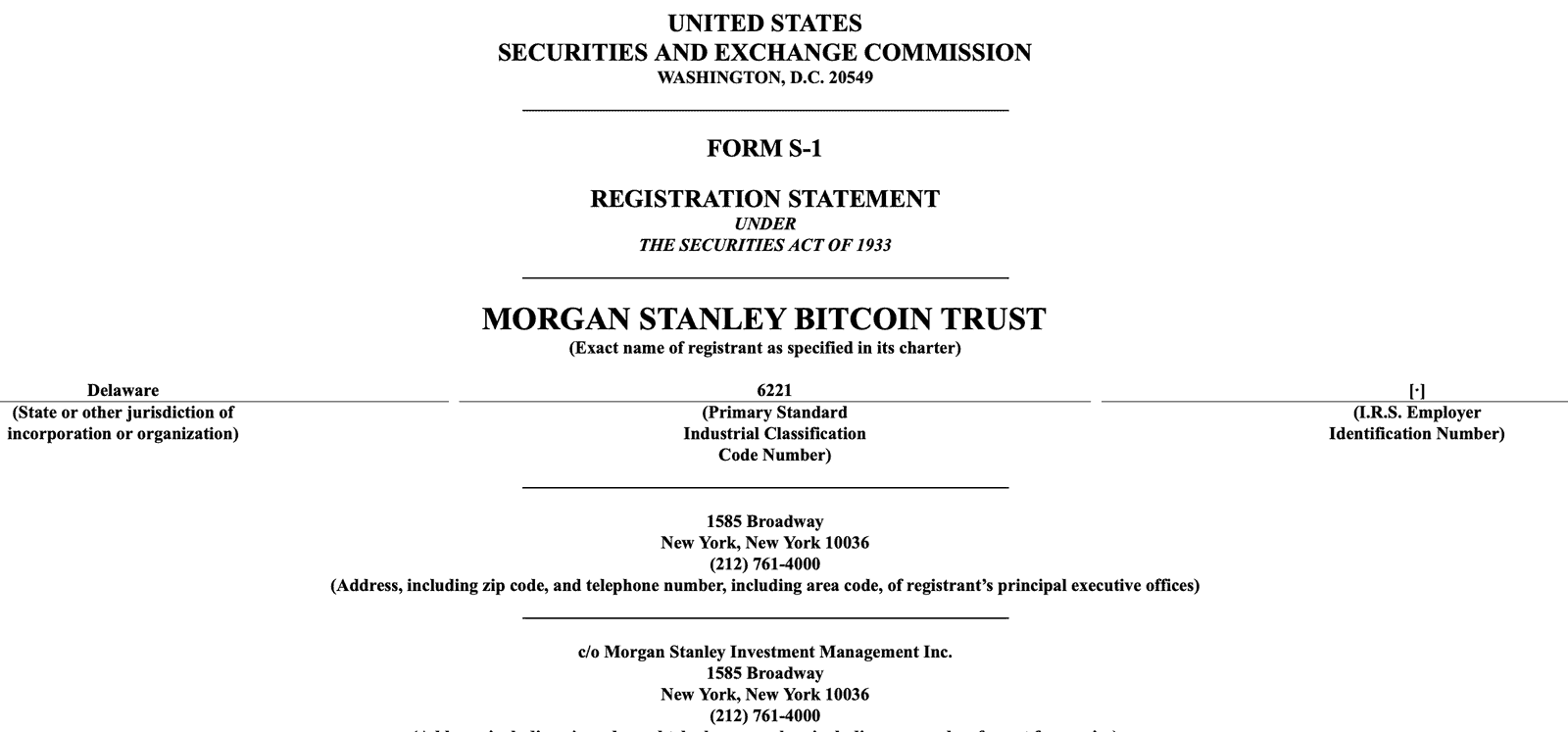
When Morgan Stanley filed its second S-1 amendment for the Morgan Stanley Bitcoin Trust on March 20, 2026, it crossed a line no major American bank had crossed before: directly issuing a spot Bitcoin ETF under its own name. Not recommending someone else’s fund. Not offering custody. Building its own product.
But the filing that made headlines was not the only signal. Morgan Stanley’s first crypto ETF filings in January targeted Bitcoin and Solana – deliberately skipping Ethereum and XRP. The bank only filed for a spot Ethereum ETF weeks later. For a firm managing $1.8 trillion in wealth assets, that sequencing was not accidental.
MSBT: What the Filing Actually Shows
The Morgan Stanley Bitcoin Trust will trade under ticker MSBT on NYSE Arca. Here is what the S-1 reveals:
- Structure: Delaware statutory trust, passive investment vehicle tracking Bitcoin’s spot price against the CoinDesk Bitcoin Benchmark (4 p.m.)
- Basket size: 10,000 shares per creation basket, with a seed basket of 50,000 shares worth approximately $1 million
- Custody: BNY Mellon handles cash custody, fund administration, and transfer agent functions. Coinbase serves as prime broker and holds the Bitcoin in cold storage. Fidelity was added as a supplemental custodian in the second amendment
- Fees: No final expense ratio disclosed. Market estimates range from 0.20% to 0.30%. Morgan Stanley is offering a fee waiver on the first $5 billion in AUM for six months
- Status: SEC review underway. Approval is not guaranteed
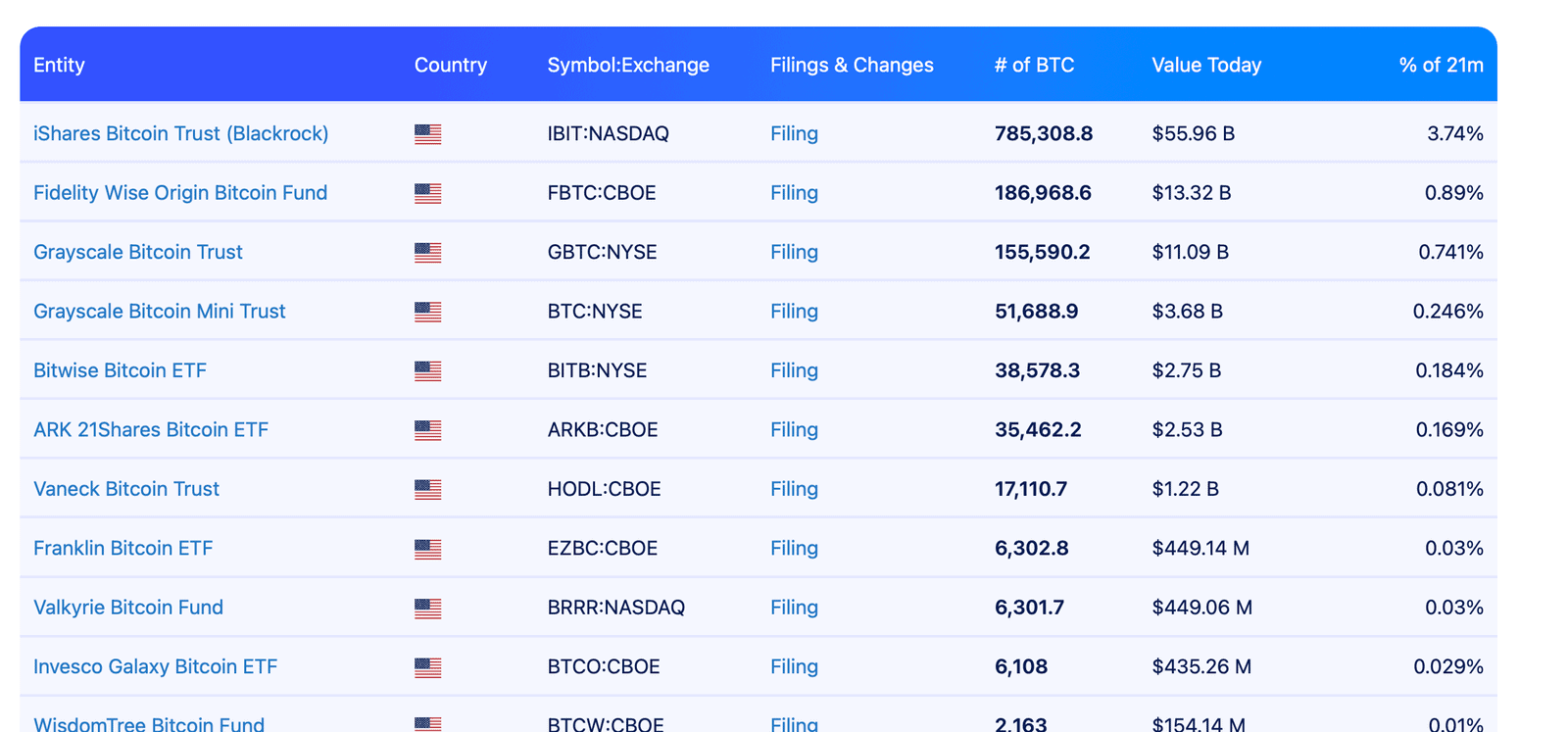
The dual-custody model with Coinbase and Fidelity mirrors the infrastructure behind BlackRock’s IBIT – the current market leader with $54 billion in AUM and 45% of total spot Bitcoin ETF assets.
Why Solana Before Ethereum?
Morgan Stanley’s January 6, 2026 filing included S-1 registrations for a Bitcoin trust and a Solana trust. No Ethereum. No XRP. The omission was widely interpreted as a brutal signal about Ethereum’s institutional positioning.
The bank later filed for a spot Ethereum ETF with staking capabilities, but the sequencing reveals a priority: Morgan Stanley views Solana as a stronger near-term institutional product than Ethereum.
The data supports this logic. Solana currently leads with 23 separate ETF filings pending at the SEC – more than any other altcoin. The network processes roughly $10 billion in daily stablecoin value and generated $2.39 billion in revenue in 2025. With 68% of SOL supply staked at approximately 6.8% annual yield, a staking ETF offers a yield component that Bitcoin cannot match.
Ethereum was not excluded – it was deprioritized. And for a bank with 15,000 financial advisors cleared to pitch crypto products, the order of product launches matters.
The $160 Billion Question
The potential scale of MSBT dwarfs existing Bitcoin ETFs. Morgan Stanley Wealth Management oversees approximately $8 trillion in total client assets. The bank recommends crypto allocations of up to 4% for aggressive portfolios, 3% for market growth, and 2% for balanced growth.
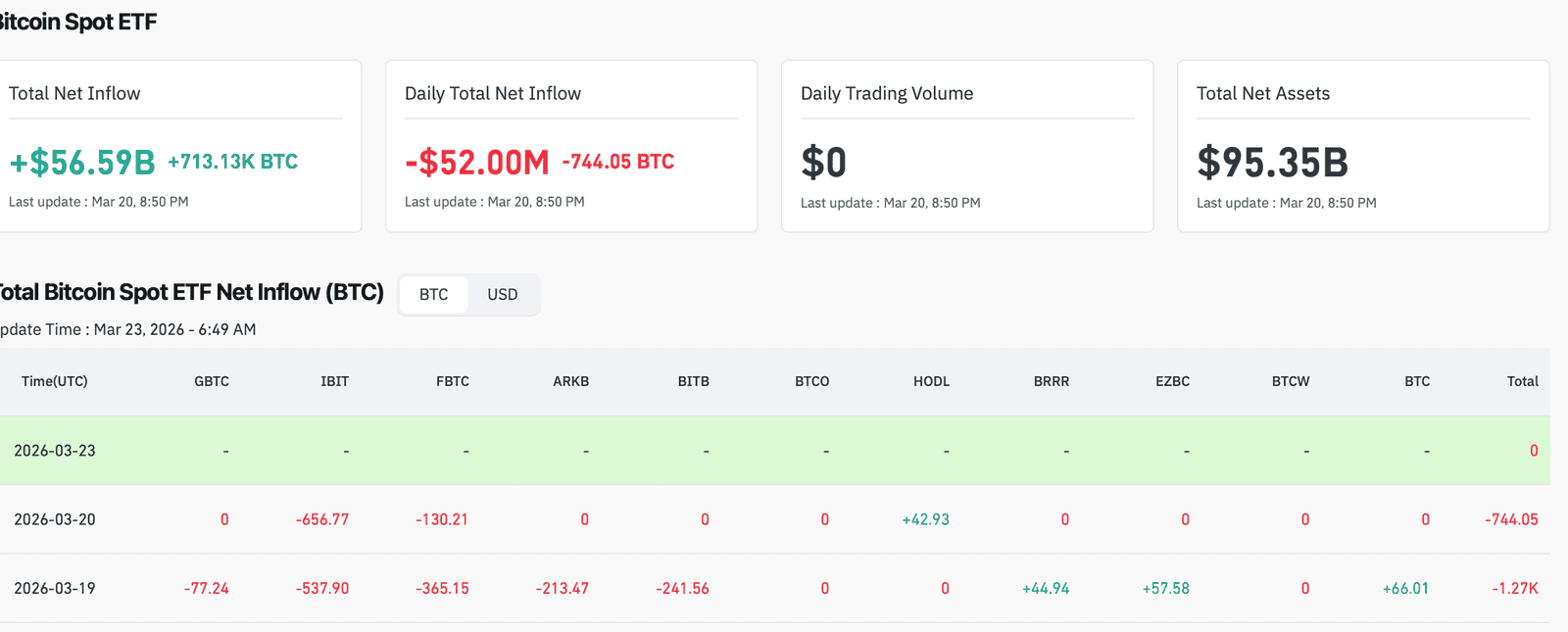
A 2% allocation across Morgan Stanley’s wealth management client base would represent approximately $160 billion flowing into Bitcoin – roughly three times the current AUM of BlackRock’s IBIT ($54 billion) and larger than the entire spot Bitcoin ETF market ($128 billion as of mid-March 2026).
Strategy CEO Phong Le called the filing a “monster Bitcoin bet,” noting that even a fraction of Morgan Stanley’s distribution power could reshape the ETF landscape.
The bank is not stopping at ETFs. Morgan Stanley plans to launch retail crypto spot trading through its ETrade platform in the first half of 2026, starting with Bitcoin, Ethereum, and Solana. This creates a vertically integrated crypto offering: research, advisory, ETF products, and direct trading – all under one roof.
The Competitive Landscape: Can MSBT Challenge IBIT?
The spot Bitcoin ETF market as of March 2026:
| Fund | Issuer | AUM | Q1 2026 Net Flows |
|---|---|---|---|
| IBIT | BlackRock | $54B | +$8.4B |
| FBTC | Fidelity | ~$20B | +$4.1B |
| GBTC | Grayscale | ~$15B | -$1.2B |
| MSBT | Morgan Stanley | Pre-launch | TBD |
BlackRock’s IBIT dominates with 45% market share and $3.2 billion in average daily trading volume. But IBIT’s advantage is distribution – and that is exactly where Morgan Stanley can compete. With 15,000 advisors proactively pitching crypto to high-net-worth clients, MSBT does not need to win the retail race. It needs to capture the wealth management channel.
The fee waiver on the first $5 billion signals aggressive intent. Morgan Stanley is willing to subsidize early adoption to build AUM quickly – the same playbook BlackRock used when it launched IBIT with a temporary fee reduction.
What This Means for the ETF Pipeline
Morgan Stanley’s entry accelerates a broader trend. As of March 2026, 92 crypto ETF applications are pending with the SEC. The March 17 SEC ruling classifying 16 crypto assets as digital commodities – not securities – has unblocked the entire pipeline.
Spot ETF filings are now pending for SOL, XRP, ADA, LINK, AVAX, DOT, HBAR, LTC, DOGE, SHIB, and more. BlackRock’s staking ETH fund (ETHB) launched on March 12. Staking ETFs for Solana from VanEck (VSOL) and Bitwise (BSOL) are already live.
When the largest wealth manager in the world builds its own crypto ETF suite rather than simply distributing others, it signals that the institutional crypto market has entered a new phase. The question is no longer whether banks will offer crypto exposure – it is which bank will capture the most assets.
This is not financial advice. Do your own research. Data as of March 23, 2026.
Sources
- Morgan Stanley MSBT S-1 filing – SEC.gov
- Morgan Stanley wealth management AUM and advisor data – Morgan Stanley
- BlackRock IBIT AUM – BlackRock
- Q1 2026 ETF flows – Blocklr
- 92 pending crypto ETF filings – Yahoo Finance
- Strategy CEO on MSBT – Bitcoin Magazine
- Morgan Stanley ETrade crypto trading – FinTech Weekly
- SEC digital commodity classification – SEC.gov
Leave a Reply