
🕑 6 min read
We spent last week staring at Lido’s dashboard, crunching Coinbase fee structures, and reading the fine print on BlackRock’s brand-new staking ETF. What we found surprised us – and not in the way most “passive income” guides would have you believe.
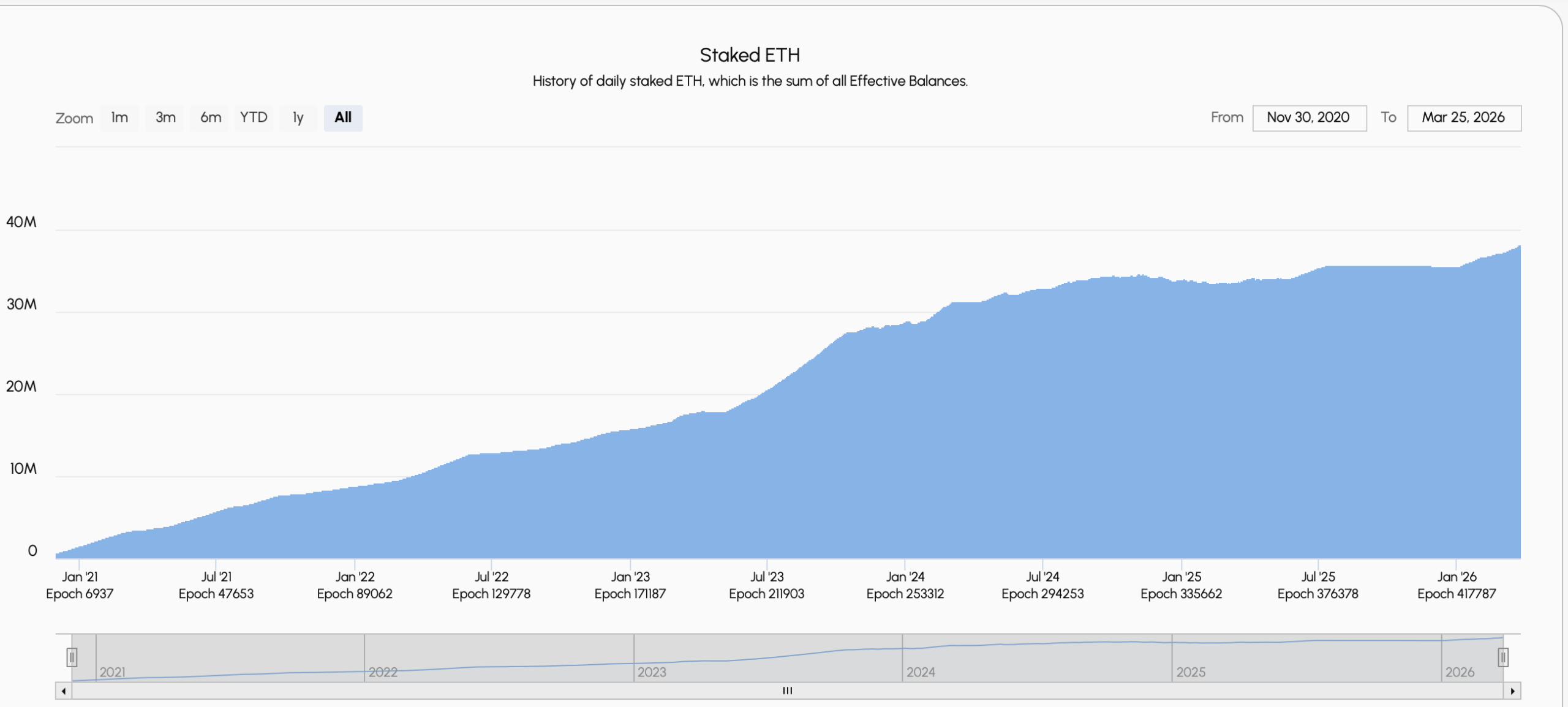
Thirty percent of all Ethereum is locked in staking contracts right now. That’s $71 billion earning yield while everyone else doom-scrolls price charts. Yet most ETH holders – probably you – haven’t staked a single coin. Fair enough. The options are confusing, the fees are hidden, and nobody explains the tradeoffs honestly.
So we will.
The 30-Second Version for People Who Won’t Read the Whole Thing
You deposit ETH. The Ethereum network uses it to validate transactions. You earn roughly 2.5-6% per year depending on your method. That’s it. Think of it like lending your car to Uber – they drive, you collect a cut, and you hope they don’t crash it.
The “don’t crash it” part matters more than most guides admit. We’ll get there.
Start With Your Budget – Everything Else Follows
Forget the technical jargon for a minute. The real question is simple: how much ETH do you have?
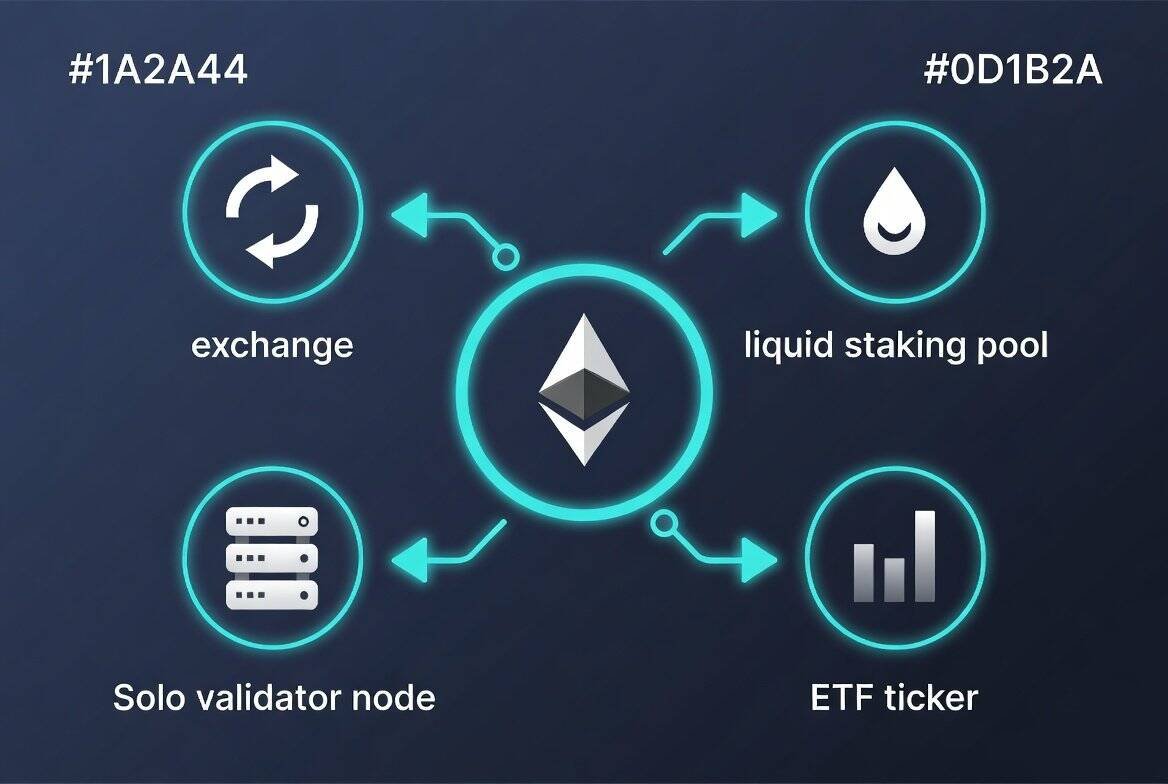
Under 1 ETH? Your only realistic options are exchanges (Coinbase, Binance, Kraken) or liquid staking pools like Lido. Both let you stake any amount. The difference is who holds your keys – and how much they skim off the top.
Coinbase takes 25% of your staking rewards. Read that again. On a 3.1% base yield, you’re walking away with about 2.3%. Binance charges 10-15%, so identical ETH earns you roughly 20% more there. Over a year, that gap compounds into real money.
Why would anyone use Coinbase then? Convenience. If you already bought ETH there – and our guide to buying Ethereum walks through that whole process – staking is literally two taps. No new apps, no wallet setup, no seed phrases to lose behind your couch cushions.
The risk with any exchange? Same movie we watched with FTX in 2022. Your keys, your crypto. Their keys, their bankruptcy filing.
Between 1 and 31 ETH? Now liquid staking gets interesting. Protocols like Lido and Rocket Pool accept your ETH and hand back a receipt token – stETH or rETH – that you can trade, lend, or use as collateral while your original deposit earns rewards in the background.
Imagine handing your savings to a financial advisor who gives you a tradable IOU. The savings earn interest. The IOU still spends. That’s liquid staking in one sentence.
Lido runs the show here – $38 billion in deposits, nearly a quarter of all staked Ethereum flowing through their smart contracts. They charge 10% of rewards and maintain a near-perfect 1:1 peg between stETH and regular ETH.
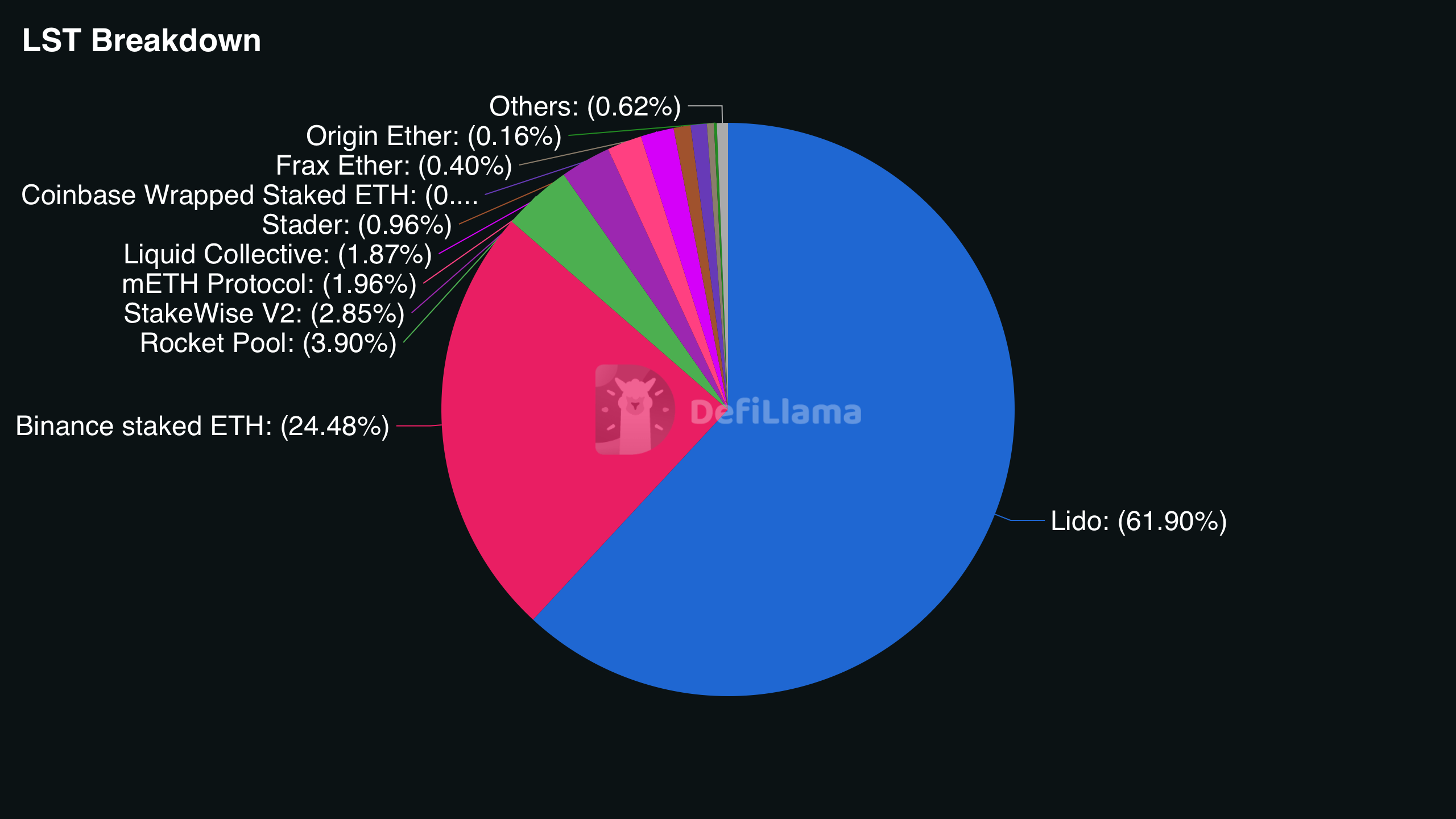
Rocket Pool takes a bigger cut (14%) but spreads validation across 2,700 independent operators instead of a concentrated set. The Ethereum purists pick Rocket Pool. The pragmatists pick Lido. Both camps have a point.
And then there’s Ether.fi, which bolts on something called restaking – essentially lending your staked ETH to secure other networks too – pushing yields above 5%. We’ll circle back to why that extra yield comes with extra ways to lose money.
Got 32 ETH (~$63,400)? You can run your own validator. A laptop-sized machine in your closet, humming 24/7, confirming Ethereum transactions and keeping every cent of yield. No middleman fees. No platform risk. No asking Coinbase’s permission to withdraw.
The catch isn’t technical anymore – Ethereum’s Pectra upgrade last May slashed activation time from 13 hours down to about 13 minutes, and rewards now auto-compound without manual intervention. Our Ethereum price forecast digs deeper into how Pectra shifted ETH’s long-term value proposition.
The catch is capital. You need $63K in ETH, a $1,100 hardware setup (32 GB RAM, 2TB SSD, nothing exotic), and the willingness to keep it running around the clock. Monthly electric bill? Ten, maybe twenty bucks.
What do you get for that? Between 4% and 6% APY with MEV-Boost – a tool that squeezes extra revenue from how transactions get ordered in each block. That’s nearly double Coinbase’s rate. On 32 ETH, you’re pocketing $2,500-$3,800 per year, and the hardware pays for itself before summer.
But – and this is the “don’t crash the car” part – validators that misbehave get slashed. Double-sign a block or go offline for too long, and the network burns a chunk of your stake as punishment. It’s rare. Still happens.
The Wall Street Option (Brand New)
Two weeks ago, BlackRock did something nobody expected five years ago. They launched ETHB – an ETF that stakes Ethereum and passes yield to shareholders. Traded on Nasdaq like Apple or Tesla. Opened with $107 million on day one.
They route 70-95% of holdings through Coinbase Prime, generating about 3.1% gross. After BlackRock’s management fee, investors keep roughly 2.54%, distributed monthly.
No wallets. No seed phrases. No DeFi rabbit holes. Just a ticker symbol in your Fidelity account.
Is the yield worse than doing it yourself? Absolutely – you’re paying BlackRock to babysit your ETH. But for someone whose crypto expertise stops at “buy the dip,” ETHB is honestly fine. Not every financial decision needs to be optimized to the last basis point.
The Degen Frontier: Restaking
We debated whether to even include this section. EigenLayer restaking can push yields to 7-10%, but the risk profile is genuinely different from everything above.
The concept: take ETH that’s already staked and “re-pledge” it to secure additional networks called Actively Validated Services. You earn base Ethereum rewards plus bonus yield from each AVS. EigenLayer dominates this space – $15-19 billion locked, controlling 93.9% of the restaking market.
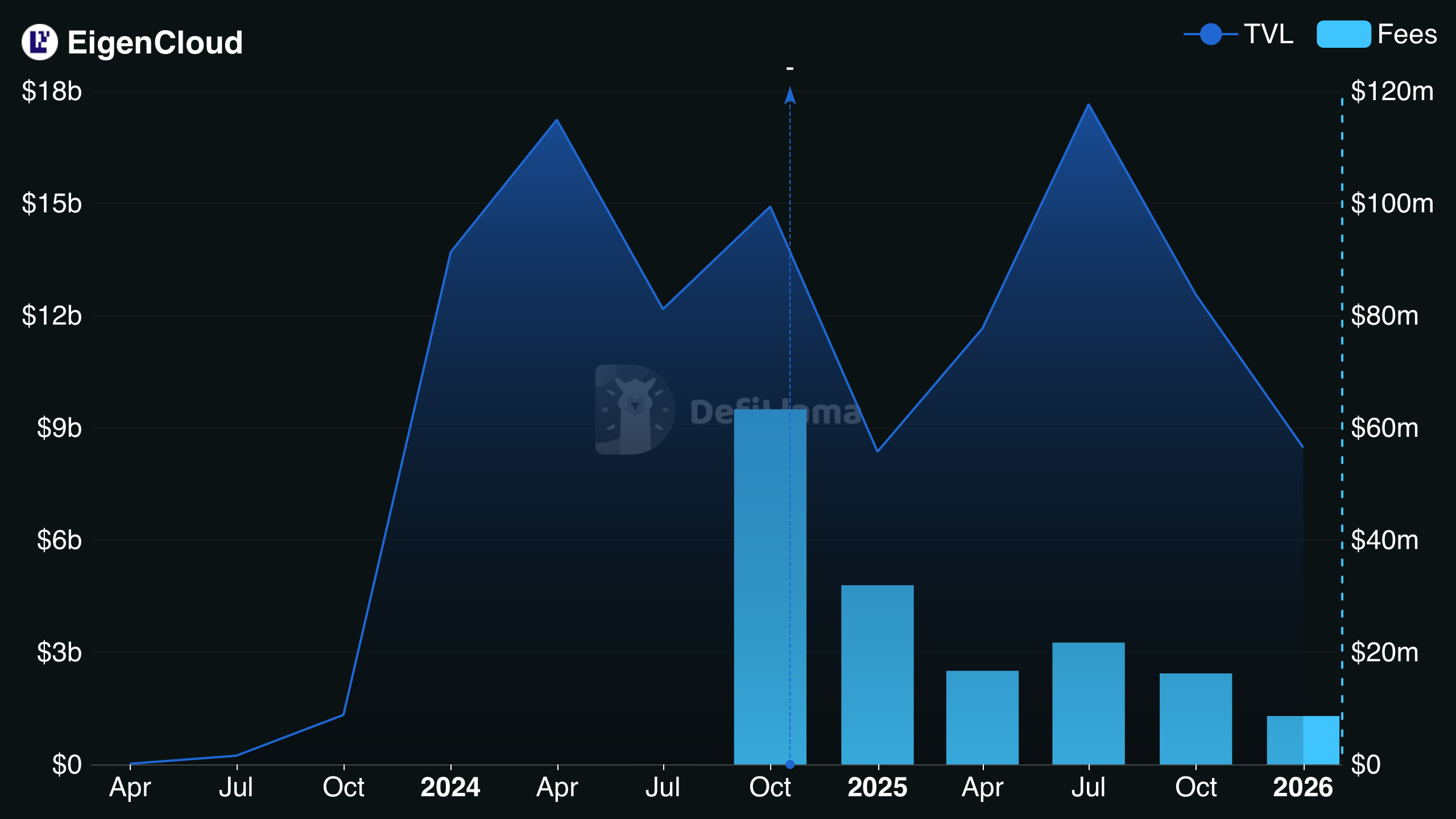
Sounds great on a spreadsheet. In practice, you’re stacking risk like Jenga blocks. Slashing penalties hit you from Ethereum AND from each AVS. Smart contract exposure multiplies across every protocol layer. Withdrawals can take weeks.
Remember what happened during the DeFi stress test last month? The protocols that survived were the simple ones. Restaking is the opposite of simple. Our honest take: unless you can explain exactly what EigenLayer’s slashing conditions are without Googling it, skip this.
The Tax Situation (Read This Even if You Hate It)
The IRS made their position crystal clear with Revenue Ruling 2023-14. Staking rewards count as ordinary income the instant you can sell or transfer them. Not when you actually sell. When you could sell.
Two taxable events per reward cycle. Income tax when the reward lands – based on ETH’s market price that specific day. Then capital gains tax later if you sell at a different price. Tracking this manually across hundreds of micro-rewards is a nightmare, which is exactly why exchanges now issue Form 1099-DA starting this year.
The IRS sees everything now. Plan accordingly. And if you’re staking more than pocket change, a crypto-savvy CPA will save you more than they cost.
Bottom Line
Liquid staking through Lido or Rocket Pool works for most people. Decent yield, full liquidity, and your stETH doubles as DeFi collateral on Aave if you want to compound further.
Got the capital and sysadmin patience for solo staking? You’ll earn more. You’ll also spend Saturday mornings monitoring uptime alerts instead of watching Netflix.
And if you just want exposure without the headache? Buy ETHB, collect 2.54% monthly, and move on with your life. Not everything in crypto needs to be complicated.
This is not financial advice. DYOR. Data as of March 27, 2026.
Leave a Reply