

🕑 8 min read
What crypto actually is, how to buy it safely, and the risks everyone should understand before investing a dollar.
Everyone says cryptocurrency is complicated. It isn’t.
The technology beneath it is complex, sure – but so is the tech behind your credit card, and you don’t lose sleep over that. Cryptocurrency is digital money that doesn’t need a bank to move. That’s the entire idea in one sentence.
The rest – blockchain, wallets, seed phrases – sounds intimidating until you actually do it. And most of it takes less time to set up than a Netflix account. This guide breaks down cryptocurrency for beginners – no jargon, no hype, just what you actually need to know before putting a single dollar in.
What you’ll learn:
- The global crypto market is worth $2.6 trillion as of April 2026, with 17,600+ cryptocurrencies – but you only need to understand about five
- You can start investing with as little as $10 on regulated exchanges like Coinbase or Kraken – no technical background required
- The #1 beginner mistake isn’t picking the wrong coin – it’s losing access through poor wallet security, which has cost investors billions
The $2.6 trillion market most people still can’t explain
$2.6 trillion. That’s how much money sits in cryptocurrency right now – bigger than the GDP of Canada.
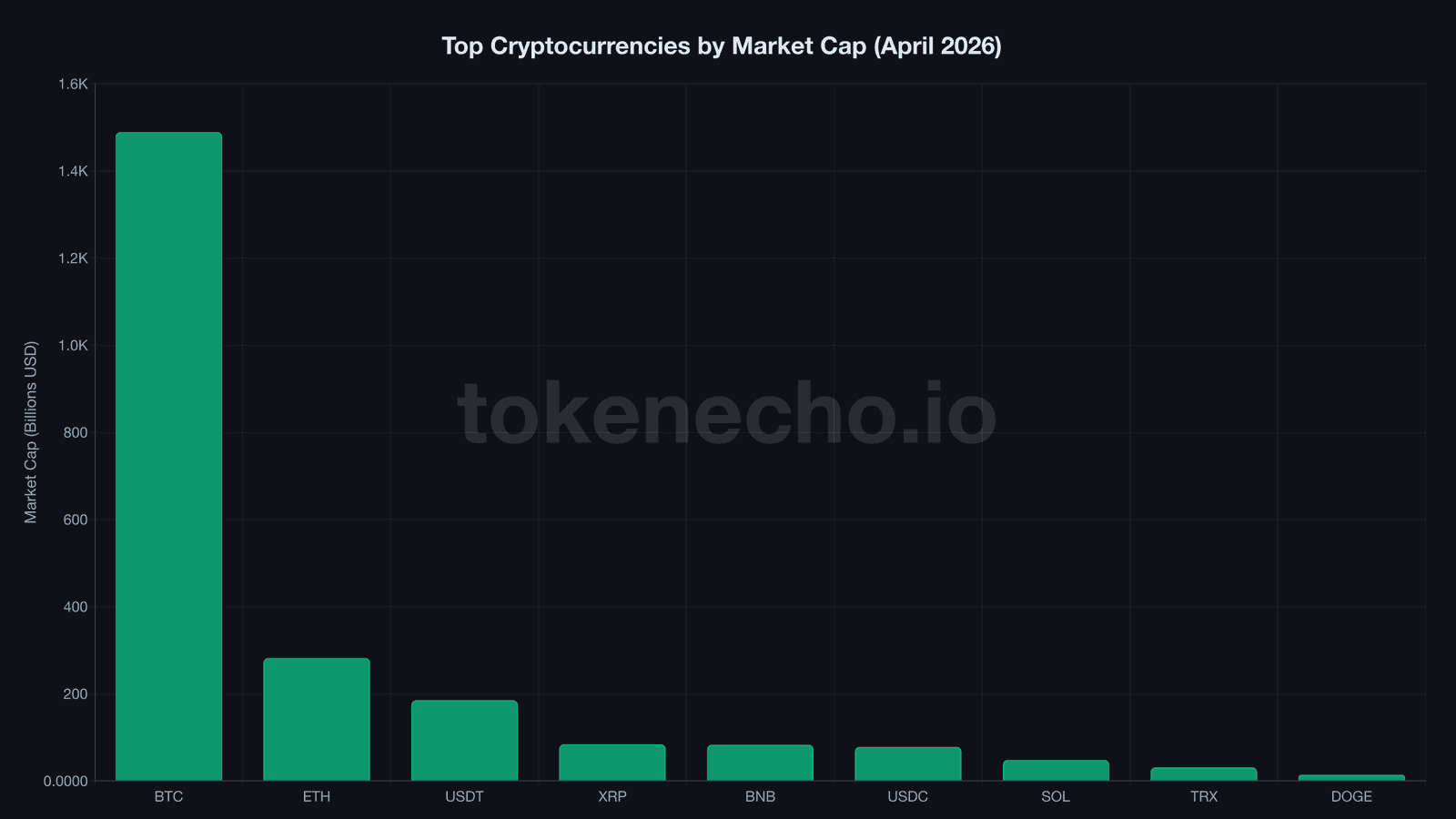
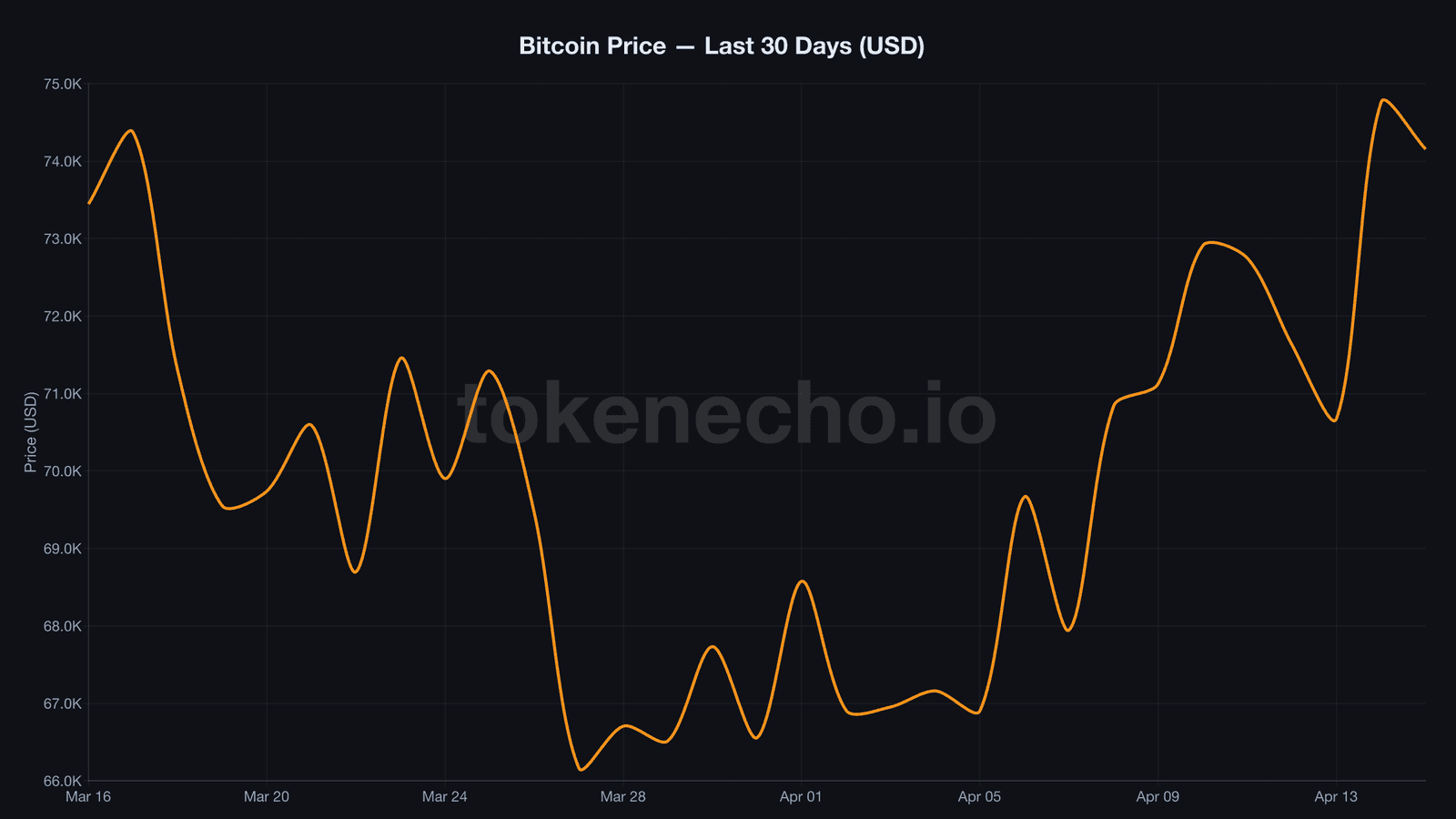
Bitcoin alone holds a $1.49 trillion market cap at $74,381 per coin as of April 15, 2026. Ethereum, the second largest, trades at $2,339 – barely a third of what it fetched at its all-time high last August. No other cryptocurrency comes close to either of them. Together those two control about 68% of the entire market.
But most beginners miss something obvious: you don’t need to buy a whole Bitcoin. You can own 0.001 BTC – roughly $74 – the same way you’d buy a fractional share of stock. Most exchanges let you start with $10.
So what IS this stuff, exactly?
Cryptocurrency runs on decentralized networks. No bank processes the transfer. No government approves it. Thousands of computers worldwide verify every transaction and record it on a public ledger – a blockchain – that anyone can audit but nobody can alter.
The concept goes back to 2008, when a pseudonymous developer calling themselves Satoshi Nakamoto published a nine-page paper proposing a version of electronic cash that could move directly between two people without a bank, a government, or any central authority touching the transaction along the way. Eighteen years later, BlackRock – the world’s largest asset manager – launched a Bitcoin ETF.
“We believe ETFs are step one in the technological revolution in the financial markets,” said Larry Fink, BlackRock’s CEO, in his 2024 annual shareholder letter.
When the guy managing $10 trillion calls crypto a “technological revolution,” the debate over whether it’s real money is already over.
The internet went through the same phase. In 1995, your uncle called email a fad. Two decades later, he was ordering groceries through an app on his phone. Crypto sits at a similar inflection point – mainstream enough for retirement fund ETFs, weird enough that your coworker still insists it’s fake money.
Bitcoin, Ethereum, stablecoins – not all crypto is equal
Why does Bitcoin trade at $74,381 while Dogecoin costs nine cents?
Price per coin is meaningless on its own. What matters is market cap, the total value of all coins in circulation. Bitcoin’s $1.49 trillion dwarfs Dogecoin’s $14.5 billion despite the dramatic price gap.
Bitcoin (BTC) is digital gold. Capped at 21 million coins forever – about 20 million already exist – it’s the original, the most trusted, and it commands 57.3% of the entire market. Most institutional investors buy Bitcoin first and everything else second.
Ethereum (ETH) does something Bitcoin doesn’t: it runs programs. Developers build applications on Ethereum – lending platforms, decentralized exchanges, digital art markets. Its $282 billion market cap makes it the world’s second-largest cryptocurrency. If Bitcoin is gold, Ethereum is a programmable financial system. You can even stake your ETH to earn passive income.
Stablecoins like Tether ($185B market cap) and USDC ($78.5B) are pegged to the US dollar. One USDT equals one dollar, always. They exist so traders can park funds between trades without converting back to fiat. Not exciting. Extremely useful.
Altcoins cover everything else. XRP commands an $84 billion market cap, with Solana and BNB in the same weight class. Dogecoin trails at $14.5 billion – but don’t let the smaller number fool you, it’s one of the most-traded coins on earth. Some altcoins solve real problems. Some are memes. The line between the two isn’t always obvious, which is part of the charm and the danger.
Start with Bitcoin and Ethereum. They’re the blue chips.
A quick sidebar on Dogecoin, because every beginner asks: two engineers built it in three hours as a joke in 2013, based on a Shiba Inu meme. It now commands a $14.5 billion market cap. Crypto doesn’t always reward logic, and anyone who claims otherwise is selling something.
The security mistake that costs beginners billions
In 2013, a British engineer named James Howells threw away a hard drive containing 7,500 Bitcoin. At today’s price, that’s $557 million sitting in a Welsh landfill. He’s spent over a decade fighting to dig it up.
Extreme case. But the principle hits every beginner: losing access to crypto is permanent. There’s no “forgot password” button. No customer service. No bank to reverse the transaction.
Your crypto lives in a wallet – software or hardware that stores the private keys controlling your coins. Lose those keys, and the money vanishes forever.
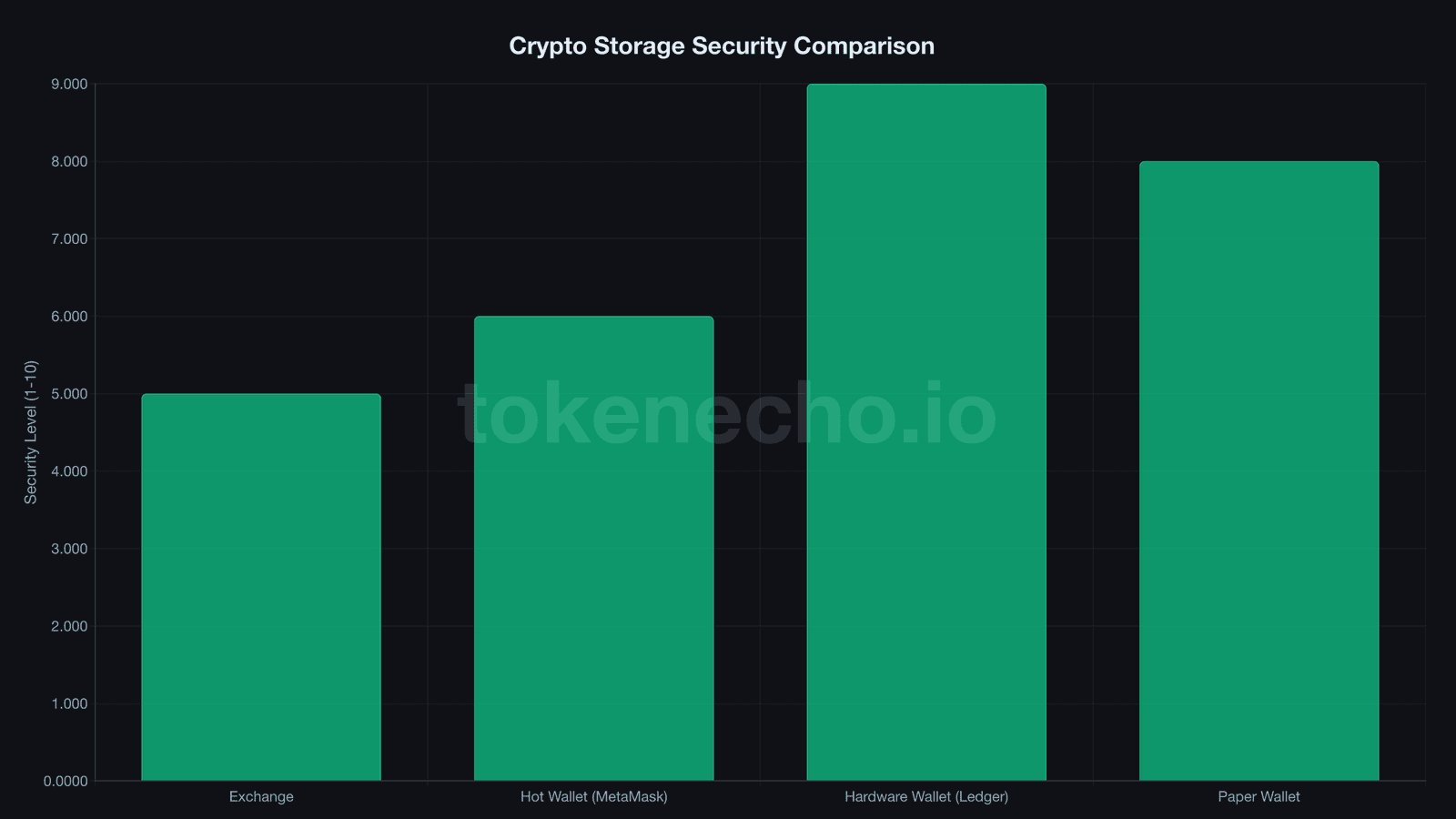
Hot wallets stay connected to the internet. MetaMask is the most popular with 30 million users – convenient for daily use, but exposed to online threats.
Cold wallets (hardware devices like Ledger) live offline. For anything over $500, they’re the safer choice. It’s the difference between cash in your pocket and gold locked in a vault.
Our crypto wallet guide walks through full setup. But the short version: write your seed phrase on paper, store it somewhere fireproof, and never – ever – type it into a website that asks for it.
Your first $50 in crypto – skip the overthinking
Don’t spend three weeks comparing exchanges. Pick a regulated one, deposit $50, and learn by doing.
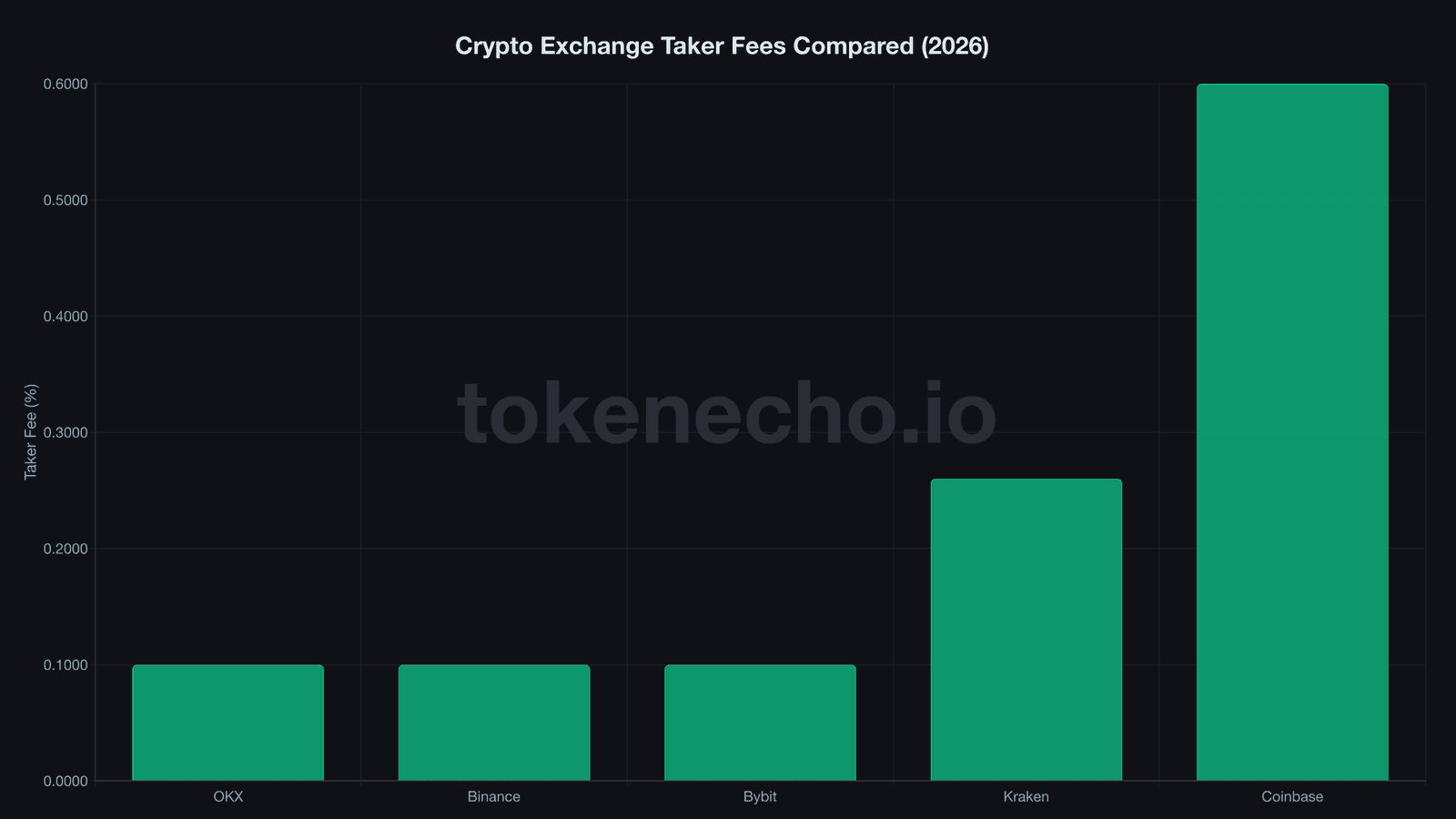
That said, the exchange matters more than the first coin you buy. Security records vary wildly, fees range from 0.10% to 1.20% per trade, and some platforms have been hacked for billions.
We’ve reviewed every major exchange – the short version:
Coinbase charges higher fees (0.60% maker) but holds a NASDAQ listing, FDIC insurance on cash balances, and stores 98% of assets in cold storage. Simplest onboarding in the industry – New York regulators approve it, which says something.
Kraken takes the opposite approach – lower fees (0.26% taker), 14 years without a major breach, and proof-of-reserves audits you can verify yourself. Less polished, more trusted by experienced traders.
Binance offers the lowest fees (0.10%) and the widest coin selection, though a $4.3 billion compliance fine in 2023 left scars. Rebuilt under new leadership – the history is worth knowing before you deposit.
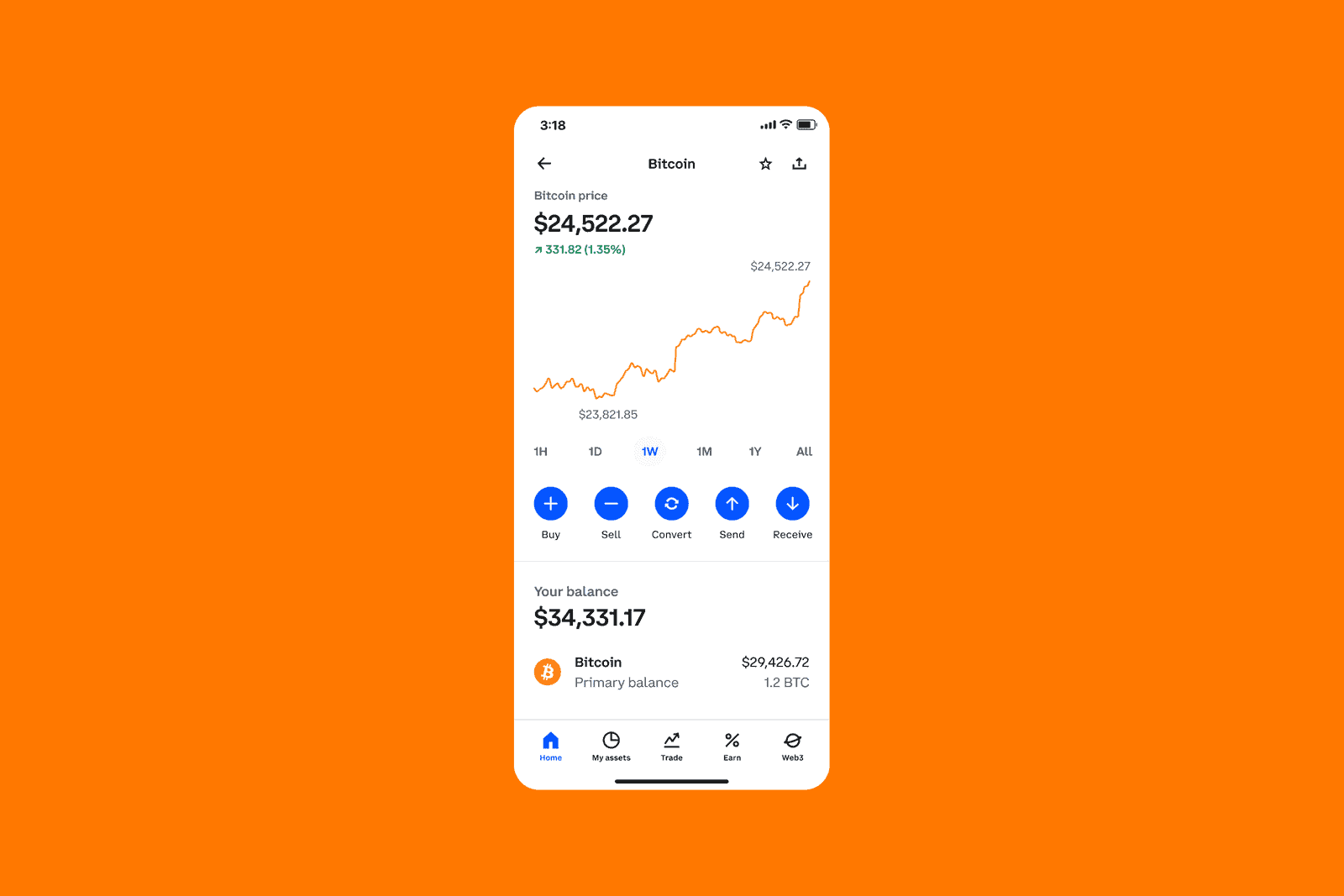
The actual buying process takes about 15 minutes. Verify your identity with a photo ID, link a bank account, and place an order. Your first purchase might be 0.00067 BTC – $50 worth. Unglamorous, but real.
For detailed walkthroughs: buying Bitcoin step by step, buying Ethereum, buying Solana, and buying Dogecoin.
Volatility, scams, and the risks your crypto YouTuber skips
In 2022, the crypto market shed over $2 trillion in value. Bitcoin crashed from $69K to $15.5K. Entire platforms – FTX, Celsius, Voyager – vaporized customer deposits overnight.
That wasn’t ancient history. That was three years ago.
A 30% monthly drawdown is normal in crypto, not a crisis. If that sentence unsettles you, shrink your position size until it doesn’t.
Scams remain everywhere. Fake exchanges, phishing emails mimicking Coinbase, Telegram groups promising guaranteed returns. The rule: if someone asks for your seed phrase or guarantees profits, it’s a scam. No exceptions.
Taxes catch beginners off guard. In the US, every single crypto sale triggers a taxable event – if you bought ETH at $2,000 and sold it six months later at $2,500, you owe the IRS capital gains tax on that $500 profit regardless of whether you withdrew the proceeds or simply swapped into another token. Keeping records from day one isn’t optional.
Regulation keeps shifting. Bitcoin ETFs are legal in the US, and stablecoin legislation cleared the Senate. But the landscape evolves quarterly – what’s permitted today may change by next year.
None of that makes crypto a bad investment. It makes it a volatile, early-stage asset class that demands more homework than an index fund. Treat it that way.
Your first 30 days – a no-nonsense roadmap
You don’t need to become a blockchain expert. You need a plan.
Start by picking one exchange and buying $25-50 of Bitcoin. Nothing else. Watch how the price swings for a few days and get comfortable with the volatility before doing anything more.
After about a week, set up a self-custody wallet and transfer a small amount off the exchange. Practice sending and receiving – our wallet creation guide covers every step.
By week three, dig into what you own. Read about how on-chain data tracks Bitcoin’s biggest moves. Check Bitcoin’s long-term price forecast. Understand why BTC and ETH serve completely different purposes.
End the month with a decision. If crypto fits your risk profile, set up a recurring buy – $25 per week or $100 per month – and let dollar-cost averaging handle the timing. DCA removes the stress of catching bottoms, which nobody does consistently anyway.
And honestly? That’s enough. You don’t need derivatives, altcoin pumps, or chart-watching at 3 AM. Most of the serious money in crypto was made by people who bought, held, and ignored the noise.
If you’re ready to dive deeper, start with our Coinbase review or step-by-step Bitcoin buying guide – both are built for first-time investors.
$2.6 trillion and 17,600 coins – but only your risk tolerance decides whether any of them belong in your portfolio.
This is not financial advice. Do your own research. Market data as of April 15, 2026. Sources: CoinGecko, CryptoQuant.
Leave a Reply