

🕑 6 min read
From a memecoin launched days before inauguration to a stablecoin rivaling DAI, the Trump family has built the most politically charged crypto portfolio in history. Here is what the data actually shows.
The Trump family’s involvement in cryptocurrency is no longer a sideshow to the presidency – it is a sprawling financial ecosystem that spans a memecoin, a DeFi protocol, a stablecoin, and direct influence over the laws that govern all three. Whether you view it as innovation or corruption depends on your politics. But the on-chain data tells a story that transcends opinion.
This guide breaks down every piece of Trump’s crypto empire with exact numbers, timelines, and what each component actually does.
Part 1: The $TRUMP Memecoin – From $74 to $3 in 14 Months
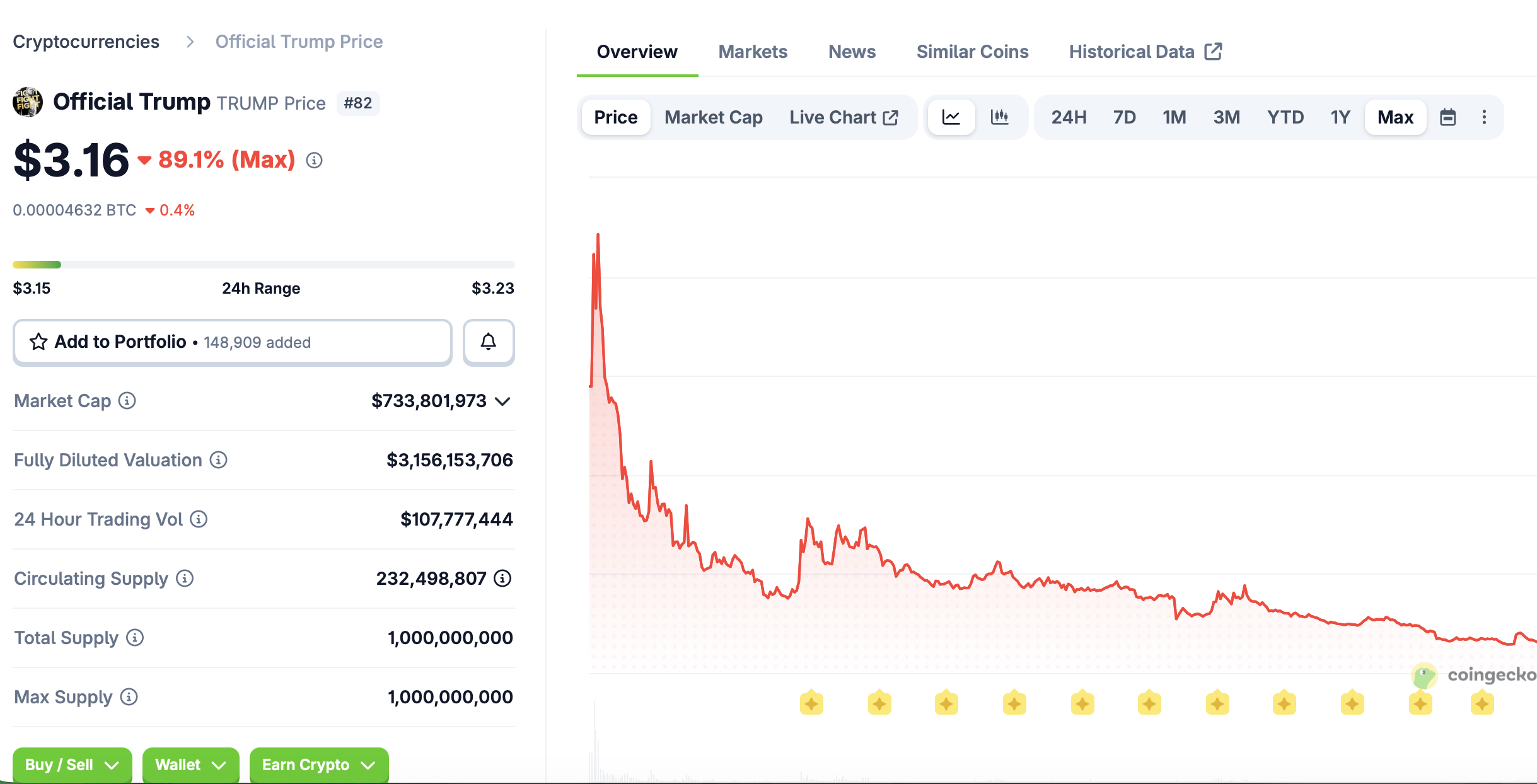
The Official Trump token ($TRUMP) launched on January 17, 2025 – exactly three days before Donald Trump’s second inauguration. Within 48 hours, the price rocketed from approximately $7 to an all-time high of $74.27 on January 19, briefly pushing the market capitalization above $14.5 billion.
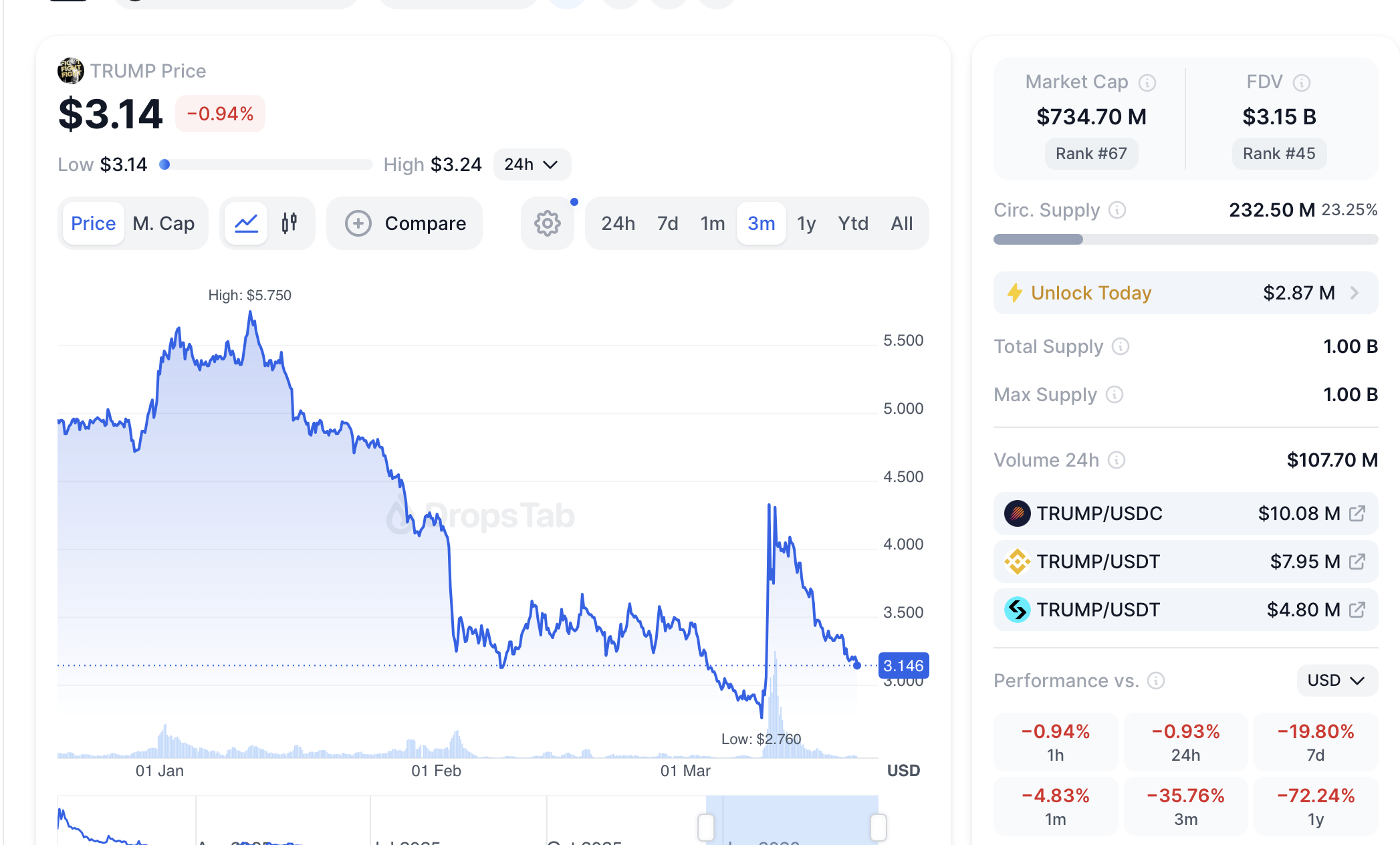
As of March 21, 2026, $TRUMP trades at $3.36 – a decline of 95.5% from its peak. The token’s market capitalization sits at roughly $780 million. The all-time low of $2.73 was hit earlier this year, meaning the token currently trades just 23% above its worst-ever price.
Tokenomics: Who owns what. The total supply is fixed at 1 billion tokens. On launch day, only 200 million tokens (20%) were available for public trading and liquidity. The remaining 800 million tokens (80%) are subject to a multi-year vesting schedule that extends through mid-2028, with daily unlocks dripping tokens into insider wallets.
Two Trump-affiliated entities – CIC Digital and Fight Fight Fight LLC – control the entire 80% locked allocation. Once fully vested in 2028, these entities will own 800 million of the 1 billion total tokens.
The Mar-a-Lago dinner. In March 2026, the $TRUMP team announced a “Crypto & Business Conference & Gala Luncheon” at Mar-a-Lago on April 25, 2026. The top 297 token holders during a qualification window (March 12 to April 10) earn a seat at the event. The 29 largest wallets get VIP access to a private reception with President Trump.
The cost of entry ranges from approximately $70,000 to $7.4 million depending on wallet ranking. On-chain data shows 83 wallets now hold more than 1 million $TRUMP tokens each – the highest count in five months. Robinhood’s custodial wallet is currently the fourth-largest holder with approximately 18.6 million tokens, indicating significant retail participation through the brokerage.
The announcement triggered a 60% price surge within 24 hours, though the token remains deep in its long-term downtrend.
Part 2: World Liberty Financial (WLFI) – The DeFi Protocol
World Liberty Financial is the Trump family’s decentralized finance platform, launched in late 2024 with the tagline “Where DeFi Meets TradFi.” It issues its own governance token, WLFI, which trades at $0.097 with a market capitalization of approximately $2.7 billion.
Ownership structure. A Trump business entity owns 60% of World Liberty Financial’s equity and is entitled to 75% of all revenue from token sales. Donald Trump personally holds 15.75 billion WLFI tokens – 15.75% of the 100 billion maximum supply. DT Marks DEFI LLC, another Trump entity, was allocated 22.5 billion tokens.
The UAE deal. On January 16, 2025 – four days before inauguration – Eric Trump signed a deal giving a 49% stake in World Liberty Financial to lieutenants of Sheikh Tahnoon bin Zayed Al Nahyan, a UAE royal who serves as the country’s national security adviser and manages its largest wealth fund. The price: $500 million, with $187 million going directly to Trump family entities and $31 million to Witkoff family entities. Steve Witkoff, a WLFI co-founder, simultaneously serves as Trump’s top envoy to the Middle East.
Governance concerns. In March 2026, WLFI held a governance vote (March 6-13) that ties voting rights to staking tokens for 180 days. Critics point out that team-linked wallets already control approximately 59% of total voting power, making governance effectively centralized despite the “decentralized” branding.
On-chain data also shows 39.7 million WLFI tokens (valued at $4 million) were transferred to Binance during a critical price zone, raising questions about insider selling.
Part 3: USD1 – The $3.3 Billion Stablecoin
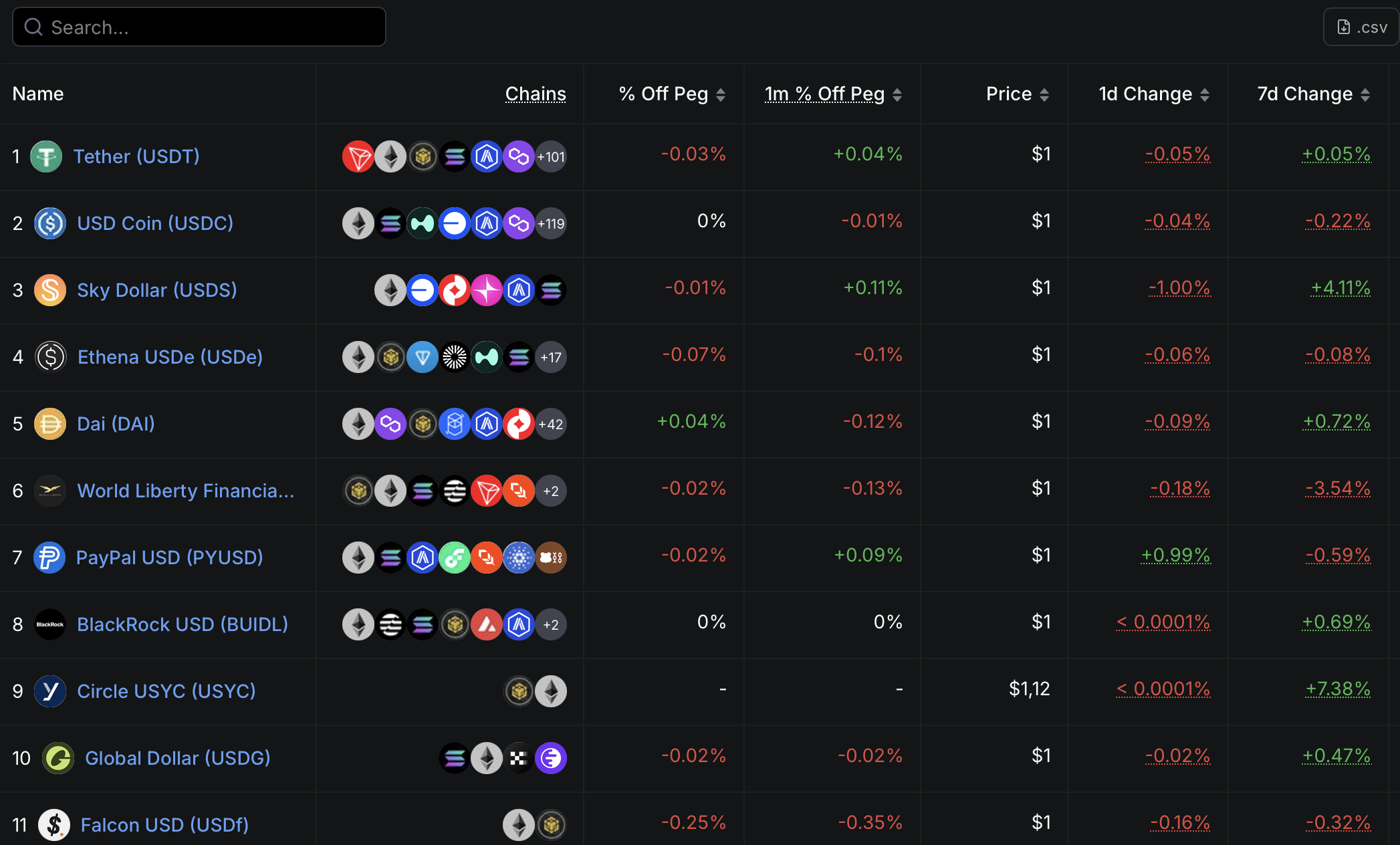
Perhaps the most consequential piece of Trump’s crypto portfolio is USD1 – World Liberty Financial’s dollar-backed stablecoin launched in March 2025. In just one year, USD1 has grown to over $3.3 billion in circulation, making it the fifth-largest dollar-backed stablecoin in the world.
USD1 is 100% backed by short-term U.S. government treasuries, dollar deposits, and cash equivalents, with reserves custodied by BitGo. It is deployed on Ethereum and Binance Smart Chain.
On March 20, 2026, WLFI announced the AgentPay SDK – described as “the economic operating layer for autonomous AI systems” – using USD1 as its settlement currency. The prediction market Myriad also adopted USD1 as its settlement asset on March 11, further expanding real-world utility.
The GENIUS Act conflict. USD1’s growth is directly intertwined with the GENIUS Act – the stablecoin regulatory framework that President Trump signed into law on July 18, 2025. Critics, including Senator Elizabeth Warren, have called the arrangement a structural conflict of interest: the president who signed the law regulating stablecoins also profits directly from a stablecoin operating under that same law.
According to a Senate Banking Committee analysis, the GENIUS Act contains no provisions prohibiting government officials from profiting through stablecoin ventures. Democrats argued that the bill could “turbocharge corruption by expanding the reach of President Trump’s USD1 stablecoin and giving him the authority to regulate his own financial product.”
The Trump administration maintains that the GENIUS Act applies equally to all issuers and that USD1 meets all regulatory requirements.
Part 4: The Full Picture – How It All Connects
The Trump crypto empire is not a collection of separate projects – it is an integrated financial ecosystem where each piece reinforces the others:
- $TRUMP memecoin generates attention and retail engagement, driving users into the broader ecosystem
- WLFI governance token captures value from the DeFi protocol and provides institutional access (at $5 million minimum)
- USD1 stablecoin generates revenue from reserves (interest on Treasuries) and provides the settlement layer
- The GENIUS Act creates the regulatory framework that legitimizes the entire structure
- The UAE investment provides $500 million in capital while raising questions about foreign influence
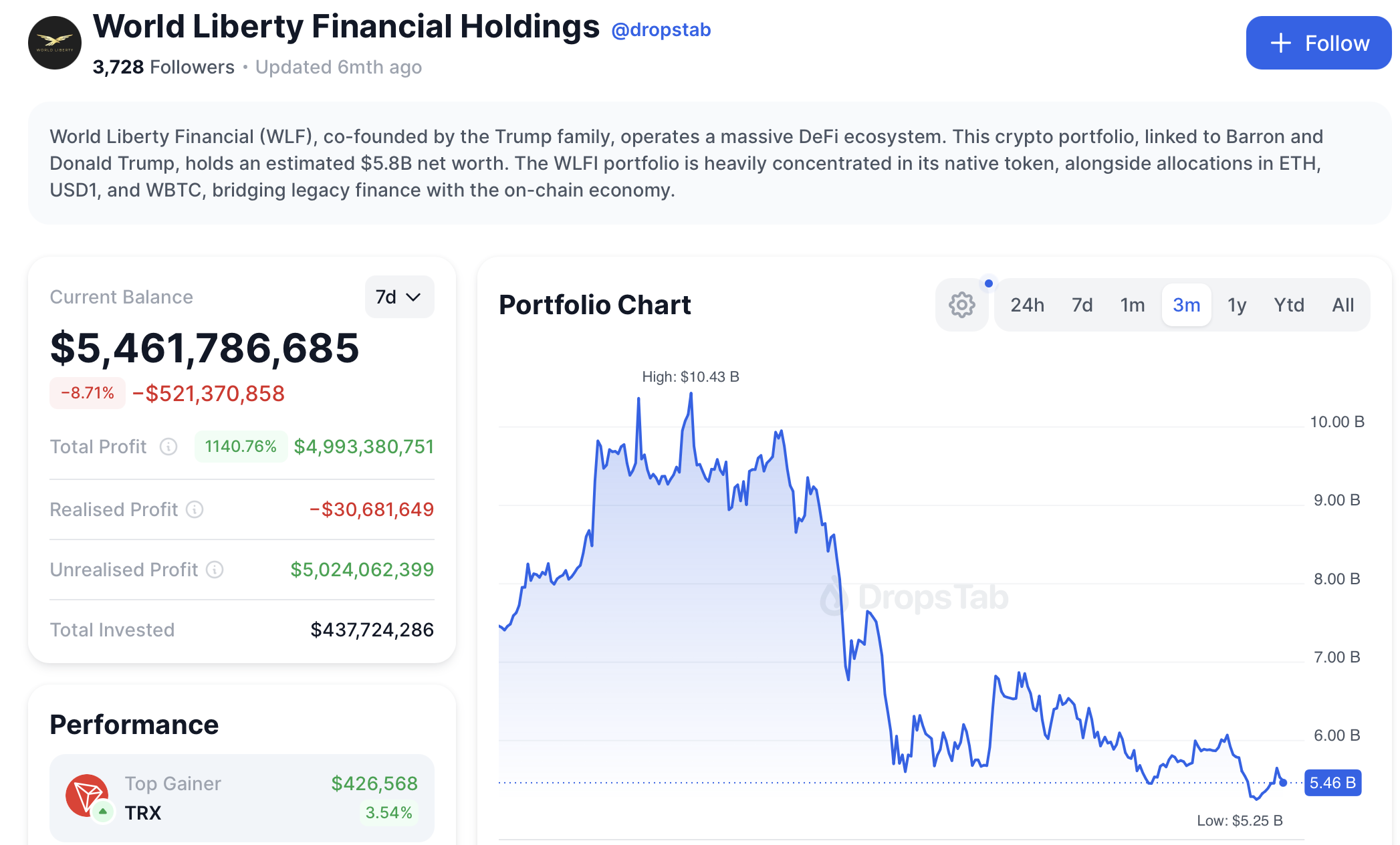
A crypto portfolio linked to Barron and Donald Trump holds an estimated $5.8 billion net worth, heavily concentrated in WLFI tokens, alongside allocations in ETH, USD1, and WBTC.
What to Watch Next
- April 25, 2026: Mar-a-Lago gala for top $TRUMP holders – watch for whale wallet movements in the qualification window
- July 18, 2026: GENIUS Act regulatory deadline – all implementing regulations must be finalized
- Mid-2028: Final $TRUMP token unlocks – 800 million insider tokens fully vested
Whether Trump’s crypto empire represents the future of American financial innovation or the most brazen conflict of interest in presidential history depends on who you ask. The data, at least, is on-chain and transparent. Draw your own conclusions.
This is not financial advice. Do your own research. Data as of March 23, 2026.
Sources
- $TRUMP token data – CoinGecko
- $TRUMP tokenomics and unlock schedule – Tokenomist
- WLFI holdings and structure – Wikipedia
- UAE 49% stake deal – CNN Politics
- USD1 stablecoin $3.3B market cap – BusinessWire
- GENIUS Act conflict analysis – Senate Banking Committee
- Mar-a-Lago dinner details – BeInCrypto
- WLFI governance vote – BingX
Leave a Reply